For years, corporate giving has been dominated by the same playbook: annual donations, branded sponsorships and one-off CSR campaigns that rarely go beyond a press release. The problem is lack of structure. Business leaders want to create real social impact but most models for doing so are still transactional, not transformative.
The world no longer needs photo-op charity. It needs systems that save lives. And that’s where a new generation of tech-driven nonprofits, such as Helpster, are rewriting the rules of corporate giving: replacing one-off sponsorships with traceable impact, symbolic gestures with measurable outcomes and delayed reporting with real-time transparency.
The CSR problem
Corporate Social Responsibility (CSR) was meant to align business growth with societal good. But even after two decades of global adoption, its impact remains inconsistent. More than 80 percent of companies globally say they can measure ROI for their sustainability projects, according to a 2025 survey by Morgan Stanley Institute, but only around 70 percent report having long-term CSR strategies. These figures show a gap between doing good and knowing whether the good lasts. Across Africa, much of CSR funding still goes to highly visible projects, such as events, donations or relief drives, that are hard to scale or sustain.
Globally, companies are re-evaluating this approach. The Edelman Trust Barometer 2024 found that 71 percent of consumers expect CEOs to drive societal change, not just fund it. Investors are also shifting attention to measurable ESG outcomes where impact is quantifiable, continuous and tied to business value.
The implication is clear: companies that treat giving as a one-off cost miss the opportunity to make it a recurring investment in resilience, equity and public trust.
A smarter model for impact
Helpster Charity, founded in 2023, shows what already works: a model of social impact built on speed, transparency and sustainability. The organisation uses technology to provide free urgent medical cover for underprivileged populations across Africa and Asia. Behind its humanitarian mission lies a model that redefines how giving can work for both individuals and businesses.
Helpster’s life-saving platform tracks every donation in real time, from contribution to medical intervention, allowing donors and corporate partners to see precisely where their money goes and whose life it touches. This level of transparency builds accountability and emotional proximity; donors no longer just give, they witness impact.
More interesting, however, is how Helpster’s funding ecosystem creates continuity. In addition to one-time donations, it partners with an investment foundation where members can commit funds that generate income. The returns are directed towards medical interventions while the investors retain access to their principal. This structure converts generosity into a sustained revenue stream for impact, a practical blend of finance and philanthropy.
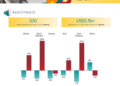
In 2025, Helpster and its partners have distributed over $260,000 in direct medical aid, saving more than 1,100 lives across Kenya, Nigeria, Bangladesh, Sri Lanka and Cambodia, at the average cost of about $230. These are modest figures compared to the size of global corporate giving, estimated at $21 billion in 2023 (CECP Giving in Numbers Report), but they point to a model that’s measurable, renewable and scalable.
Why businesses should care
For companies, embedding impact in operational systems is both moral and strategic. The COVID-19 pandemic revealed how fragile public health ecosystems directly affect supply chains, consumer behaviour and workforce stability. A business landscape that ignores health inequity is one that underestimates risk.
By integrating giving through tech-driven platforms like Helpster, businesses can achieve three critical outcomes:
Sustained visibility: real-time funding infrastructure ensures every donation is visible from disbursement to treatment, with direct hospital payments making impact both verifiable and continuously story-worthy. Every intervention is trackable with case-specific data.
Employee engagement: staff can contribute individually through the same platform, aligning company culture with purpose.
Return on reputation: measurable, data-backed impact enhances brand trust and investor confidence far more than ceremonial donations ever could.
In essence, this model makes social impact operational, something a finance or HR department can participate in, not just the CSR unit.
The shift from optics to outcomes
The old CSR language of “giving back” implies a separation between business and society, as if impact begins only after profit. The emerging paradigm challenges that notion. Business is part of the social fabric, not outside it. A company that integrates life-saving giving into its ecosystem restores value and circulates it. Platforms like Helpster prove that social impact can be structured like any other business system: transparent, efficient and data-driven. The key difference is that the output is measured not in sales or shares but in lives saved.
Consider this: WHO data shows that half of the world’s population lack access to essential health services, and about 100 million people are pushed into extreme poverty every year because of medical costs. For businesses seeking to make their ESG strategies more than compliance documents, contributing to healthcare access through verifiable systems offers a direct, quantifiable pathway to change.
Reimagining partnership
The future of corporate impact lies in partnership, not charity. Imagine if even one percent of annual marketing budgets across the private sector were channelled through transparent health-impact systems. Global advertising spending is projected to surpass 1 trillion dollars in 2025, according to Statista, meaning a fraction of that redirected could fund urgent medical care for millions of people who currently go without it.
Such partnerships wouldn’t require companies to build new foundations or departments. They only need to plug into systems already designed to translate money into measurable outcomes, systems like Helpster’s.
So, the question is no longer whether companies should give but how intelligently they can do it.

Stanley Olisa is a global strategic communications professional with a decade of experience crafting compelling brand narratives, managing reputational risk and inspiring meaningful stakeholder engagement. Send feedback and responses to olisastanley513@gmail.com and comment@businessamlive.com