Driving sustainability for the air travel industry over the years has remained a never ending debate, straddling between quick fixes, long term intervention and forward-looking strategies.
The desire to consolidate this all important target for the aviation ecosystem has stretched the latitude of aviation strategists, drawing the intersection between balancing government revenue demand with the sector’s growth.
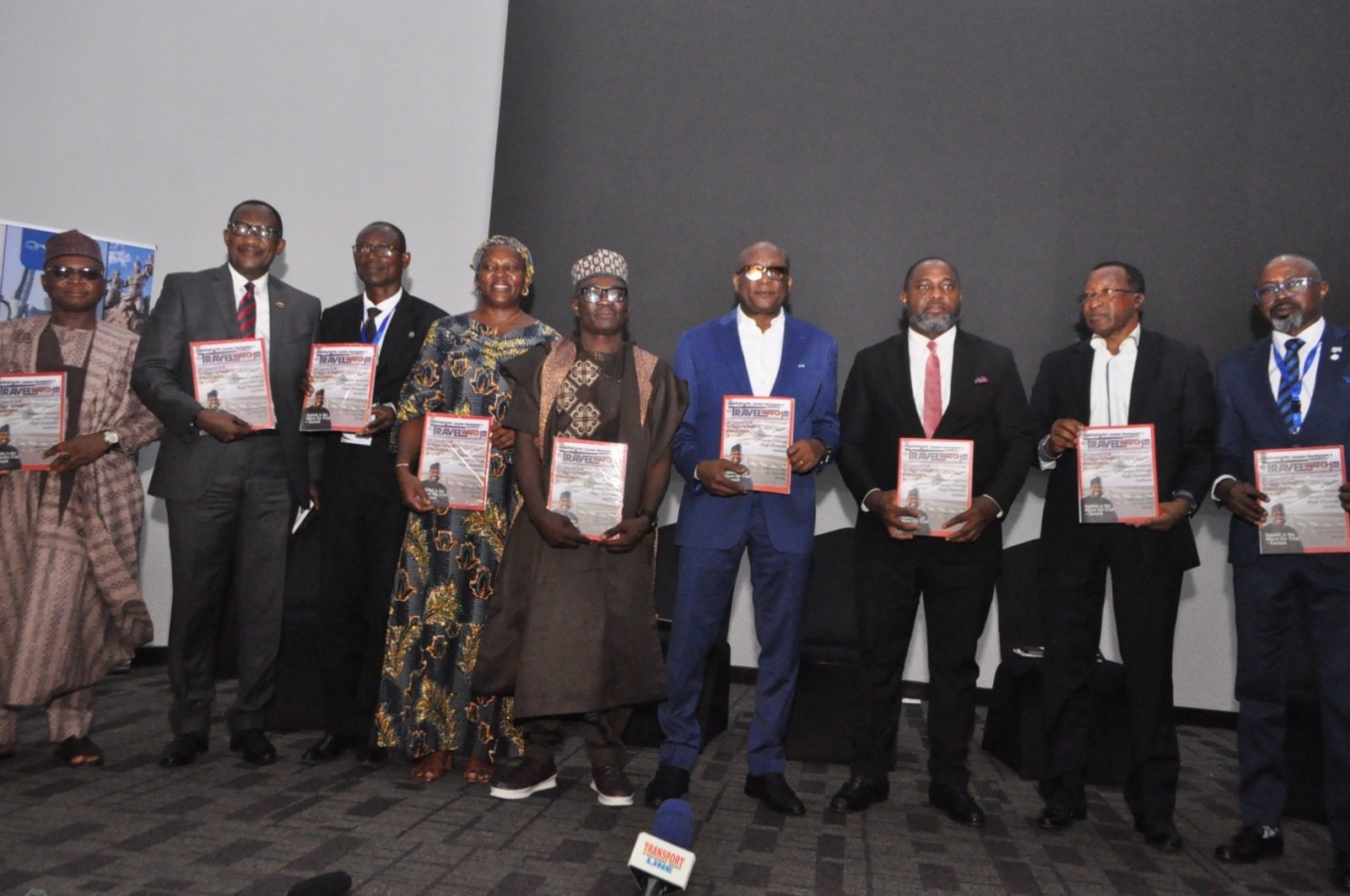
These considerations, among others, were the key issues when industry players and stakeholders gathered recently for the 30th edition of the League of Airport and Aviation Correspondents (LAAC) Conference at Providence Hotel, G.R.A, Ikeja.
After intense deliberations on the theme of the conference, participants resolved that: to avoid a recurrence of high airlines’ mortality rate, there is need for a review of the five percent Ticket Sales Charge (TSC), collected from airlines and in its place, they canvassed unit cost per flight.
Stakeholders at the conference also noted that in a bid to mitigate the effects of flight delays, there should be proper dissemination of information to passengers early enough to stave off confusion at the airport.
They canvassed a review of the government’s huge revenue expectations from airlines and rather pushed for more practical ways for service cost recovery.
Allen Onyema, the chief executive officer of Air Peace Limited, firmly said that Nigerian airlines won’t succeed until there is a review of the 54 aviation charges that have become a significant barrier to the profitability and competitiveness of the carriers, both domestically and internationally.
Onyema, who is also the vice president of Airlines Operators of Nigeria (AON), said the charges are among the highest in the world, adding, “One thing I want to mention is that there are many charges. If I were to list them, there are about 54 that airlines pay. Even for international flights, it’s the same. I remember when ECOWAS came together. Even our president signed a treaty on behalf of ECOWAS calling for a 25% reduction in taxes across West Africa. That has not been implemented anywhere yet.
“One thing I must say is that I’m certain any day President Bola Tinubu sees us, if they allow us to see him, because I know he wants to meet with us, that will be the day there will be a revolution in the airline industry in this country. Because that man supports indigenous businesses. He does.
“I remember a few occasions when I visited him regarding the four percent Free on Board (FOB) customs duty. He acted within 24 hours. I happened to be at the [Aso Rock] Villa [Abuja] that day, not to see him, and I ran into the controller general of customs, a fantastic man. These are people who think about the country, not just revenue. He said to me, ‘It’s going to hurt airlines.’ I said, ‘we are already bleeding. This four percent will hurt us.’ He said, ‘Okay, let’s go see the president.’ This man helped me. Within 24 hours, the four percent was removed. That is the power of listening.
“The problem is that the president has not seen us. He has too many things to grapple with. When he does see us, aviation will flourish in this country. It will benefit the agencies, the government, and the flying public,” he said.
While canvassing for the enthronement of consistent policies to consolidate the sector’s growth, stakeholders noted that in anticipation of the surge in airlines’ fleet size, there is a need for massive investment in airport infrastructure.
They noted that considering the huge market potential of the country, there is a need to galvanise the required framework.
While advocating the need for the application of practical experience in the approach to the industry’s sustenance for economic development, participants were of the opinion that the perceived unhealthy rivalry among stakeholders on revenue sources and industry growth is needless.
They proposed the adoption of Key Performance Indicators in arriving at charges and taxes issued to airlines by government agencies.
The conference also noted with concerns, the multiplicity of changes, which require verification so as not to discourage private investment into the sector.
Participants spared a thought for the conditions attached to personnel choice of unionisation, adding that appropriate charges and taxes from agencies to operators in pursuant of revenue should, if it will continue, should go beyond scheduled commercial sales airlines and be extended to other service providers.
Spokesperson of the AON and chairman of United Nigeria Airlines, Obiora Okonkwo, a professor, while speaking on infrastructure disclosed how bird strikes are inflicting severe damage on airline operations and profitability.
He expressed frustration with the Federal Airport Authority of Nigeria (FAAN) for not adequately mitigating the problem and noted the financial burden of such incidents on operators who have taken bank loans to acquire aircraft.
He said: “I have an aircraft, [an] E-190. This is the 13th day of AOG (aircraft on ground) due to bird strike. We bought new blades and fixed them. Imagine having borrowed 30 percent of funds from the bank to acquire these beautiful aircraft, only to wake up and face a bird strike. It happens continuously within one month. It is very painful.”
Suleiman Idris, chairman of LAAAC, in his welcome address, called for stronger and more structured engagement among the federal government, aviation agencies, airlines, airport operators, labour, investors and other stakeholders before major fiscal or regulatory decisions affecting the sector are implemented.
Consultation, he said, should not merely be about informing stakeholders of decisions that have already been taken, it should involve meaningful dialogue in which industry concerns are considered before policies are finalised.
“The challenge before us is not whether the government should generate revenue from aviation. The more important question is: How much revenue can the sector reasonably bear without undermining its capacity to grow?
“The questions that deserve honest answers are: What should these revenues achieve? How much should go towards regulation? How much should support safety and security? How much should be invested in infrastructure? How much should be deployed to modernise air navigation systems? And how can the industry demonstrate greater accountability and transparency in the utilisation of these? ” He asked.
According to him, as much as the government has legitimate revenue requirements to fund critical areas of national development, government-owned and regulated aviation institutions also require sustainable revenue to discharge their statutory responsibilities.
He, however, commended the critical role aviation agencies and the Ministry of Aviation and Aerospace Development have played and continue to play in maintaining the delicate balance between effective regulation, consumer protection, the creation of an environment in which operators can thrive, the continuous improvement in airport infrastructure, passenger experience and operational efficiencies as well as the continuous efforts to modernise air navigation infrastructure and improve the efficiency and safety of Nigeria’s airspace.
“The ongoing investments in airport infrastructure, regulatory reforms, connectivity and other initiatives demonstrate the importance attached to aviation as a catalyst for economic development. However, the work is not finished,” he added.
For three decades, LAAC has remained at the forefront of aviation journalism in Nigeria, providing a platform for informed discourse, professional engagement and constructive interrogation of policies and developments within the aviation industry.