Every generation is confronted with at least one question it cannot avoid. Some generations are asked whether they will defend freedom. Others are asked whether they will oppose tyranny. Some are challenged to dismantle apartheid; others to confront corruption or resist dictatorship.
Our generation may be remembered for a different question, one at once simpler and more unsettling: When Africans are hunted by fellow Africans, who will defend civilisation?
Please notice the question is not who will defend illegal immigration. Nor is it who will defend governments that fail to enforce their own laws. The question is who will defend the idea that no grievance, however legitimate, gives ordinary citizens the licence to become police officers, prosecutors, judges and executioners.
That distinction matters a lot, and we should let it matter. It matters because serious societies collapse not when they fail to distinguish right from wrong, but when they fail to distinguish one wrong from another. South Africa is once again confronting one of those moments.
Across parts of the country, organised groups have taken it upon themselves to identify, intimidate, assault and dispossess migrants from other African countries. Shops have been looted, and families have fled. Fear has become an unwelcome resident in communities that once symbolised the triumph of reconciliation over hatred. Predictably, the debate has polarised.
One side insists that illegal immigration has become intolerable; it has, and presents a list of the evils that illegal immigration embodies, pointing out that the government has failed to act. The other condemns the violence and demands greater protection for migrants, invoking humanity, memory and history. Both sides are partly right, yet both are also incomplete.
A mature society should be able to hold two truths at once.
The first is that every sovereign nation has both the right and the responsibility to control its borders. No serious democracy can function without immigration laws. A country that cannot determine who enters its territory, who may work within it and who is entitled to reside there has surrendered one of the essential attributes of sovereignty. South Africa has that right. Nigeria has that right. Ghana has that right. Kenya has that right. Britain exercises that right. The United States exercises that right.
Indeed, those who passionately defend strict immigration enforcement in Europe or North America cannot suddenly discover that borders are immoral when the country involved happens to be African. States exist partly to regulate entry and residence. That is neither xenophobia nor nationalism. It is governance.
But there is a second truth that deserves equal clarity: no democracy worthy of the name can allow mobs to assume the functions of the state. The moment immigration enforcement passes from public institutions to self-appointed groups, society crosses a dangerous threshold. Such a society enters a state where law gives way to vengeance, citizenship to tribalism, justice to suspicion, and civilisation itself begins to retreat.
This is why the present crisis in South Africa is not fundamentally an immigration crisis. It is a crisis of governance. Illegal immigration did not organise the mobs. It did not authorise them. It did not lend them moral legitimacy. That failure lies elsewhere.
Governments exist for many reasons, but among their oldest, most fundamental and most visible responsibilities is maintaining and exercising the monopoly on the legitimate and superior use of force.
The state exists precisely so that private citizens do not enforce public law. When governments abandon that responsibility, someone else invariably fills the vacuum.
The vacuum the state leaves unoccupied is sometimes filled by organised crime. Sometimes it is militias. Sometimes it is vigilantism dressed up as patriotism.
History teaches us that the journey from vigilantism to barbarity is remarkably short. Every lynch mob in history has believed it was administering justice. Every pogrom has claimed to be protecting the community. Every campaign of collective violence has found language to justify itself. As Wole Soyinka puts it, the vocabulary changes; the logic rarely does.
South Africa of all nations should know this better than most nations. Its own history teaches that the denial of humanity begins not with murder but with classification. People become “them.” Neighbours become “foreigners.” Human beings become problems. Violence becomes easier once empathy has been stripped away. This is why the issue before us is larger than immigration.
The issue before us is whether the rule of law still matters. One of civilisation’s greatest achievements was persuading humanity that disputes should be settled through institutions rather than by crowds. Thanks to that very old shift, Courts replaced vengeance. Police replaced private armies. Constitutions replaced tribal retaliation, and Democracy replaced mob rule.
It is easy to underestimate the gravity and intensity of all this, or to forget that these were not merely administrative improvements but moral revolutions.
Every time a society tolerates organised citizens taking the law into their own hands, it chips away at centuries of civilisational progress. Some will respond that desperate people act because the government has failed them. Such an observation is understandable, but it is also dangerous.
We must be clear that if government failure becomes sufficient justification for private violence, then no democracy is safe. The answer to weak government cannot be the disappearance of government; it must be better government.
Nothing should concern South Africans more than the growing perception that organised violence can occur while those entrusted with maintaining public order appear hesitant, overwhelmed, or absent.
We must be clear on another point: the authority of a democratic state does not disappear in a single dramatic moment. It erodes gradually. The sequence is undramatic and consistent. First, people stop trusting institutions. Then they stop waiting for institutions. Finally, they replace institutions. That is the real danger before South Africa today.
The real danger is not only that migrants fear for their safety. It is also that citizens may come to believe that legitimacy belongs not to law but to numbers, and that order and justice belong not to constitutions but to crowds. History has shown us where that road ends. It never ends well.
Somewhere, thousands of kilometres away, one of Africa’s most recognisable sons is watching the world through the lens of a television camera rather than the streets that first shaped him. His gift has never been wealth, nor has it been political office. His gift has been something arguably more powerful: the rare ability to help millions see difficult truths with clarity, wit and humanity.
In the next part, I write directly to him, not because one man can solve South Africa’s crisis, but because moments like these remind us that influence is not merely a privilege. It is a responsibility. And there are times when silence becomes part of the story.
To be continued
- business a.m. commits to publishing a diversity of views, opinions and comments. It, therefore, welcomes your reaction to this and any of our articles via email: comment@businessamlive.com

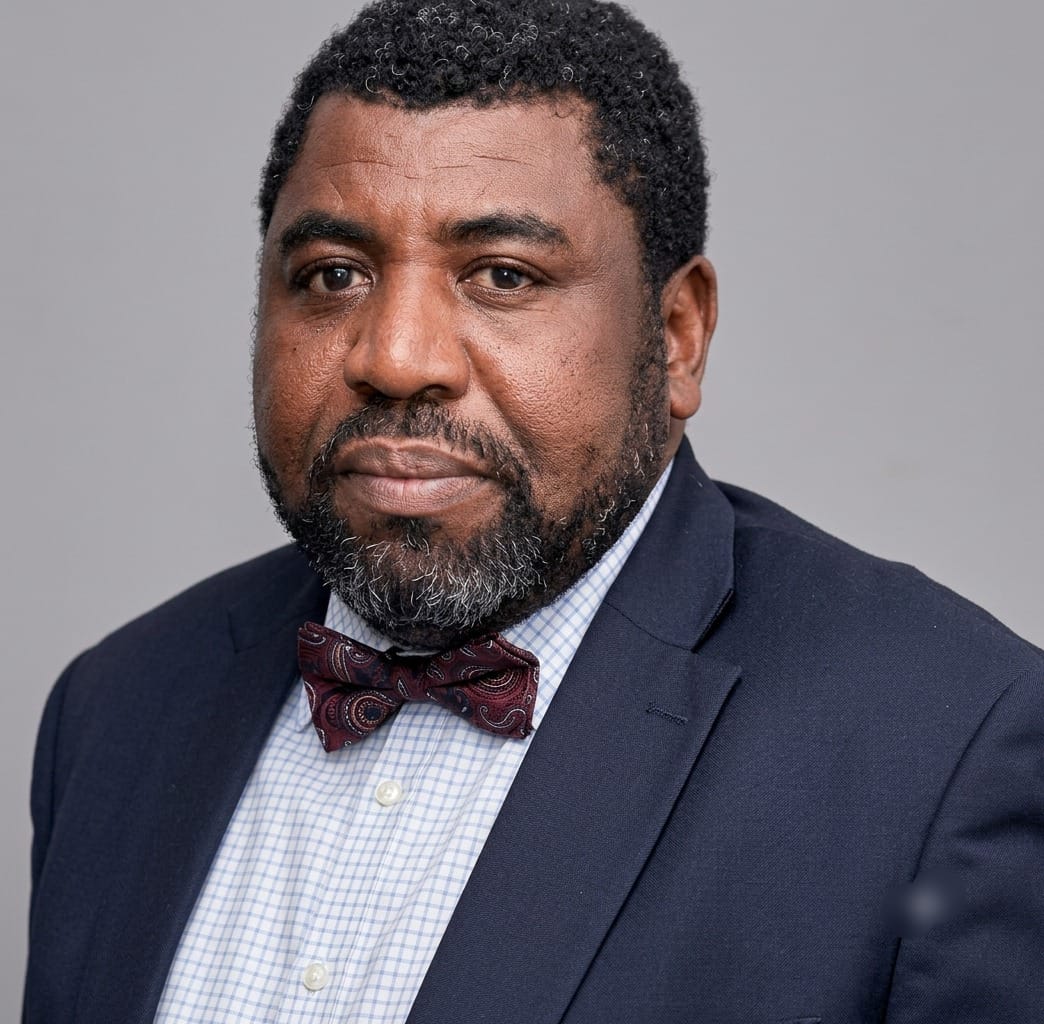
Anthony Kila is a Jean Monnet professor of Strategy and Development. He is currently Institute Director at the Commonwealth Institute of Advanced and Professional Studies, CIAPS, Lagos, Nigeria. He is a regular commentator on the BBC and he works with various organisations on International Development projects across Europe, Africa and the USA. He tweets @anthonykila, and can be reached at anthonykila@ciaps.org