AFRICAN UNION (AU) officially adopted Swahili as an official working language for the continent in February 2022, following the approval by the AU Heads of State, made up of 55 member states. The idea of Swahili as a pan-African language has been on the drawing board for well over half a century. It was pushed in the 1960s by Tanzania’s first President Julius Nyerere. Lately, a number of reasons are responsible for the choice of Swahili. Of note is the fact that Swahili is spoken by over 200 million people. It has come to be regarded as sub-Saharan Africa’s most widely used, capable of serving as a unifying language if the continent achieves greater unity. It has become a dominant language in East Africa, especially Tanzania, Uganda, and Kenya. The recognition for adoption followed a 2021 resolution by UNESCO, which designated July 7th of every year as World Kiswahili Language Day. Moreover, Swahili is among the first languages in Africa for which language technology applications have been developed. This is one of the known steps so far taken in giving a voice to Africa.
A year after the adoption of Swahili, Ethiopian Prime Minister Abiy Ahmed emphasised on the principle for African solution to African problems, calling on Member States to show solidarity with one another in times of crisis. He reiterated the need for the AU to have a continental media house as Africa needs to tell its own story rather than continuing to depend on external media to tell it. That year, 2023, still at the yearly Head of State meetings, Moussa Faki Mahamat, the then AU Commission Chairperson, noted broadly that “it is imperative that our Member States decide, with determination, in their economic and development choices. The activation of various mechanisms of internal resilience, intra-African solidarity, rapid implementation of African financial institutions, all supported by virtuous governance seems in my view to be the way to salvation.”
Hitherto, the African continent has been steadily consuming the outputs from major foreign outlets – news, studio interviews, documentaries, entertainment. MultiChoice is a South African company, owned by French media conglomerate CANAL+. It operates DStv, a major satellite television service in sub-Saharan Africa. MultiChoice reportedly has approximately 14.5 million total subscribers across its platforms like DStv and GOtv, with an estimated overall audience reach of about 93 million people, more than the combined population of Senegal, Gambia, Gabon, Equatorial Guinea, Eritrea and Togo put together. The subscriber base is spread across 50 sub-Saharan African markets.
This leading entertainment company is easily the biggest pay TV operator on the continent, which has affected millions of viewers in Africa by introducing television network channels mainly from US, Asia and Europe.
The words of Ethiopia’s Abiy Ahmed in the AU chambers still ring hollow as mere statements that are yet to lead to any real policy framework, funding, personnel hiring, programmes and events. For now, Africa is host to no fewer than 13 foreign media outlets, yet without one indigenous.
It is fair enough that these media houses exist in Africa to promote the interest of their countries or executives. Has BBC Africa been able to demonstrate Africa’s interest over and above the British? It is unlikely that Germany’s DW Africa will jettison its home country in favour of Africa. Nor will RFI Afrique abandon France while covering the 55 African countries. TRT Africa, as we know, provides worldwide news and current affairs focusing on Turkey, Europe, Africa, Western and Southern Asia. But the US does not only have CNBC Africa, it has VOA Africa and Business Insider Africa. Consider Russia’s Sputnik Africa, China’s CGTN Africa and Qatar’s Al-Jazeera Africa. All these show how strategic Africa is to these countries and could provide clues to their continued ubiquitous presence.
The presence of many French media is particularly noteworthy and evokes some curiosity as France, in addition to the RFI Afrique, still operates Jeune Africa, TV5 Monde Afrique and Africa Report (in English). Again, the question still is, why are all these foreign media outlets focusing on Africa? And, rather sadly, for Africa, these foreign media outlets have become the continent’s main sources of information about the various countries!
Based on history, African countries combined now have five official languages: Portuguese, French, English, Arabic and Swahili. In which of them is Africa ready to support a continental media? When will Africa set up such media and how will it be run? What will be the central messages? Who will be the drivers? What are the issues such media will be covering? We are aware that most, if not all, of those media highlighted have concentrated for the most part on underdevelopment, wars, famines, ethnic rivalry, religious crisis and economic doldrums when their emphasis is not on entertainment such as movies or sports.
Can Africa sustain homegrown continent-wide media, led by the technocrats, or by business entities? What will be their rallying points? How will they be different from those foreign outlets operating in Africa?
So much is at stake in Africa’s present and future from a media standpoint. The source or origin of such media therefore matters as well as the content that shapes narratives for good or for bad.
It is no longer a question of if but of when will Africa own its own media. A continent cannot afford to continue to be bombarded with a cacophony of foreign media reporting about events within its geopolitical boundaries without any counterbalancing reporting from a virile and influential local media. Nature abhors vacuum.
The existing vacuum created is what these foreign media have taken advantage of. Africa can tell its own story through its own media. It’s high time for one.

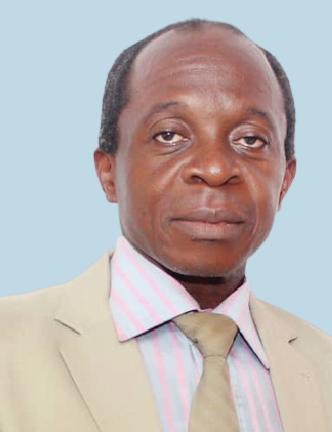
Dr. Olukayode Oyeleye, Business a.m.’s Editorial Advisor, who graduated in veterinary medicine from the University of Ibadan, Nigeria, before establishing himself in science and public policy journalism and communication, also has a postgraduate diploma in public administration, and is a former special adviser to two former Nigerian ministers of agriculture. He specialises in development and policy issues in the areas of food, trade and competition, security, governance, environment and innovation, politics and emerging economies.