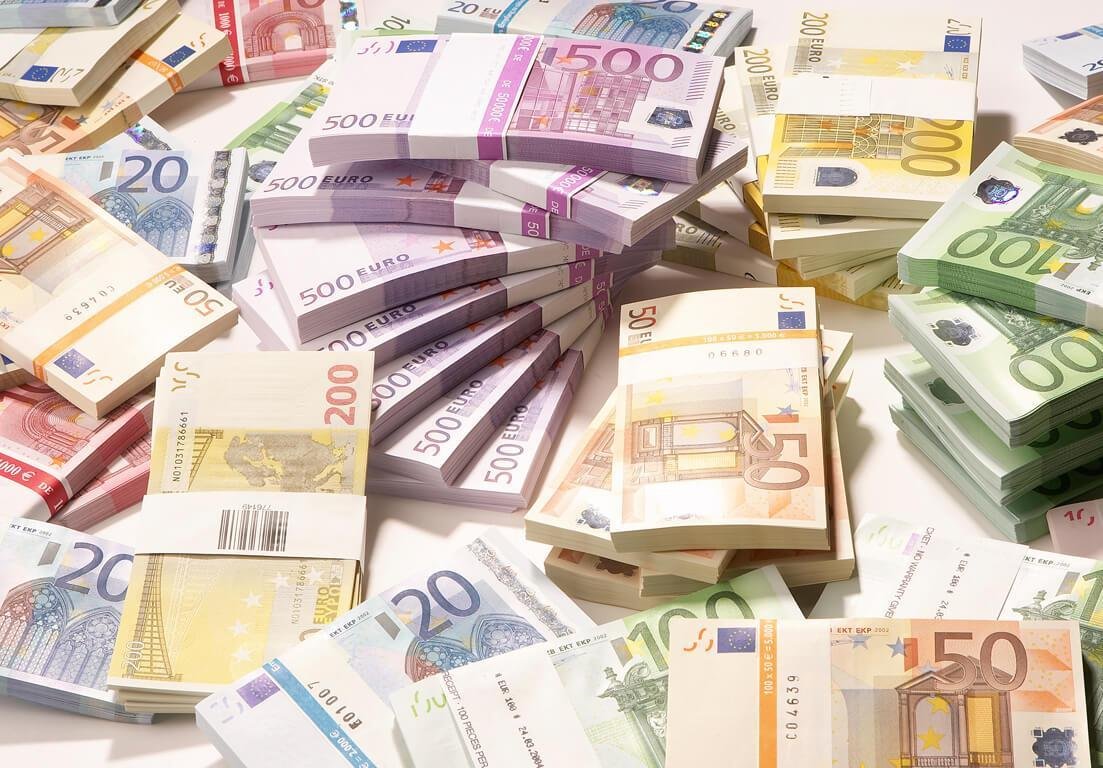
Rising French borrowing costs, Spain’s snap election and renewed eurozone inflation are putting investors on alert as the European Central Bank faces a difficult policy balancing act
PHILLIP ISAKPA
The euro has fallen to its weakest level against the US dollar in 17 months as mounting political uncertainty in France and Spain combines with rising government borrowing costs and renewed inflation pressure across the eurozone.
The single currency fell as low as $1.1161 on Monday, its weakest level since May 2025, before recovering slightly. It has now recorded four consecutive weeks of losses as investors reassess the outlook for Europe’s second-largest economy and the wider currency bloc.
The immediate pressure has been concentrated on French government bonds. The yield on France’s 10-year sovereign bond reached 4.917 percent, close to a 24-year high, while the premium investors demand to hold French debt over German Bunds has widened sharply.
The market reaction reflects more than a routine currency move.
France is attempting to reduce a large fiscal deficit while carrying a debt burden that the European Commission expects to reach about 118.1 percent of GDP in 2026 and 120.2 percent in 2027. The Commission has also warned that political uncertainty could complicate efforts to place French debt on a sustained downward path.
For investors, the concern is increasingly about whether France can deliver fiscal consolidation at a time when political pressures are intensifying ahead of the country’s 2027 presidential election.
The potential outcome from a stronger dollar position has made Uche Uwaleke, a Nigerian professor of capital market, and president, Capital Market Academics of Nigeria, to urge Nigeria to be cautious.
“Nigeria remains highly sensitive to the dollar because oil is priced in dollars and a significant portion of imports and external obligations are dollar-linked. If global investors become more defensive because of higher U.S yields and a stronger dollar, capital flows into emerging markets can weaken,” said Uwaleke in response to questions.
“My cautious note for Nigeria would be this: do not mistake current naira stability for immunity from a stronger-dollar environment. The improvement in reserves and foreign-exchange-market functioning gives Nigeria more room than it had during periods of acute FX stress,” he advised.
France becomes the euro’s biggest vulnerability
France has carried high debt levels for years without triggering sustained market alarm. What has changed is the combination of fiscal pressure, rising borrowing costs and political uncertainty.
The yield on a government bond is effectively the return investors demand to lend to the state. When that yield rises, the cost of refinancing existing debt and raising new funds also increases.
That creates a potentially difficult feedback loop.
Higher yields increase interest costs. And higher interest costs put additional pressure on the budget.
A weaker fiscal outlook can make investors demand still higher yields.
And growing concern about France can spill into the euro if investors begin to reassess the risk attached to European assets more broadly.
The European Commission’s latest forecast already points to rising French interest costs, with government interest payments projected to increase from 2.2 percent of GDP in 2025 to 2.6 percent in 2026 and 2.8 percent in 2027.
That is why developments in the French bond market have become increasingly important for currency investors.
Nigel Green, chief executive of financial advisory group deVere, said the market was treating France as the eurozone’s weak link and warned that pressure on the single currency could persist for months.
“Markets have decided France is the eurozone’s weak link and they’re making the euro pay for it,” Green said.
His view is that investors are increasingly reluctant to assume that current French fiscal plans will survive the political cycle.
That is a market interpretation rather than a certainty, but it captures the central concern now being reflected in French bond prices.
Spain adds a second political risk
France is not the only major eurozone economy creating uncertainty for investors.
Spain has also moved into the market’s focus after Prime Minister Pedro Sánchez called a snap general election for November 29, following the rejection of government housing measures in parliament.
The Spanish development is significant because it adds political uncertainty to a bloc already dealing with questions over fiscal credibility in France.
Spain’s bond market has not experienced the same degree of stress as France’s. Its 10-year government bond yield was around 4.08 percent on Monday, while its premium over German debt remained considerably narrower than France’s.
That distinction matters.
The issue is not that Spain and France face identical fiscal problems. They do not.
Rather, investors are having to assess political uncertainty in two of the eurozone’s largest economies at the same time.
That can affect the way global investors allocate capital across European markets.
ECB caught between inflation and debt
The European Central Bank faces a particularly difficult balancing act.
Euro-area annual inflation accelerated to 3.8 percent in September, up from 3.2 percent in August, according to Eurostat’s flash estimate. Energy was the biggest contributor, with prices rising 18.8 percent year-on-year.
The ECB responded to renewed inflation pressure by raising its three key interest rates by 25 basis points at its September meeting. The deposit facility rate was increased to 2.50 percent, while the main refinancing rate rose to 2.65 percent.
The central bank’s projections put average euro-area inflation at 3 percent for 2026, 2.5 percent in 2027 and 2.1 percent in 2028, while economic growth is projected at 0.9 percent this year and 1.4 percent next year.
The difficulty is that higher rates, while useful for fighting inflation, also raise borrowing costs.
For heavily indebted governments such as France, that increases the cost of servicing newly issued debt.
The ECB therefore has to deal with an unusual combination of risks: inflation is still too high, growth remains relatively weak, and financial markets are becoming increasingly sensitive to sovereign debt sustainability.
The central bank has a Transmission Protection Instrument available to address disorderly market dynamics that threaten monetary-policy transmission, although it has not been used.
That distinction is important because market pressure on an individual country’s bonds does not automatically mean the ECB will intervene.
Uche Uwaleke, a professor of capital markets and president of Capital Markets Academics of Nigeria told Business a.m. in response to questions that Europe is facing higher energy costs and elevated inflation at the same time that growth is relatively fragile, adding that the ECB faces an uncomfortable trade-off.
“Raising rates can support the euro and contain inflation, but doing so can further constrain economic activity; while holding back can support growth but potentially leave the currency vulnerable,” Uwaleke said.
A weaker euro can make Europe’s inflation problem worse
The euro’s decline also has consequences beyond foreign-exchange traders.
Europe is a major importer of energy, while crude oil is largely priced in US dollars. When the euro weakens against the dollar, European buyers need more euros to purchase the same amount of dollar-priced oil.
That can amplify imported inflation.
The effect becomes more significant when energy prices are already rising.
This creates a difficult policy combination for the ECB: higher energy prices push inflation upwards, while a weaker euro can increase the domestic-currency cost of those imports.
If inflation remains elevated, the ECB has less room to ease monetary policy even if economic growth is weak.
Dollar benefits from Europe’s uncertainty
The dollar’s relative strength is another part of the story.
The euro’s decline has occurred even as US economic data have shown signs of cooling. The US economy added only 29,000 jobs in September, according to the latest employment figures, reducing expectations of an imminent Federal Reserve rate increase.
Yet the dollar remained relatively firm.
That suggests the euro’s weakness is not simply a reflection of stronger US economic data. Relative confidence matters.
When investors become more concerned about European fiscal or political risks, the dollar can benefit from its role as a major reserve currency and liquid global safe-haven asset.
In other words, the dollar does not necessarily have to become dramatically stronger for the euro to fall.
The euro can weaken simply because investors become less willing to hold European assets.
Uwaleke explained that for the wider global economy, a prolonged dollar rally matters more than the euro’s decline in isolation. “A stronger dollar generally tightens global financial conditions because so much international trade, commodity pricing and external borrowing is conducted in dollars,” he said.
Why this matters beyond Europe
For Africa, the euro’s weakness has implications through trade, currencies and the cost of imported goods.
Europe remains an important trading and investment partner for African economies. A sustained depreciation of the euro against the dollar can therefore change the relative price of African exports to Europe and the cost of European goods and services purchased by African importers.
There is also a currency dimension.
Many African economies already manage significant exposure to the US dollar. If the euro weakens while the dollar remains strong, currencies that trade heavily against the dollar can face different competitive and import-cost dynamics in their relationships with European markets.
For Nigeria, the more immediate transmission is through the dollar.
A stronger dollar relative to the euro does not automatically translate into a weaker naira, but it reinforces the importance of dollar liquidity for a country whose external trade, oil revenues and substantial international financial obligations are heavily dollar-linked.
According to Uwaleke, emerging and frontier-market economies, including Nigeria, can face higher debt-servicing costs, pressure on their currencies and potentially greater incentives for investors to move money into dollar assets. “This is particularly relevant when U.S. Treasury yields are also rising,” he added.
For Nigerian businesses importing European machinery, industrial equipment or other euro-priced goods, however, a weaker euro could reduce the naira cost of those purchases relative to a scenario in which the euro were strengthening against the dollar.
The impact is therefore mixed rather than uniformly negative.
Not another 2012 — yet
The latest market turbulence has revived memories of the eurozone sovereign-debt crisis of 2010-12, when concerns over government finances threatened the integrity of the monetary union.
But the institutional environment is different today.
The eurozone has stronger financial safeguards, while the ECB has additional tools for addressing disorderly market fragmentation.
ECB President Christine Lagarde has also stressed that the current situation should not simply be equated with the earlier sovereign-debt crisis.
Green similarly argues that the more plausible risk is not an immediate repeat of 2012 but a prolonged period of weakness in the euro.
That distinction matters.
A currency does not need to collapse for its weakness to become economically significant. A prolonged depreciation can gradually affect import costs, investment returns, inflation expectations and capital allocation.
For European governments, meanwhile, persistently higher bond yields can progressively narrow fiscal room for manoeuvre.
What investors will watch next
The euro’s near-term direction is likely to depend on several developments.
First, whether France can convince investors that its fiscal consolidation plans are credible.
Second, whether political uncertainty ahead of the French presidential election intensifies.
Third, whether Spain’s November election produces greater political stability or adds another layer of uncertainty.
Fourth, whether energy prices and euro-area inflation begin to moderate.
And fifth, how the ECB responds if inflation remains elevated while sovereign borrowing costs continue to rise.
For now, the euro’s fall to a 17-month low is less a story about a single market event than a reflection of several pressures converging at once.
France’s fiscal challenge, Spain’s political uncertainty, renewed energy inflation and the relative strength of the dollar are reinforcing one another.
The immediate question for investors is therefore not simply whether the euro can recover from $1.1161.
It is whether Europe can restore confidence in its fiscal and political outlook before a prolonged period of currency weakness becomes a broader drag on the region’s economy.
For the euro, the market is watching Paris, Madrid and Frankfurt — and increasingly pricing the risks between them.