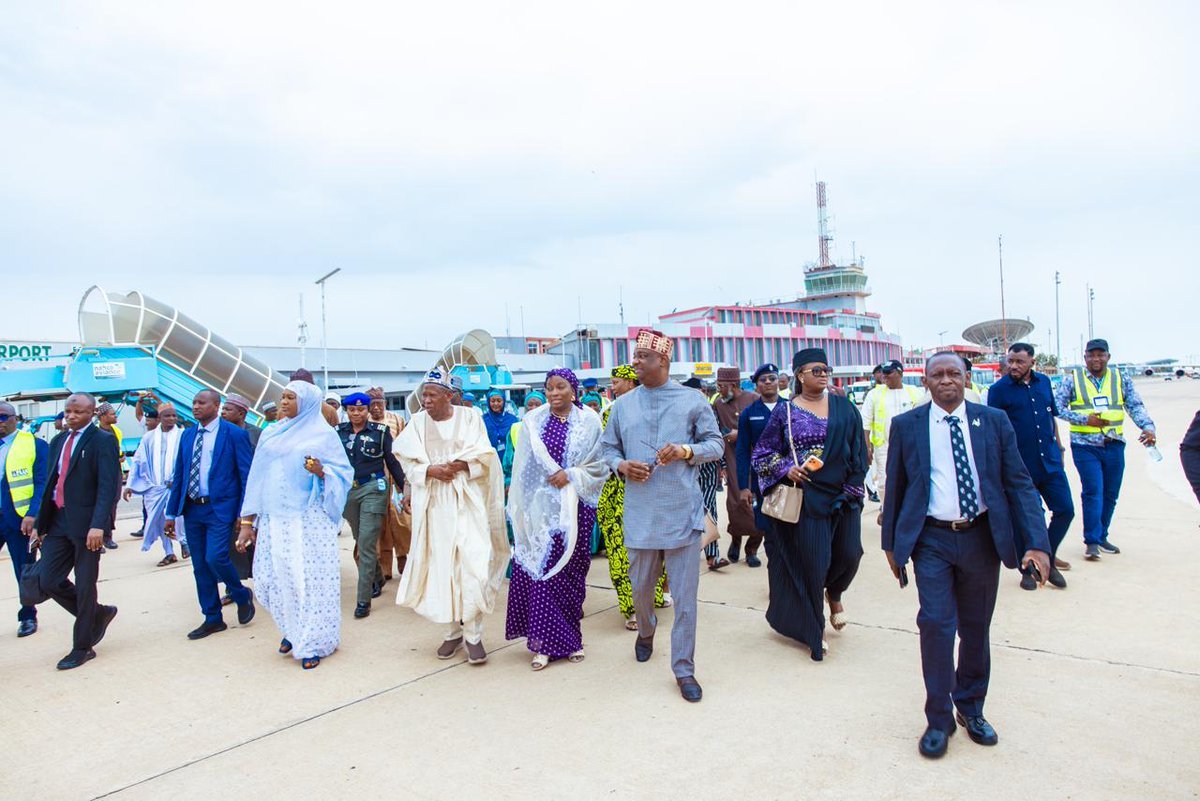
The federal government has approved N46 billion for the rehabilitation of the primary and secondary runways at Mallam Aminu Kano International Airport (MAKIA), reinforcing ongoing efforts to modernise Nigeria’s aviation infrastructure and improve operational efficiency across the country’s airport network.
The approval coincided with the commissioning of the newly upgraded Dankabo Domestic Terminal by the Federal Airports Authority of Nigeria (FAAN), a project aimed at enhancing passenger experience and supporting growing air travel demand in Northern Nigeria.
The terminal features modern baggage handling systems, upgraded check-in facilities, improved passenger lounges, enhanced air-conditioning and other operational improvements designed to streamline passenger processing and strengthen airport services.
Festus Keyamo, minister of Aviation and Aerospace Development, announced the runway rehabilitation project during the commissioning ceremony, describing it as part of the Federal Government’s broader strategy to renew critical aviation infrastructure nationwide.
According to the minister, the rehabilitation will cover both the airport’s primary and secondary runways, addressing ageing infrastructure while improving operational reliability and aviation safety.
Speaking at the event, Olubunmi Kuku, managing director and chief executive of FAAN, said the authority remains committed to upgrading airport infrastructure to improve passenger experience, operational efficiency and service delivery across Nigeria’s airports.
She noted that modernising airport facilities remains central to FAAN’s strategy of positioning Nigeria’s aviation sector to accommodate increasing passenger traffic and future industry growth.
Mallam Aminu Kano International Airport serves as one of Nigeria’s busiest commercial gateways and plays a strategic role in connecting Northern Nigeria with domestic and regional destinations across West Africa.
The airport supports passenger travel, cargo movement and cross-border trade, making continued investment in its infrastructure important for improving business connectivity and regional commerce.
Industry stakeholders say runway rehabilitation is expected to enhance aircraft safety, reduce operational disruptions associated with ageing pavements and improve the airport’s capacity to accommodate rising passenger and aircraft movements.
The investment also aligns with government efforts to strengthen aviation infrastructure as part of Nigeria’s economic diversification agenda, recognising the sector’s contribution to trade, tourism, logistics and investment.
Modern airports are increasingly viewed as critical economic assets that facilitate business travel, attract investment and improve supply chain efficiency by connecting commercial centres with regional and international markets.
Abdullahi Umar Ganduje, chairman of the FAAN Board, described both projects as part of the government’s sustained commitment to renewing strategic public infrastructure.
He commended the Ministry of Aviation and Aerospace Development and FAAN management for implementing projects that strengthen aviation operations while supporting wider economic development objectives.