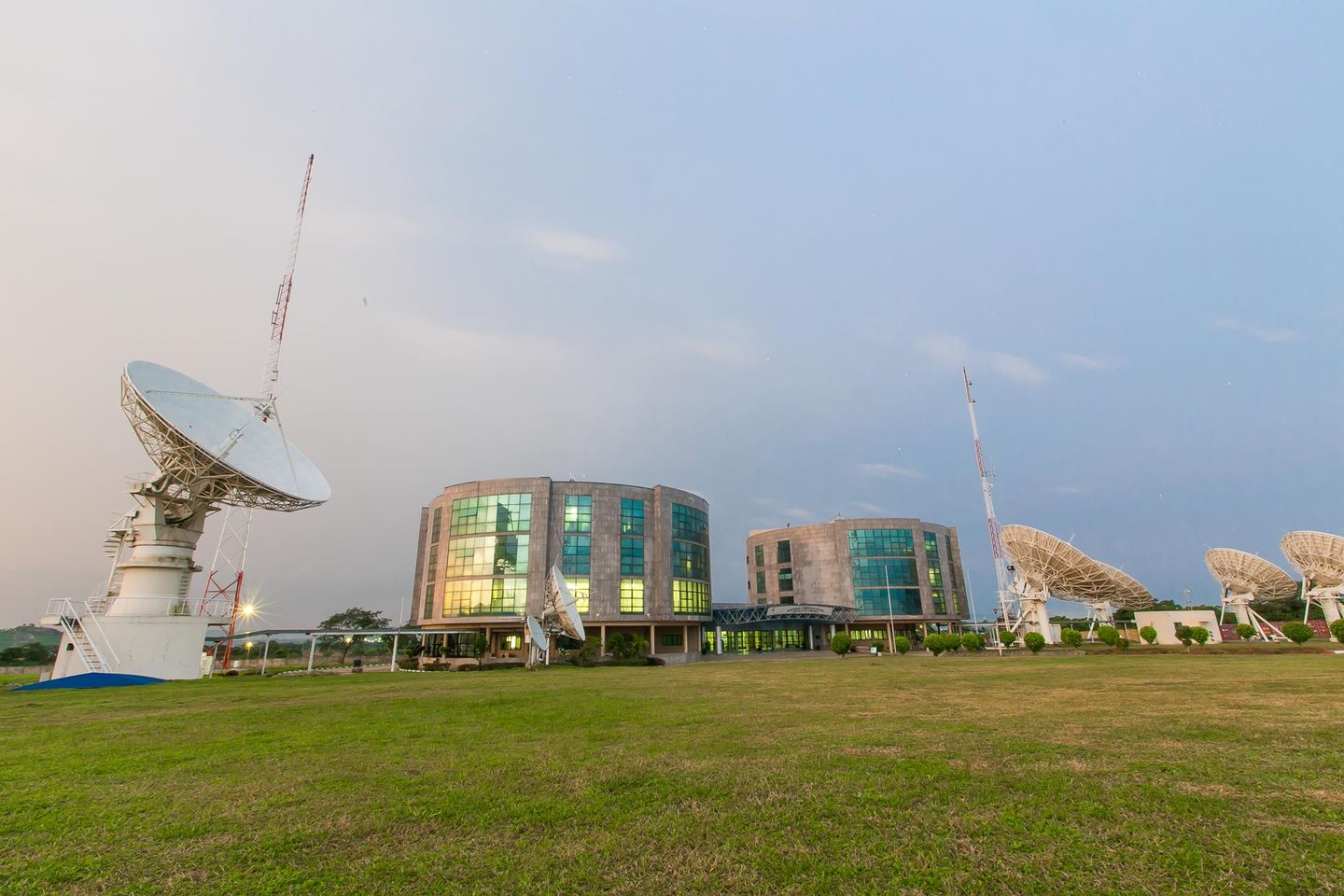
The Federal Executive Council (FEC), has approved the acquisition and deployment of two new high-throughput communication satellites, NIGCOMSAT-2A and NIGCOMSAT-2B, as part of efforts to expand broadband coverage and strengthen Nigeria’s communications infrastructure.
The satellites, which will be deployed by Nigeria Communications Satellite Limited, NIGCOMSAT, are expected to extend connectivity to underserved, unserved and hard-to-reach communities, particularly areas where terrestrial broadband infrastructure is difficult or expensive to deploy.
The approval moves the satellite acquisition programme into its next phase, with NIGCOMSAT set to lead implementation under the supervision of the Federal Ministry of Communications, Innovation and Digital Economy.
According to NIGCOMSAT, the additional satellite capacity will complement existing terrestrial broadband networks while expanding the country’s ability to provide satellite-enabled services across sectors including education, healthcare, agriculture, financial services, broadcasting, enterprise and government.
The agency said the deployment would also improve the resilience of Nigeria’s communications infrastructure by providing alternative connectivity options in areas where terrestrial networks face geographical, infrastructure or reliability constraints.
“The deployment is expected to extend connectivity to underserved, unserved and hard-to-reach communities, strengthen national communications resilience and increase Nigeria’s capacity to deliver satellite e-enabled services,” NIGCOMSAT said.
Speaking on the development, Jane Nkechi Egerton-Idehen, managing director and chief executive officer,NIGCOMSAT, described the approval as a significant milestone for the agency and the country’s digital development ambitions.
“This is a significant milestone for NIGCOMSAT and for Nigeria, and we commend President Bola Ahmed Tinubu for the leadership and support that have enabled us to reach this stage,” she said.
According to Egerton-Idehen, NIGCOMSAT-2A and NIGCOMSAT-2B would strengthen Nigeria’s national satellite capacity while expanding connectivity and supporting critical communications services.
“Our priority is to translate this investment into measurable value for Nigerians and position NIGCOMSAT for stronger impact within the global satellite and digital economy,” she added.
Beyond expanding broadband access, the satellites are expected to support secure and resilient communications for critical national requirements, including national security and defence.
The additional capacity could also help reduce Nigeria’s reliance on external satellite infrastructure while strengthening domestic capabilities in satellite communications and related digital technologies.
NIGCOMSAT said the project is expected to generate opportunities across the broader satellite and digital technology value chain, including telecommunications, broadcasting, ground infrastructure, systems integration, technical support and satellite terminal deployment.
The satellites are expected to be delivered by Thales Alenia Space of France and Israel Aerospace Industries (IAI).
With FEC approval now secured, the next phase will involve engagements with technology partners, contract finalisation, technical planning and other preparations required for the manufacture, launch and eventual deployment of the satellites.
The development comes as Nigeria continues to pursue digital infrastructure expansion aimed at improving broadband availability and narrowing the connectivity gap, particularly in communities where conventional terrestrial networks remain limited.