The economic cost of distrust in Nigeria’s democracy
One of the most telling remarks you hear on the streets today is: “We did not elect this government.” Whether accurate or not, it reflects a profound crisis of trust in Nigeria’s electoral system. The 2023 elections, though validated by the courts, left lingering doubts in the minds of many Nigerians. That gap between legality and legitimacy is costly, not only politically, but economically.
The courts may settle disputes, but they cannot manufacture trust. Democracy cannot thrive on legality alone; it requires legitimacy that flows from the people’s confidence in the ballot. Unless this confidence is rebuilt before 2027, Nigeria risks repeating the same cycle of cynicism, apathy, and contested governance.
At its heart, an election is more than a logistical exercise of registering voters, printing ballots, and declaring winners. It is a covenant between citizens and the state. Voters participate in the belief that their voices will count, that their mandate will be faithfully recorded and reflected. When promised technologies fail, when results are not transparently relayed, when institutions are perceived as hesitant or compromised, that covenant frays. Citizens begin to disengage.
Philosophy offers a useful reminder. John Rawls argued that justice must not only be done but must be seen to be done. The same applies to democracy: it must be seen to work. In 2023, too many Nigerians saw promises unfulfilled, technology that faltered, collation processes that confused, institutions that appeared unprepared or vulnerable to manipulation. The result was alienation, not affirmation.
Politics and economics are inseparable. Investors look first to the credibility of institutions before betting on an economy. When citizens mistrust elections, governments emerge under the shadow of legitimacy battles. Every policy decision is then viewed through a lens of suspicion rather than acceptance. This undermines reforms, delays execution, and creates uncertainty in the market.
For a country battling inflation, currency volatility, and weak investor sentiment, electoral credibility is not a luxury, it is an economic asset. A credible electoral system signals stability, predictability, and institutional maturity. It reassures both citizens and investors that the social contract is intact.
This is why Nigeria must pay urgent attention to a factor that is quietly being ignored: the looming transition at the Independent National Electoral Commission (INEC). Professor Mahmoud Yakubu’s tenure as chairman ends in November 2025, and a wave of appointments of national commissioners and resident electoral commissioners (RECs) will follow.
This is not a routine bureaucratic exercise. It is the foundation of the 2027 elections. If these appointments are handled through political patronage and quiet deal-making, public mistrust will deepen. If they are done transparently, with the highest standards of impartiality, they could help repair the trust deficit.
As I argued in The Calm Before the Crisis (of April 24, 2025), this silence around INEC appointments is dangerous. INEC is the institutional backbone of Nigeria’s democracy. The perception, rightly or wrongly, that its leadership owes their positions to political patronage risks eroding trust before a single ballot is cast.
The Council of State must not rubber-stamp names. The Senate must hold rigorous, participatory confirmation hearings. The Department of State Services must vet candidates diligently and independently. Civil society, the media, and citizens must demand openness now, not after names are submitted. A delayed or reactive response will be too little, too late.
Electoral distrust also carries a domestic economic cost. When people believe their votes do not matter, they withdraw, not just from elections, but from civic and economic responsibility. Turnout declines, tax morale weakens, and reforms requiring broad citizen buy-in become harder to sustain. Governance becomes the project of the few, funded by the many, but owned by none. That is a recipe for inefficiency and stagnation.
The link between civic trust and economic performance is clear. Countries with credible electoral systems enjoy stronger investor confidence, more stable currencies, and a healthier tax-to-GDP ratio. In Nigeria’s case, every disputed election and every perception of manipulation undermines the fiscal base and prolongs economic fragility.
Nigeria cannot afford another cycle of electoral disillusionment. The trust deficit from 2023 must not be carried forward unchecked. Ahead of 2027, three steps are essential, each reinforcing the other to create a credible, sustainable democratic culture.
Philosophically, elections must be reframed as a moral covenant. That requires public accountability, transparency, and open acknowledgement when systems fail. Citizens must feel their votes are sacred, not expendable. Civic education and continuous public engagement are crucial here, so that elections are seen as shared ownership rather than an elite-controlled exercise.
Politically, INEC’s leadership appointments must be transparent and credible. Its operations must demonstrate competence through early technology testing, credible logistics, and clean communication. Political parties must reform their primaries; flawed pipelines cannot produce credible candidates. The judiciary must also remain above suspicion, because electoral disputes resolved in mistrust only deepen alienation. In addition, security agencies must act with neutrality, ensuring that elections are free from intimidation, coercion, or manipulation. Equally important, key political contestants must look beyond the usual conversations about who will run, from where, and on what platform or coalition. These debates dominate headlines but miss the deeper truth: without credible electoral structures, even the strongest candidate or coalition risks futility. A flawed system will not deliver legitimacy, no matter the popularity of the contestants. Serious contenders for 2027 should therefore become champions of reform, pressing for transparent INEC appointments, supporting internal party democracy, and demanding accountability in electoral processes. In doing so, they not only protect their own chances but also strengthen the very system on which their legitimacy depends.
Economically, electoral integrity must be treated as an investment in stability. Adequate funding for INEC should be tied to performance metrics. Reforms should be benchmarked against the high price of disputes, litigations, and legitimacy crises, which cost more than credible elections ever would. Transparent budgeting and accountability for electoral expenditure would reassure both citizens and international partners that Nigeria is serious about building an efficient, modern electoral system.
Elections are the foundation of political legitimacy, but they are also the bedrock of economic confidence. Democracy does not endure because courts uphold results. It endures because citizens believe in them. If trust is not rebuilt before 2027, Nigeria risks deepening cynicism and further weakening its economic recovery. But if we succeed, credible elections could become our greatest competitive advantage, a signal to the world that Nigeria is not only open for business, but governed by the will of its people.
The road to credible elections in 2027 does not begin at the polling unit. It begins now, in the structures we build, the appointments we demand, and the accountability we enforce. A trusted ballot is not just a political good; it is an economic asset Nigeria cannot afford to squander.
- business a.m. commits to publishing a diversity of views, opinions and comments. It, therefore, welcomes your reaction to this and any of our articles via email: comment@businessamlive.com

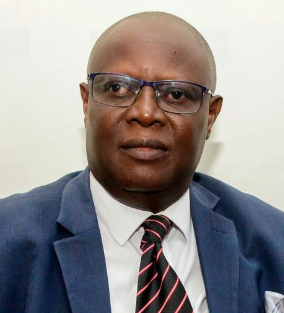
John Onyeukwu, is a lawyer and public policy analyst with interdisciplinary expertise in law, governance, and institutional reform. He holds an LL.B (Hons) from Obafemi Awolowo University, an LL.M from the University of Lagos, and dual master’s degrees in Public Policy from the University of York and Central European University. He also earned a Mini-MBA. John has managed development projects on governance, public finance, civic engagement, and service delivery. He can be reached on john@apexlegal.com.ng