
A laptop can be a classroom, a coding lab and a gateway to the digital economy. But for many Nigerian students, that gateway remains closed by limited access to technology. Joshua Peters, 17, is working to change that reality, using his not-for-profit, GiveBack Backpacks, to bring digital learning tools closer to young people whose potential often exceeds the resources available to them.
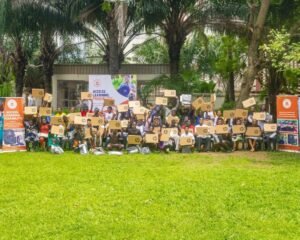
The teenage founder of GiveBack Backpacks, a not-for-profit organisation he established at 14, has presented 200 HP laptops worth about $50,000 to young Nigerians, including girls displaced from Chibok, in an initiative aimed at expanding access to technology-led learning and equipping students with the tools to develop digital skills.
The donation was unveiled at a Youth Empowerment Summit organised by the Society for Performing Arts in Nigeria (SPAN) in Ikoyi, Lagos. Each laptop came with a backpack, water bottle, educational materials and technology aids, reflecting the organisation’s approach to combining digital devices with practical learning resources.
As digital skills become increasingly important to learning and participation in the modern economy, access to the tools needed to acquire those skills remains a challenge for many Nigerian students.
GiveBack Backpacks is seeking to address part of that challenge by placing technology and learning resources in the hands of young people.
“Talent is everywhere, but access is not. A young person’s ability should never be measured by the opportunities they happened to be born into,” Peters told students, teachers and partners at the summit.
The organisation considers computers not merely as donated equipment, but as practical tools through which students can experiment, build digital capabilities and explore new opportunities.
Closing the gap in digital learning
Peters’ initiative is rooted in the recognition that two equally talented students can face sharply different educational prospects because one has access to a computer and the other does not.
That disparity matters as coding, data, digital design, online research and digital media become increasingly important to how young people learn and prepare for employment. Students without access to devices may struggle to translate classroom instruction into practical experience, limiting their ability to test ideas and demonstrate their capabilities.
GiveBack Backpacks seeks to address that constraint by placing computers and supporting educational resources directly in students’ hands.
The organisation’s model treats each laptop as a platform for continued learning rather than a one-off charitable gift. With access to a device, students can explore lessons, practise skills, conduct research and develop ideas that may eventually translate into productive work.
“A laptop can open a lesson you could not attend, help you learn a skill, test an idea or tell a story that needs to be heard. With practice and persistence, a tool received today can become an opportunity created tomorrow,” Peters told the students.
A central focus of the programme is supporting young women whose education has been disrupted, particularly girls displaced from Chibok.
Through its partnership with SPAN, GiveBack Backpacks is helping extend access to digital learning for these young women while also providing resources to other students with limited access to technology and school supplies.
“Their education and opportunities have been disrupted through no fault of their own. We cannot give back the time they have lost. But we can stand with them, invest in what comes next, and extend that same commitment to other young people whose ambitions deserve a fair chance,” Peters emphasised.
The collaboration with SPAN provides an institutional partnership for the initiative, bringing together the society’s work in developing young Nigerian talent through the arts and GiveBack Backpacks’ focus on digital access.
Peters thanked SPAN Nigeria for helping the organisation turn a shared belief into action. He also expressed gratitude to teachers and supporters who continue to work with young people.
A young founder’s technology drive
According to Peters, he started GiveBack Backpacks at 14, building an organisation around the belief that access to learning resources can influence a young person’s future.
Now 17, he is using the initiative to reach students who may have the talent and ambition to benefit from technology but lack the equipment to explore their potential.
He urged students to use the resources to study and create, and to help others when they are able to do so.
“Use these resources to study, to create and, when you can, to help someone else find their way forward,” he said.
The initiative’s ambition extends beyond distributing equipment to encouraging beneficiaries to use their new access to technology to contribute to their communities and expand opportunities for others.
Against the backdrop of unequal access to digital resources in Nigeria, the intervention offers a practical example of how targeted support can bring technology-enabled learning tools within students’ reach.
However, the immediate delivery of 200 laptops and learning packages is only the first stage. The longer-term impact will need to be assessed by whether beneficiaries develop digital skills, gain access to further opportunities and use those capabilities to produce benefits beyond the initial intervention.








Turning energy investment into lasting economic value in Africa