At the 4th Conference on Public Health in Africa #CPHIA2025, the atmosphere was charged with intellect, collaboration, and the shared pursuit of a healthier, more self-reliant Africa. Ministers, scientists, policymakers, and innovators converged to advance the theme: “Moving towards self-reliance to achieve universal health coverage and health security in Africa.”
But amid the plenary brilliance, speeches, and sessions — from Dr Jean Kasea, DG AfricaCDC, to Dr. Joe Phaahla’s rousing keynote, to Prof. Blade Nzimande’s vision for Africa’s health sovereignty — one personal moment reminded me that systems are only as healthy as the humans within them.
It began with something seemingly simple: a mistaken entry into a dining room reserved for the Minister of Health. Having been directed there by another attendee, I walked in with good intention but was swiftly met with hostility. The individual who confronted me — a fellow professional from the National Department of Health — chose reprimand over respect.
“Why are you disrespecting me?” he said.
“Sir, respectfully, we are adults and shouldn’t speak to each other as if we are children,” I replied.
His retort: “Whoever doesn’t want to be addressed like a child shouldn’t behave like one.”
My closing words: “This is where this should stop.”
His final line before I walked out: “Then you must leave.”
I left, not in shame, but in reflection. Moments later, I found the room I was originally meant to enter — ironically, one labeled “Collective Dialogue.”
The psychology beneath the moment
From a behavioural science perspective, that interaction was not merely about etiquette — it was about power, perception, and psychological safety. In public institutions, particularly in hierarchical settings like government or health sectors, authority often disguises insecurity. When individuals feel unseen, undervalued, or threatened in their professional identity, they sometimes assert dominance to regain psychological equilibrium.
This is what trauma-informed practice helps us understand: hurt people often hurt others through institutional behaviour patterns. The goal of trauma-informed leadership is not to personalise such encounters, but to pause, reflect, and ask — What pain, fear, or conditioning might be driving this reaction?
The emotional cost of disrespect
Disrespect is not benign — it is psychological violence. Neuroscientific studies show that social exclusion, humiliation, and public shaming activate the same brain regions as physical pain. The adult brain perceives disrespect as a threat to belonging and safety.
When one professional disrespects another in a public health space, it ripples beyond ego — it erodes trust, belonging, and the collaborative culture needed for systemic progress. In a context like CPHIA, where Africa’s brightest minds are meant to build unity for health sovereignty, emotional maturity must be part of our professional literacy.
Trauma-informed leadership in public health
A trauma-informed lens invites leaders and practitioners to operate from awareness, accountability, and empathy. It asks us to consider:
What emotions are we bringing into our professional interactions?
How might unprocessed personal or institutional trauma influence our tone and actions?
How can we model compassion in moments of misunderstanding or conflict?
The answer lies in self-regulation, a skill central to emotional intelligence. It is the ability to pause before reacting — to choose curiosity over control, dialogue over dominance. This pause is not weakness; it is psychological strength.
From self-reliance to collective reliance
The conference theme — “Moving towards self-reliance to achieve universal health coverage and health security in Africa” — takes on deeper meaning when viewed through this lens. True self-reliance is not isolation; it is interdependence. It is the understanding that no health system, institution, or nation can flourish if its people are emotionally unwell or relationally fractured.
Africa’s health transformation will not only be powered by science, policy, and infrastructure — but by psychological safety, respect, and compassion within our professional ecosystems.
We must reframe leadership not as dominance, but as relational stewardship. To lead is to hold space for humanity, even when hierarchy tempts us to diminish it.
Four reflections for flourishing professionals
Pause before power
Every interaction is a choice between control and connection. Ask: Am I responding to the person or reacting to my perception of threat?
Respect is healing
In cultures with colonial wounds and generational trauma, respect restores dignity. Treating others with humanity is not optional — it’s reparative.
Cultivate emotional agility
Practice pausing, breathing, and reframing. The mind that can self-regulate under stress is the mind that can lead under pressure.
Transform spaces into sanctuaries
Whether it’s a boardroom, hospital, or conference, create spaces where people feel seen, safe, and significant. That is how flourishing begins.
Call to action
A culture of flourishing in Africa’s health systems
Let every conference, policy table, and health department meeting become a laboratory for flourishing. Integrate behavioural science and trauma-informed principles into leadership development, medical education, and health diplomacy.
Because before we can achieve Universal Health Coverage, we must first achieve Universal Human Regard.
“Flourishing begins the moment we realize that how we treat one another is public health.”
— Dr Joshua Awesome

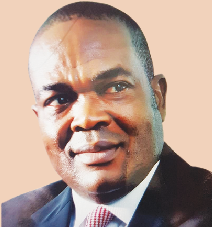
Dr. Joshua Awesome is a Coaching Psychologist/Executive and Business Performance Coach who has supported over 100,000 professionals across Africa and the globe. He can be reached via: joshua@africainmind.org