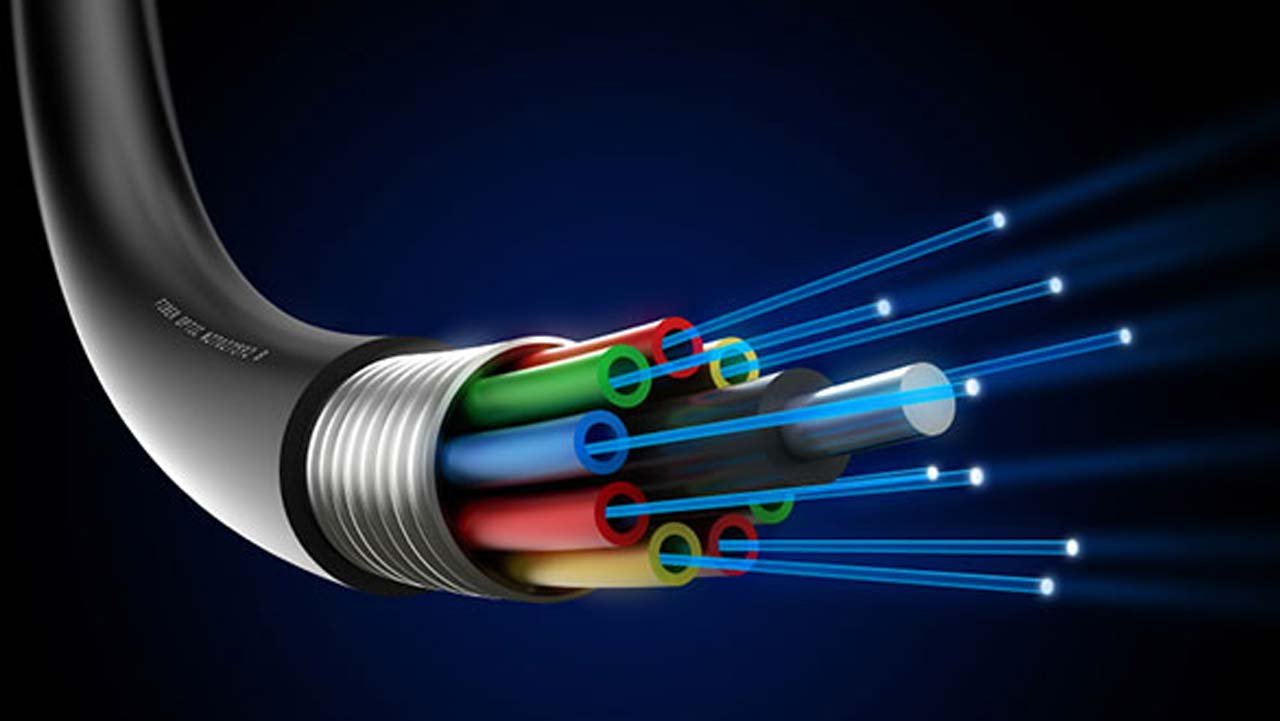
For a country pursuing an ambitious digital economy agenda, the physical infrastructure needed to power that vision remains unevenly distributed across Nigeria, with new data from the Nigerian Communications Commission (NCC) exposing significant gaps in fibre optic deployment and telecommunications infrastructure from one state to another.
The commission’s latest State-Wise Digital Infrastructure Deployment data shows that Nigeria has deployed 101,148.36 kilometres of fibre optic infrastructure and 57,756 Base Transceiver Station (BTS) sites across the 36 states and the Federal Capital Territory. However, beneath the national totals lies a widening infrastructure gap that reflects years of uneven investment, regulatory hurdles and varying state policies.
The figures reveal that Lagos, the country’s commercial hub, remains far ahead of every other state with 11,586.70 kilometres of fibre and 7,996 BTS sites, accounting for more than one in every nine kilometres of fibre deployed nationwide.
The Federal Capital Territory follows with 6,973.13 kilometres of fibre and 2,884 BTS sites, while Edo, Kano, Rivers, Kaduna, Ogun and Delta each have more than 4,000 kilometres of fibre infrastructure.
At the other end of the spectrum are states where digital infrastructure remains comparatively limited. Ebonyi has only 586.92 kilometres of fibre, Bayelsa 656.87 kilometres, Jigawa 970.10 kilometres, Borno 1,012.52 kilometres and Zamfara 1,100.98 kilometres.
The disparity is equally evident in the distribution of BTS sites, the network facilities that enable mobile communication. While Lagos alone hosts nearly 8,000 BTS sites, Zamfara has just 362, Ebonyi 422, Yobe 433, Bayelsa 436 and Gombe 491.
The uneven spread of infrastructure highlights a long-standing challenge facing Nigeria’s telecommunications industry. Operators have consistently argued that investment decisions are influenced not only by commercial demand but also by the regulatory environment in each state, particularly the cost and complexity of obtaining Right of Way (RoW) approvals for laying fibre optic cables.
RoW refers to the permission granted by state governments for telecommunications companies to install fibre infrastructure along public roads and other government corridors. Because fibre networks form the backbone of broadband connectivity, delays or excessive charges can significantly slow network expansion.
Although the Nigerian Governors’ Forum agreed to harmonise RoW charges at N145 per linear metre, compliance remains inconsistent across the country.
According to the NCC’s latest data, 12 states currently charge zero naira for Right of Way. These include Adamawa, Anambra, Bauchi, Benue, Enugu, Jigawa, Kaduna, Katsina, Kebbi, Nasarawa, Niger and Zamfara.
Another 16 states have adopted the agreed N145 per linear metre rate. They are Abia, Borno, Cross River, Ebonyi, Edo, Ekiti, Gombe, Imo, Kogi, Kwara, Ondo, Oyo, Plateau, Sokoto, Taraba and Yobe.
However, several economically important states continue to charge substantially higher fees.
Among them, Ogun State records the highest Right of Way charge in the country at N6,600 per linear metre, followed by Kano at N2,754, Delta at N2,706, Rivers at N2,256 and Akwa Ibom at N2,000.
Other states charging above the nationally agreed rate include Osun (N1,500), the Federal Capital Territory (N950), Bayelsa (N850) and Lagos (N850).
Industry stakeholders say these disparities increase deployment costs and influence where operators invest.
Speaking recently at a Forum, Aminu Maida, the executive vice chairman of the NCC, described high RoW charges as one of the biggest obstacles to expanding broadband infrastructure across Nigeria.
“One of the most significant barriers to broadband deployment in Nigeria has been the high RoW fees charged by state governments, despite a resolution by the Nigerian Governors’ Forum fixing the rate at N145 per linear metre,” he said.
Maida added that Right of Way approvals remain one of the most significant factors affecting fibre rollout.
“Excessive charges, unpredictable approval timelines and multiple permitting requirements increase deployment costs and slow national progress,” he said.
According to him, state governments need to recognise that widespread connectivity delivers greater long-term economic benefits than the short-term revenue generated from expensive RoW permits.
“State Governments must increasingly recognise that the long-term economic value of digital infrastructure far outweighs the short-term revenue from RoW charges,” he said.
He also urged states to integrate telecommunications infrastructure into urban planning.
“Connectivity should not be treated as an afterthought, considered only after roads have been paved and buildings completed. Just as new developments make provision for electricity, water and drainage, they should also make provision for telecommunications infrastructure.”
Telecommunications operators have also shared similar concerns.
Gbenga Adebayo, chairman of the Association of Licensed Telecommunications Operators of Nigeria (ALTON), recently called for urgent government intervention to eliminate RoW charges and multiple taxation, which he said continue to discourage infrastructure investment.
“Right-of-way charges should be eliminated across the country. The issue of multiple taxation must become a thing of the past,” he said during a televised interview.
Adebayo also stressed the need to protect telecommunications infrastructure as critical national infrastructure, arguing that stronger protection would encourage greater private sector investment while supporting Nigeria’s digital economy objectives.
The implications of the uneven rollout extend beyond the telecommunications industry. Fiber infrastructure underpins high-speed internet access, cloud computing, financial technology, e-commerce, digital healthcare, online education and emerging technologies such as artificial intelligence.
Where fibre deployment is limited, broadband availability often becomes more expensive and network quality can suffer, widening the digital divide between states.
While commercial viability naturally influences where operators invest, industry analysts say reducing regulatory bottlenecks could make more states attractive for future deployment.
The NCC believes one way to encourage greater competition among states is through its Nigeria Digital Connectivity Index (NDCI), an annual scorecard designed to measure each state’s digital readiness and competitiveness.
By benchmarking infrastructure development, policy implementation and investment readiness, the commission expects the index to help track progress while encouraging states to improve their regulatory environments and accelerate broadband expansion.