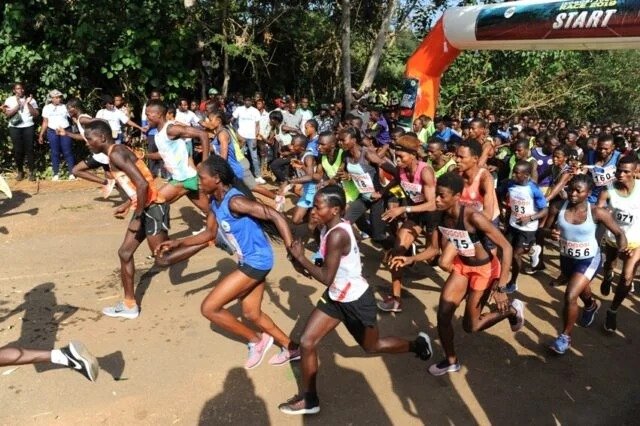
The fourth edition of the Ikogosi 17.5km Race has demonstrated the commercial potential of sports tourism in Nigeria, drawing more than 8,000 runners to Ekiti State and generating reported demand for hotels, food vendors, farmers, transport operators and other local businesses.
The race, held on October 31, attracted approximately 13,700 registrations from 28 Nigerian states and three African countries, according to its organisers. The turnout underscores the ability of sporting events to bring visitors into destinations outside the country’s major commercial centres and create economic activity across several sectors.
Hotels in Ikogosi-Ekiti and neighbouring Ilawe-Ekiti reportedly recorded full occupancy during the race weekend. The Ikogosi Warm Springs Resort, which hosted the finish-line activities, and six selected hotels in Ado-Ekiti also recorded full bookings, extending the accommodation demand beyond the immediate race venue to the state capital.
The figures offer an indication of how a recurring sporting event can stimulate a destination’s visitor economy. However, registrations and actual participation are different measures: while organisers reported about 13,700 registrations, more than 8,000 runners took part. The number of visitors who travelled to Ekiti, their length of stay and their spending will be important in determining the race’s wider economic contribution.
The event’s growth has been substantial when measured against its earlier editions. The Ikogosi Marathon Initiative’s published history shows that its inaugural 10km race in 2014 recorded 241 finishers. The 2019 edition attracted 3,770 registrations and 1,950 finishers, while the event’s 2025 return, which introduced the 17.5km distance, recorded 6,560 registrations and 3,684 finishers.
The approximately 13,700 registrations reported for the 2026 edition point to a significant expansion in interest, although the final number of finishers and the volume of out-of-state visitors would provide a clearer basis for assessing the event’s growth and tourism impact.
Beyond accommodation, organisers said the race generated business for local suppliers and service providers. Farmers supplied oranges, watermelons and bananas for runners, while food vendors along the route benefited from increased patronage. The event also engaged 200 paid volunteers and contracted local businesses for logistics, event production, photography, videography and digital content services.
Ekiti-based vendors produced 8,000 running vests and 8,000 numbered race bibs, while indigenous artists performed at the finish line. These activities illustrate how sports tourism can distribute spending beyond conventional hospitality businesses, creating opportunities for farmers, manufacturers, creative professionals and small-scale service providers.
The race also carried a ₦30 million prize purse, with the male and female winners receiving ₦2 million each. Forty Ekiti indigenes also received cash prizes. The organisers said the Ikogosi Marathon Initiative had invested approximately ₦550 million in sporting events since its establishment, with funding provided by the MKD Araoye Foundation. The figure represents the initiative’s reported cumulative investment, rather than an independently verified measure of the race’s economic impact.
The scale of the opportunity is reflected in international marathon markets, where established events attract substantial visitor spending and commercial activity. A study by Sheffield Hallam University, commissioned by London Marathon Events, estimated that the 2025 TCS London Marathon generated £226 million in economic activity across the United Kingdom, including £68 million in direct economic impact in London. It also found that 66 percent of surveyed businesses considered Marathon Sunday one of their busiest days of the year.
Similarly, a 2026 assessment by Brand Finance estimated that the world’s 50 leading marathons generated a combined economic impact of about $6 billion for their host cities in 2025. The assessment included visitor spending, race revenues and related economic activity.
Although the international events operate on a different scale and benefit from larger visitor markets and more extensive tourism infrastructure, they showcase the potential for sporting competitions to become recurring sources of economic activity when they attract participants, spectators and sponsors.
For Ekiti, the immediate opportunity is to convert race-weekend demand into year-round visits. Ikogosi Warm Springs Resort already provides accommodation, dining, conference and leisure facilities, giving the race a tourism asset around which visitors can plan longer stays. The challenge is to encourage runners and their supporters to return outside the competition period and explore the springs and other attractions across the state.
That will depend on more than increasing the number of participants. Accommodation providers will need to sustain service standards, transport links must make the destination accessible, and tourism operators will need to offer activities that encourage visitors to stay longer and spend more.
The organisers acknowledged operational challenges during the 2026 edition, including starting-line infrastructure, water distribution and the delivery of finishers’ medals. They said measures were being reviewed ahead of the next race to improve safety, hydration, crowd management and event infrastructure.
Plans to stage an international edition in 2027 could widen the race’s reach and attract more foreign participants. But a larger field will also place greater demands on accommodation, transport, event management and public infrastructure. Building stronger partnerships with local businesses and public institutions will therefore be important to sustaining growth.
The reported participation of runners from three other African countries offers a starting point for expanding the event’s international profile. Its engagement of local suppliers, paid volunteers and creative businesses also provides an early indication of how a sporting event can connect visitor spending with the wider local economy.
The longer-term test for the Ikogosi race will be whether it can turn a growing annual gathering into a dependable tourism product; one that attracts visitors beyond race weekend, supports local enterprise and strengthens Ekiti’s position in Nigeria’s domestic tourism market.