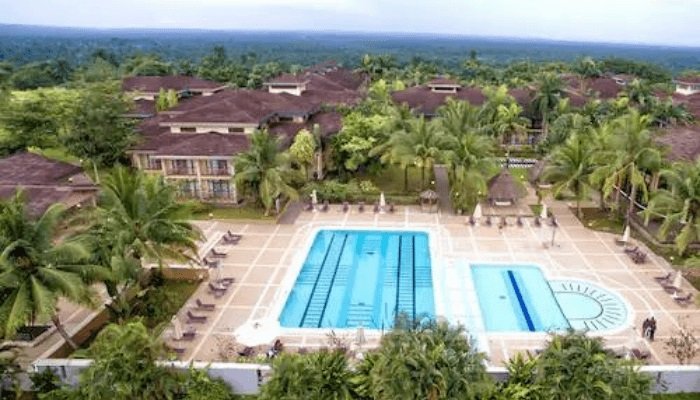
Ibom Hotel & Golf Resort in Uyo has commenced a temporary closure for renovation, marking the beginning of a new management phase as Akwa Ibom State seeks to improve the commercial performance and service standards of one of its biggest hospitality assets.
The closure, which began on August 31, 2026, will allow renovation and transformation work to proceed at the resort as the property moves into a new management arrangement involving Dubai-based hospitality management company Aleph Hospitality.
The development comes after more than 18 years of operation for the resort, which has built its business around accommodation, leisure, golf, conferences and events.
With 163 rooms and suites spread across approximately 174 hectares, Ibom Hotel & Golf Resort is one of the state’s largest tourism and hospitality facilities. Its assets include an 18-hole golf course, clubhouse, restaurants, conference facilities, a marina, two helipads and parking facilities.
The renovation is considered an attempt by the Akwa Ibom State Government to reposition its hospitality investments and place greater emphasis on professional management and commercial performance.
The hotel said the renovation would refresh its facilities and improve the overall experience for guests when the property reopens.
The work is expected to go beyond upgrading accommodation facilities, bringing together different components of the resort’s hospitality business, including food and beverage, conferences, golf and other leisure activities.
The new management arrangement follows an agreement signed in February 2026 between the Akwa Ibom State Government and Aleph Technical and Advisory Services for the management of several state-owned hospitality facilities.
The agreement covered Ibom Hotel & Golf Resort, Four Points by Sheraton, Ibom International Hotel and ARISE Palm Resort.
The state government said the move towards professional management was designed to improve service standards, introduce greater hospitality expertise and strengthen the commercial performance of the facilities.
The renovation of Ibom Hotel has been taking place in stages.
Earlier reports indicated that 40 of the hotel’s 163 rooms and seven chalets had been closed for rehabilitation while other parts of the property continued operating.
The latest closure, however, marks a more significant phase in the transformation of the resort.
The property said its investment in renovation was intended to prepare the hotel for its next stage of operations under the new management arrangement.
Hospitality assets such as Ibom Hotel generate revenue from more than room bookings. Restaurants, conferences, events, leisure activities and other guest services provide additional opportunities for spending within the property.
Improving the condition and management of these facilities could therefore have implications for the wider commercial performance of the resort.
Despite the temporary closure of the hotel, the resort’s golf operations will continue.
The hotel said the golf course and Golf Clubhouse would remain open to golfers and visitors throughout the renovation period.
The decision allows one of the property’s key leisure assets to continue operating while rehabilitation work is carried out on the accommodation and other facilities.
For guests with existing reservations falling within the closure period, the hotel said its team would assist in making alternative accommodation arrangements within Akwa Ibom State.
The continuation of golf activities could also help preserve customer engagement with the resort while the wider facility undergoes transformation.
The management transition has also raised questions about the future of employees at the state-owned hospitality facilities.
The Akwa Ibom State Government said workers would not be laid off solely because of the change in management.
However, it acknowledged that some employees might decide not to continue under the new arrangement, while others may not possess the skills required by the incoming management company.
Some employees are expected to remain at the hotel during the closure to support rehabilitation activities, maintain the property and provide security and other essential services.
The move to renovate Ibom Hotel and introduce a new management structure reflects a push by Akwa Ibom State to extract greater commercial value from its investments in tourism and hospitality.
Government-owned hotels and resorts often face pressure to maintain high service standards, compete with privately operated facilities and generate sufficient revenue to justify continued investment.
By bringing in an external hospitality management company, the state is seeking to combine public ownership with private-sector operational expertise.
The success of the arrangement will ultimately depend on whether the new management structure can improve occupancy, strengthen customer experience, increase spending across the resort and position the property more competitively within Nigeria’s hospitality market.