Business A.M
No Result
View All Result
Tuesday, July 14, 2026
  • Login
  • Home
  • Technology
  • Finance
  • Comments
  • Companies
  • Commodities
  • About Us
  • Contact Us
Subscribe
Business A.M
  • Home
  • Technology
  • Finance
  • Comments
  • Companies
  • Commodities
  • About Us
  • Contact Us
No Result
View All Result
Business A.M
No Result
View All Result
Home Interview

Interview with Prasad Kapre CEO & Director, Style Quotient Jewellery Pvt Limited

by Admin
August 7, 2017
in Interview

Prasad Kapre is a well-known name in the Gems & Jewellery industry. The current portfolio that he holds is that of a CEO & Director of Style Quotient Jewellery Pvt Limited, managing Being Human Jewellery with Salman Khan.

Prasad began his career in the Gems & Jewellery industry with DeBeers in 1995. He was the first employee in the Indian team to take up the challenge of “Marketing diamonds to Indian women.” In a country which is obsessed with gold, it was truly a big opportunity for Prasad to prove his mettle. With this success, he rose to be the Business Director of DeBeers.
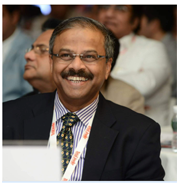
Prasad Kapre
Prasad Kapre

Over the last twenty-two years of marketing Gems & Jewellery, Prasad introduced some of the most successful brands of Indian diamond jewellery, namely, super brand Nakshatra, Asmi, Arisia, Sangini, Anant and more recently Being Human Jewellery in the mass segment. With the very first brand Nakshatra, it created a major revolution in the industry and opened diamonds as a category in the minds of Indian women.

He has a track record of innovation, clear strategic thinking, meticulous planning and a knack for building businesses and brands in tune with the future.

Armed with an MBA in marketing, Prasad has experience of over 30 years in the marketing world. His twenty two year run in the Gems & Jewellery industry demonstrates his immense loyalty and tremendous passion for the industry. The testimony to this is that he had a 3 year run as Co-Chairman FICCI, Gems & Jewellery Sector and today having completed his tenure is the executive member of FICCI. The industry has immensely benefited from his wealth of knowledge and expertise.

ET:  As a member of the FICCI committee on Gems & Jewellery, please tell us what constitutes the Gems & Jewellery sector of India and what are the various drivers that will aid the growth of this segment? 

PK:  The Gems & Jewellery sector constitutes all the business stakeholders from mines to markets. So we have the mining companies, sightholders, cutting and polishing companies (for diamonds and other gem stones), jewellery manufacturers, wholesalers, distributors and retailers as an integral part of the sector.

Each stakeholder has their own barriers to growth or the catalyst to grow. However, one common factor to drive growth is to increase the consumption. For this, one needs to understand the motivation of a consumer to buy jewellery. As we say, no woman needs jewellery, however, every woman wants one and for this there are primarily 6 motivations to buy jewellery:
    1. To enhance her beauty quotient
    2. As a gift of love from the spouse to make her feel loved
    3. As a self-reward for every achievement in her life
    4. To fulfill a social obligation of having a piece of jewellery in her wardrobe
    5. To be the center of attention at every social function
    6. One-upmanship (in comparison to the women next door)

With a proper marketing campaign, keeping these inherent motivations in mind, the trade can build an emotional connect with buyers to create a demand for jewellery.

Designer & branded jewellery is seen as a lucrative segment in the Gems & Jewellery industry. What are the future trends of this industry?

The jewellery industry is perhaps the only industry where under the same roof, a consumer can find the original as well as a copy of the design. This is perhaps because every retailer has a small little workshop where a karigar employed by the retailer can copy the design and make a replica in a few hours/days.

This is one of the biggest challenges of this industry especially for the designer & branded jewellery. The trade, even today, believes in selling the jewellery as a commodity and hence sells the piece giving a break up of metal + gem stones + labour = retail price. So first of all, it is a cost plus strategy and not really value minus or charging any premiums. This is done to keep the investment angle as a driving force for the consumer to come and buy jewellery. Besides what it also means is that retail in a way has educated the consumers not to pay anything for the design. The trade forgets that design is perhaps the only reason that consumers buy jewellery at a particular showroom.

But millennials are changing the way they buy jewellery. Today, jewellery is no more an investment but is more for adornment. With this mindset, the demand for designer and branded jewellery is expected to grow exponentially.

The online jewellery retailing segment is gaining traction and may pose a challenge to the brick-and-mortar set-up. What are the challenges of the retail jewelry sector?

Online jewellery retailing, no doubt, is gaining traction but it is more at a fashion and semi-precious jewellery level. The current average ticket value has still not crossed the five figure mark and hence for gold and diamond jewellery it is still not seen as a major competition or threat.

The biggest challenge for the jewellery sector is the lack of any interest in jewellery with youngsters. They do not perceive any utility value and hence do not have much interest in jewellery. The young consumers of today would rather spend over Rs 50,000 on a good and latest mobile phone instead of spending the same amount on jewellery as it does not have any utility value for them. So the challenge is the change in the young mindsets and their aspirations for electronic products which will give them a better perceived value.

The other challenges include:

Highly volatile gold prices + heavy discount on making charges adversely impacting the industry’s operating margins
Adverse regulatory/policy measures continue to exert further pressure on thin margins
Regulatory restrictions on gold imports and gold loan schemes

Industry focused on rationalisation (closure of unprofitable stores) and selective expansion
Launch of brands focused on new-age consumer preferences such as fashion jewellery priced at less than Rs. 20,000 and focused on young, working women (e.g. Mia by Tanishq)

Players looking at opportunities in silver jewellery (e.g. Viola by Gitanjali, Saiesha Diamonds)

New category creators (e.g. Gemfields, PGI) have decided to go slow on an Indian market launch/expansion in the current environment.

How does your industry prepare design professionals & skilled craftsmen for future requirements?

The Government of India is largely investing in Skill India projects within the Gems & Jewellery sector. There are major training and Skill India centres across the country which have been assisting this industry in developing and implementing various courses to enhance the skills required in uplifting the jewellery segment.

Besides these, there are various private and other semi-government organisations like the National Institute of Fashion Design (NIFT) which imparts courses on designing and basic knowledge on jewellery processing and manufacturing.

As a strategic marketing professional, you have been associated with various jewellery brands and campaigns, including establishing the DeBeers brands in India. Can you please share with us what are the current brands you are establishing in the market?

PK:  With over 22 years in jewellery marketing, I have personally grown very passionate about this industry. Given the rich heritage and culture in Gems & Jewellery, there is a huge potential for this industry to grow. There are various consumer segments both in terms of demographics and psychographics which need different kinds of jewellery. Keeping this in mind, we have introduced different brands addressing different consumers, price and product segments and reasons to buy. The four brands that we have currently introduced in the market are:

    1. Silvostyle – Affordable range of silver jewellery to make a style statement
    2. Links of Life – Creative concept in a bracelet for the young mindset to express their best moments of their life and flash it on their wrists
    3. Tarun Tahiliani – A designer jewellery with one of a kind designer pieces in affordable silver with semi-precious stones
    4. Being Human Jewellery – Jewellery with a heart. With a star persona of Salman Khan setting trends and with a charity angle which brings hope and joy in the life of the under privileged.

Courtesy Empowering Times 

Admin
Admin
Previous Post

Adding luster to the business of stones

Next Post

Click! The amazing story of India’s e-commerce boom and where it is headed

Next Post

Click! The amazing story of India's e-commerce boom and where it is headed

  • Trending
  • Comments
  • Latest

CBN to issue N1.5bn loan for youth led agric expansion in Plateau

July 29, 2025

How UNESCO got it wrong in Africa

May 30, 2017
NGX taps tech advancements to drive N4.63tr capital growth in H1

Insurance-fuelled rally pushes NGX to record high

August 8, 2025

Glo, Dangote, Airtel, 7 others prequalified to bid for 9Mobile acquisition

November 20, 2017

6 MLB teams that could use upgrades at the trade deadline

Top NFL Draft picks react to their Madden NFL 16 ratings

Paul Pierce said there was ‘no way’ he could play for Lakers

Arian Foster agrees to buy books for a fan after he asked on Twitter

State

State Police by design

July 14, 2026
NAAPE moves to shield pilots, engineers with loss-of-licence insurance scheme

NAAPE moves to shield pilots, engineers with loss-of-licence insurance scheme

July 14, 2026
Global airlines are investing heavily in economy class cabins as competition for passengers shifts beyond ticket prices to the quality of the travel experience, prompting carriers to modernise fleets, redesign cabins and enhance onboard services in a bid to strengthen customer loyalty and improve long-term profitability. The renewed focus reflects a transformation in the aviation industry, where economy class, despite offering lower fares than premium cabins, remains the largest contributor to passenger volumes and an increasingly important driver of commercial performance. With millions of travellers continuing to prioritise affordability, airlines are finding that modest improvements in comfort and convenience can translate into stronger repeat business, improved customer satisfaction and higher ancillary revenues. As a result, carriers are directing substantial investment towards upgrading economy cabins through newer aircraft, ergonomically designed seats, advanced inflight entertainment systems, onboard connectivity, enhanced catering and improved cabin service. Industry analysts say the strategy is becoming a key differentiator as airlines compete more aggressively for passengers on both regional and long-haul routes. Unlike business and first-class travellers, whose numbers are relatively limited, economy passengers account for the overwhelming majority of airline traffic, making their overall travel experience increasingly central to airlines' growth strategies. Rather than relying solely on fare reductions to attract customers, airlines are seeking to build stronger brand loyalty by improving the value passengers receive throughout their journeys. "Passenger expectations have changed significantly. Travellers increasingly compare airlines based not only on ticket prices but also on comfort, reliability, connectivity and the overall onboard experience," aviation analysts note. Several of the world's leading airlines have already embraced the strategy. Carriers including Singapore Airlines, Qatar Airways, Emirates, Turkish Airlines, All Nippon Airways (ANA), EVA Air and Cathay Pacific have invested significantly in upgrading their economy cabins through improved seating, larger entertainment libraries, enhanced meal services and customer-focused cabin experiences. Although each airline has adopted different approaches, the underlying objective remains the same: making economy travel more comfortable for the largest segment of their customer base while strengthening long-term commercial competitiveness. Fleet modernisation is playing a critical role in that transformation. Next-generation aircraft such as the Boeing 787 Dreamliner, Airbus A350 and Airbus A321neo are enabling airlines to improve the passenger experience while simultaneously lowering operating costs. Compared with older aircraft, these models offer quieter cabins, larger windows, improved air quality, better humidity control and greater fuel efficiency, creating benefits for both passengers and airline operators. The newer aircraft also reduce fuel consumption and maintenance expenses, allowing airlines to improve customer experience without significantly increasing operating costs over the aircraft's lifespan. Technology has emerged as another major area of investment. Features once reserved almost exclusively for premium cabins, including USB charging ports, wireless internet connectivity, mobile application integration and personalised digital entertainment platforms, are increasingly becoming standard in economy class. Passengers are also benefiting from greater control over their travel experience, with digital services allowing them to access entertainment, communicate onboard and manage various aspects of their journeys more conveniently. The growing investment reflects changing consumer expectations in an increasingly digital travel environment. Recent international passenger satisfaction surveys consistently indicate that airlines investing in cabin comfort, inflight technology and customer service continue to perform strongly in global service rankings. While competitive pricing remains an important consideration for travellers, customer experience has become an increasingly influential factor in airline selection, particularly on medium and long-haul routes where comfort plays a greater role in purchasing decisions. The trend is expected to reshape competition within Africa's aviation industry as airlines expand their fleets to meet growing passenger demand.

Global airlines raise economy class spending to win passenger loyalty

July 14, 2026
US

How Vulnerable Are US Financial Markets?

July 14, 2026

Popular News

  • CBN to issue N1.5bn loan for youth led agric expansion in Plateau

    0 shares
    Share 0 Tweet 0
  • How UNESCO got it wrong in Africa

    0 shares
    Share 0 Tweet 0
  • Insurance-fuelled rally pushes NGX to record high

    0 shares
    Share 0 Tweet 0
  • Glo, Dangote, Airtel, 7 others prequalified to bid for 9Mobile acquisition

    0 shares
    Share 0 Tweet 0
  • Nigeria agrees with Russia on first nuclear energy plant by mid 2020s

    0 shares
    Share 0 Tweet 0
Currently Playing

CNN on Nigeria Aviation

CNN on Nigeria Aviation

Business AM TV

Edeme Kelikume Interview With Business AM TV

Business AM TV

Business A M 2021 Mutual Funds Outlook And Award Promo Video

Business AM TV

Recent News

State

State Police by design

July 14, 2026
NAAPE moves to shield pilots, engineers with loss-of-licence insurance scheme

NAAPE moves to shield pilots, engineers with loss-of-licence insurance scheme

July 14, 2026

Categories

  • Frontpage
  • Analyst Insight
  • Business AM TV
  • Comments
  • Commodities
  • Finance
  • Markets
  • Technology
  • The Business Traveller & Hospitality
  • World Business & Economy

Site Navigation

  • Home
  • About Us
  • Contact Us
  • Privacy & Policy
Business A.M

BusinessAMLive (businessamlive.com) is a leading online business news and information platform focused on providing timely, insightful and comprehensive coverage of economic, financial, and business developments in Nigeria, Africa and around the world.

© 2026 Business A.M

Welcome Back!

Login to your account below

Forgotten Password?

Retrieve your password

Please enter your username or email address to reset your password.

Log In
No Result
View All Result
  • Home
  • Technology
  • Finance
  • Comments
  • Companies
  • Commodities
  • About Us
  • Contact Us

© 2026 Business A.M