What has been happening in the downstream sector, and particularly the refining sub-sector, of the Nigerian oil and gas industry in the past couple of years is akin to a regime of ‘abracadabra’ — the more you look, the less you see; and the little you understand! It is a combination of intrigues, prevarications, half-truths, tergiversations, and policy somersaults, and even sabotage.
On one hand, the Federal Government of Nigeria (FGN) would seem to be encouraging the liberalisation of the downstream sub-sector, with incentives for local refining of crude oil to flourish. On the other hand however, some policies and actions of the FGN (or its agencies) put avoidable and debilitating hurdles on the path of the existing and potential local refiners.
When, at his inauguration, on May 29, 2023, President Bola Ahmed Tinubu, announced fuel subsidy removal (extempore), his administration hurriedly resorted to issuance of licenses to a large number of persons and entities for the importation of refined products — particularly Premium Motor Spirit (PMS). Soon, the beneficiaries (licensees) — otherwise called petroleum products marketers — began to exploit the exponential rise in the price of PMS.
They entrenched themselves in the refined products marketing chain, to such an extent that the FGN saw them as the only ‘solution’ to the persisting fuel scarcity and soaring price of PMS. Since all the public-owned refineries in the country had remained moribund, and produced no PMS, the country depended wholly on fuel importation. Although this was putting so much pressure on the Naira exchange rate at the foreign exchange (FX) market — due to the huge PMS import bill — the FGN and the product marketers sustained the status quo.
At a point, when the Dangote Refinery was to commence operations, to supply PMS and other products locally, vested interests, including fuel importers and marketers, regulatory agencies, and almost the entire officialdom — posed all manner of hurdles. Even as the local refinery was through with test-running, and commenced PMS production and distribution, a key regulatory body — the Nigerian Midstream and Downstream Petroleum Regulatory Agency (NMDPRA) — had to announce non-issuance of operational permit to the refinery.
NMDPRA chief executive at the time, Farouk Ahmed, reportedly told journalists that, “Dangote Refinery is still in the pre-commissioning stage. It has not been licensed yet. We have not licensed them yet.” Although the Dangote Refinery eventually won a pyrrhic victory, and secured all approvals, the local operating environment had remained largely ‘turbulent’ — with the petrol importers not giving up their trade.
In its survival moves, the Dangote Refinery has had to import much of its core input — crude oil — from far-flung places, even as Nigeria remained a major crude oil producer/exporter. All manner of subterfuge was presented for the inability of the Nigerian National Petroleum Company (NNPC) Limited and other upstream oil companies to adequately supply the local refinery with crude oil. Even the much-hyped “Naira-4-Crude” policy, under which Dangote Refinery was to be buying crude oil in Naira was shoddily implemented. Almost sabotaged!
Although the FGN through the NMDPRA early this year, had announced the suspension of the issuance of more fuel import licenses, this statement was instead kept in the breach. No sooner had the regulatory agency made the promise than it resumed issuing more petrol import licenses. The NMDPRA early this month (May 2026) resumed issuance of fuel import licenses to petroleum marketers. The licenses were issued to six of the marketers expected to import around 720,000 metric tons of PMS. The beneficiaries of these licenses are said to be existing “major oil marketers.”
About the same time as this new licensing policy shift, the NNPCL also announced to the shock of all Nigerians that it had signed a Memorandum of Understanding (MoU) with two Chinese companies for the revamping of the moribund Port Harcourt and Warri refineries. The two companies: Sanjiang Chemical Company Limited and Xinganchen (Fuzhou) Industrial Park Operation and Management Company Limited are collaborating through a potential technical equity partnership in support of “the completion and operation” of the refineries.
According to a statement issued by the NNPCL after signing the MoU on Thursday, April 30, 2026, “The potential framework would cover completion of outstanding work at the two refineries, together with operating and maintaining both facilities to achieve best-in-class, sustainable performance. Planned expansion and upgrades would elevate both facilities to cleaner, more profitable product standards.”
The statement further said, “The potential collaboration also contemplates expanding the refineries’ petrochemical capacities and harnessing gas and downstream opportunities through the development of co-located gas-based industrial hubs.” NNPCL’s chief executive, Bayo Ojulari, described the MoU execution as “a significant milestone, following more than six months of concerted engagement between the technical and management teams of NNPC and the two Chinese partners.”
This unexpected move by the NNPCL, rather than eliciting public acceptance, has drawn the anger and rabid criticism of practically all stakeholders in the oil refining ecosystem. Without exception, practically all the stakeholders want the NNPCL to abandon the idea of another round of rehabilitation of the refineries. This is because the latest move of the NNPCL to revamp the refineries will be the umpteenth time such an effort is made.
In the past one decade or so, billions of dollars, and trillions of naira have been sunk into several (failed) rehabilitation efforts of the public-owned refineries in Nigeria. This is why, from an unusual source — the Church of Nigeria (Anglican Communion) — has come a strident call on the FGN to reverse the current MoU for the rehabilitation of the refineries. Primate of the Church of Nigeria, Most Reverend Henry Ndukuba, who made the call during the first session of the 13th Synod of the Church in Abuja, urged the federal government to ‘reconsider and reverse” the MoU, warning that the country risks losing control of its oil wealth.
Ndukuba said the refineries should be handed over to competent Nigerian investors, capable of reviving them and reinvesting profits into the local economy. On its part, the Nigeria Employers Consultative Association (NECA) also raised serious concern about the latest move by the NNPCL, warning that Nigeria could not afford another failed refinery rehabilitation project.
In a statement issued in Lagos, the director-general of NECA, Adewale-Smart Oyerinde, described the latest MoU as troubling, “in view of the billions of dollars previously spent on refinery turnaround maintenance projects with little or no results.” He said: “while the country urgently requires functional refineries to reduce dependence on imported petroleum products, Nigerians deserve clear explanations on the outcome of previous rehabilitation expenditures before fresh agreements are signed.”
Several other stakeholder-groups have similarly spoken, and called on the NNPCL to cancel the MoU with the Chinese firms. This is because not only that the nitty-gritty of the agreement between the NNPCL and the Chinese companies are shrouded in secrecy, Nigerians have since become suspicious of any effort of the federal government and its agencies to manage and commercially run refineries. Not only have the public refineries remained drain pipes on government coffers (because of several failed rehabilitations), successive managements of the facilities have proven them unviable in the hands of the government.
Therefore, the only inference to be drawn from the current move of the FGN through the NNPCL regarding the moribund refineries is that the powers that be are not at ease with the perceived dominance of the Dangote Refinery. And so, rather than improving the environment for many private refineries to thrive, the FGN (through the ‘revamped’ refineries) intends to checkmate the private players.
This, undoubtedly, is also why the fresh petrol import licensing spree is ongoing. And perhaps, the FGN is ready for another round of billions of dollars down the drain. We wait and see!
- business a.m. commits to publishing a diversity of views, opinions and comments. It, therefore, welcomes your reaction to this and any of our articles via email: comment@businessamlive.com

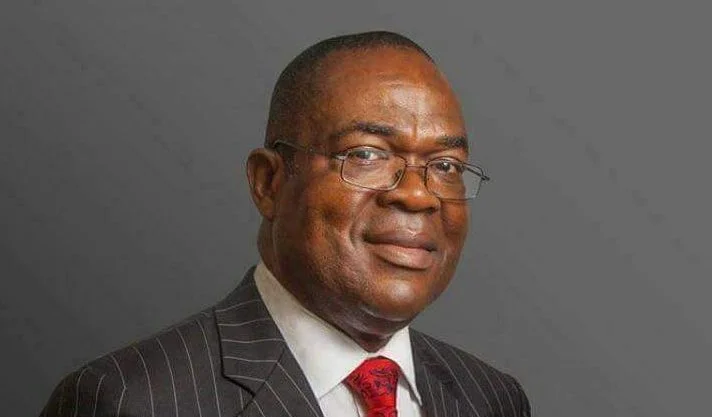
Marcel Okeke, a practising economist and consultant in Business Strategy & Sustainability based in Lagos, is a former Chief Economist at Zenith Bank Plc. He can be reached at: obioraokeke2000@yahoo.com; +2348033075697
(text only)