Business A.M
No Result
View All Result
Tuesday, July 14, 2026
  • Login
  • Home
  • Technology
  • Finance
  • Comments
  • Companies
  • Commodities
  • About Us
  • Contact Us
Subscribe
Business A.M
  • Home
  • Technology
  • Finance
  • Comments
  • Companies
  • Commodities
  • About Us
  • Contact Us
No Result
View All Result
Business A.M
No Result
View All Result
Home capital market

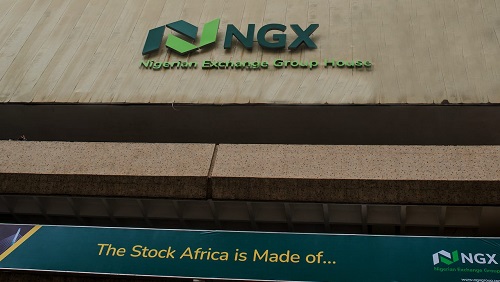
Investors see N1.253trn boost as NGX kicks off 2025 in green

by Admin
January 21, 2026
in capital market, Equities, Markets

Onome Amuge

Investors in the Nigerian equities market enjoyed a booming trading session at the Nigerian Exchange (NGX) during the final days of 2024 and the early days of 2025, securing a N1.253 trillion weekly profit. This comes on the heels of a N609 billion profit recorded during the previous week, reflecting continued investor confidence in the Nigerian equities market.

The bullish momentum on the NGX led to an increase in market capitalisation, rising from N61.912 trillion at the end of the previous week to N63.166 trillion by the end of the current week. This gain represented a 1.42 percent appreciation in the overall value of the Nigerian equities market, which climbed from 102,133.30 points to 103,586.33 points.

Despite having only three trading sessions for the week due to the New Year holiday break, the Nigerian equities market managed to post a N1.253 trillion profit, thanks to the bullish investor sentiment that reigned supreme in the market.

The week began on a positive note, as investors amassed a N987.18 billion gain on the opening day of trading, Monday, December 30, 2024.

As the last trading day of 2024, the Nigerian equities market wrapped up the year on a slight down note, recording a N135.95 billion loss on Tuesday, December 31, 2024. The market then took a breather, as the federal government designated Wednesday, January 1, 2025, as a public holiday to celebrate the start of the New Year.

The Nigerian equities market made a triumphant start to the New Year on Thursday, January 2, 2025, as investors pocketed N154.73 billion profit at the end of the day’s trading session. The positive momentum carried over to Friday, January 3, 2025, as investors continued to cash in on the bullish sentiment in the market, racking up N247.69 billion gain.

Investors flocked to the trading floor of the NGX for the week, driving a robust trading activity and a substantial uptick in trading volumes. During the three trading sessions, a total of 2.618 billion shares, valued at N69.742 billion, were traded in 47,953 deals, representing a significant increase from the 1.387 billion shares, worth N52.023 billion, that were transacted in 33,411 deals during the previous week.

The Financial Services Industry emerged as the main driver of investor activity this week on the NGX, dominating the trading volumes and deal counts across the three trading sessions. This is as 1.751 billion shares, amounting to N17.079 billion, exchanged hands in 20,595 deals within the sector, accounting for 66.88 percent of the total equity turnover volume and 24.49 percent of the overall equity turnover value.

The Services Industry emerged second place in the NGX trading activity chart for the week, with 205.807 million shares, valued at N1.829 billion, traded in 3,654 deals.  It contributed 7.86 percent  to the overall equity turnover volume and 2.62 percent to the overall equity turnover value.

The ICT Industry emerged as the third most active sector with 189.938 million shares, amounting to N1.844 billion, transacted in 3,686 deals. It constituted 7.24 percent of the total equity turnover volume and 2.64 percent of the overall equity turnover value.

Amidst the diverse range of stocks traded on the Nigerian Xchange (NGX) floor this week, Royal Exchange Plc, Chams Holding Company Plc, and Universal Insurance Plc captured the attention of investors and emerged as the top three most traded equities in terms of volume.

With a combined total of 612.033 million shares, valued at N773.439 million, transacted in 2,108 deals across the three stocks, these top equities captured 23.38 percent of the total equity turnover volume and 1.11 percent of the overall equity turnover value.

Amidst the positive market sentiments, investor confidence was reflected in the increased number of equities that appreciated in price during the week. A total of eighty-two (82) equities recorded gains, marking an improvement from the sixty-four (64) equities that saw positive price movements during the previous week.

On the flip side, only eighteen (18) equities witnessed price declines, signaling a decrease in bearish sentiments from the previous week’s tally of twenty (20). The number of equities that remained unchanged also declined from sixty-nine (69) in the previous week to fifty-two (52).

Prestige Assurance Plc took centre stage as the biggest gainer for the week, recording a 46.00 percent jump in its share price.

Neimeth International Pharmaceuticals Plc and Sovereign Trust Insurance Plc were also top gainers, with 45.26 percent and 45.16 percent share price increases, respectively.

While some investors celebrated the positive performance of select equities, others experienced declines in their holdings, as PZ Cussons Nigeria Plc, CWG Plc, and Union Dicon Salt Plc saw substantial losses in their respective share prices.

The week’s most significant decline was recorded by PZ Cussons Nigeria Plc, which lost 13.79 percent of its share price, while CWG Plc and Union Dicon Salt Plc also witnessed a 10.83 percent and 10 percent decline respectively, signalling bearish investor sentiment towards these equities.


Admin
Admin
Previous Post

NCC refutes claims on data depletion on mobile networks

Next Post

Stanbic IBTC Insurance  earns audit  certification for quality management

Next Post

Stanbic IBTC Insurance  earns audit  certification for quality management

  • Trending
  • Comments
  • Latest

CBN to issue N1.5bn loan for youth led agric expansion in Plateau

July 29, 2025

How UNESCO got it wrong in Africa

May 30, 2017

Glo, Dangote, Airtel, 7 others prequalified to bid for 9Mobile acquisition

November 20, 2017
NGX taps tech advancements to drive N4.63tr capital growth in H1

Insurance-fuelled rally pushes NGX to record high

August 8, 2025

6 MLB teams that could use upgrades at the trade deadline

Top NFL Draft picks react to their Madden NFL 16 ratings

Paul Pierce said there was ‘no way’ he could play for Lakers

Arian Foster agrees to buy books for a fan after he asked on Twitter

NAAPE moves to shield pilots, engineers with loss-of-licence insurance scheme

NAAPE moves to shield pilots, engineers with loss-of-licence insurance scheme

July 14, 2026
Global airlines are investing heavily in economy class cabins as competition for passengers shifts beyond ticket prices to the quality of the travel experience, prompting carriers to modernise fleets, redesign cabins and enhance onboard services in a bid to strengthen customer loyalty and improve long-term profitability. The renewed focus reflects a transformation in the aviation industry, where economy class, despite offering lower fares than premium cabins, remains the largest contributor to passenger volumes and an increasingly important driver of commercial performance. With millions of travellers continuing to prioritise affordability, airlines are finding that modest improvements in comfort and convenience can translate into stronger repeat business, improved customer satisfaction and higher ancillary revenues. As a result, carriers are directing substantial investment towards upgrading economy cabins through newer aircraft, ergonomically designed seats, advanced inflight entertainment systems, onboard connectivity, enhanced catering and improved cabin service. Industry analysts say the strategy is becoming a key differentiator as airlines compete more aggressively for passengers on both regional and long-haul routes. Unlike business and first-class travellers, whose numbers are relatively limited, economy passengers account for the overwhelming majority of airline traffic, making their overall travel experience increasingly central to airlines' growth strategies. Rather than relying solely on fare reductions to attract customers, airlines are seeking to build stronger brand loyalty by improving the value passengers receive throughout their journeys. "Passenger expectations have changed significantly. Travellers increasingly compare airlines based not only on ticket prices but also on comfort, reliability, connectivity and the overall onboard experience," aviation analysts note. Several of the world's leading airlines have already embraced the strategy. Carriers including Singapore Airlines, Qatar Airways, Emirates, Turkish Airlines, All Nippon Airways (ANA), EVA Air and Cathay Pacific have invested significantly in upgrading their economy cabins through improved seating, larger entertainment libraries, enhanced meal services and customer-focused cabin experiences. Although each airline has adopted different approaches, the underlying objective remains the same: making economy travel more comfortable for the largest segment of their customer base while strengthening long-term commercial competitiveness. Fleet modernisation is playing a critical role in that transformation. Next-generation aircraft such as the Boeing 787 Dreamliner, Airbus A350 and Airbus A321neo are enabling airlines to improve the passenger experience while simultaneously lowering operating costs. Compared with older aircraft, these models offer quieter cabins, larger windows, improved air quality, better humidity control and greater fuel efficiency, creating benefits for both passengers and airline operators. The newer aircraft also reduce fuel consumption and maintenance expenses, allowing airlines to improve customer experience without significantly increasing operating costs over the aircraft's lifespan. Technology has emerged as another major area of investment. Features once reserved almost exclusively for premium cabins, including USB charging ports, wireless internet connectivity, mobile application integration and personalised digital entertainment platforms, are increasingly becoming standard in economy class. Passengers are also benefiting from greater control over their travel experience, with digital services allowing them to access entertainment, communicate onboard and manage various aspects of their journeys more conveniently. The growing investment reflects changing consumer expectations in an increasingly digital travel environment. Recent international passenger satisfaction surveys consistently indicate that airlines investing in cabin comfort, inflight technology and customer service continue to perform strongly in global service rankings. While competitive pricing remains an important consideration for travellers, customer experience has become an increasingly influential factor in airline selection, particularly on medium and long-haul routes where comfort plays a greater role in purchasing decisions. The trend is expected to reshape competition within Africa's aviation industry as airlines expand their fleets to meet growing passenger demand.

Global airlines raise economy class spending to win passenger loyalty

July 14, 2026
US

How Vulnerable Are US Financial Markets?

July 14, 2026
Development

Reinventing Development Finance

July 14, 2026

Popular News

  • CBN to issue N1.5bn loan for youth led agric expansion in Plateau

    0 shares
    Share 0 Tweet 0
  • How UNESCO got it wrong in Africa

    0 shares
    Share 0 Tweet 0
  • Glo, Dangote, Airtel, 7 others prequalified to bid for 9Mobile acquisition

    0 shares
    Share 0 Tweet 0
  • Insurance-fuelled rally pushes NGX to record high

    0 shares
    Share 0 Tweet 0
  • Major tech companies conquering Africa with sports

    0 shares
    Share 0 Tweet 0
Currently Playing

CNN on Nigeria Aviation

CNN on Nigeria Aviation

Business AM TV

Edeme Kelikume Interview With Business AM TV

Business AM TV

Business A M 2021 Mutual Funds Outlook And Award Promo Video

Business AM TV

Recent News

NAAPE moves to shield pilots, engineers with loss-of-licence insurance scheme

NAAPE moves to shield pilots, engineers with loss-of-licence insurance scheme

July 14, 2026
Global airlines are investing heavily in economy class cabins as competition for passengers shifts beyond ticket prices to the quality of the travel experience, prompting carriers to modernise fleets, redesign cabins and enhance onboard services in a bid to strengthen customer loyalty and improve long-term profitability. The renewed focus reflects a transformation in the aviation industry, where economy class, despite offering lower fares than premium cabins, remains the largest contributor to passenger volumes and an increasingly important driver of commercial performance. With millions of travellers continuing to prioritise affordability, airlines are finding that modest improvements in comfort and convenience can translate into stronger repeat business, improved customer satisfaction and higher ancillary revenues. As a result, carriers are directing substantial investment towards upgrading economy cabins through newer aircraft, ergonomically designed seats, advanced inflight entertainment systems, onboard connectivity, enhanced catering and improved cabin service. Industry analysts say the strategy is becoming a key differentiator as airlines compete more aggressively for passengers on both regional and long-haul routes. Unlike business and first-class travellers, whose numbers are relatively limited, economy passengers account for the overwhelming majority of airline traffic, making their overall travel experience increasingly central to airlines' growth strategies. Rather than relying solely on fare reductions to attract customers, airlines are seeking to build stronger brand loyalty by improving the value passengers receive throughout their journeys. "Passenger expectations have changed significantly. Travellers increasingly compare airlines based not only on ticket prices but also on comfort, reliability, connectivity and the overall onboard experience," aviation analysts note. Several of the world's leading airlines have already embraced the strategy. Carriers including Singapore Airlines, Qatar Airways, Emirates, Turkish Airlines, All Nippon Airways (ANA), EVA Air and Cathay Pacific have invested significantly in upgrading their economy cabins through improved seating, larger entertainment libraries, enhanced meal services and customer-focused cabin experiences. Although each airline has adopted different approaches, the underlying objective remains the same: making economy travel more comfortable for the largest segment of their customer base while strengthening long-term commercial competitiveness. Fleet modernisation is playing a critical role in that transformation. Next-generation aircraft such as the Boeing 787 Dreamliner, Airbus A350 and Airbus A321neo are enabling airlines to improve the passenger experience while simultaneously lowering operating costs. Compared with older aircraft, these models offer quieter cabins, larger windows, improved air quality, better humidity control and greater fuel efficiency, creating benefits for both passengers and airline operators. The newer aircraft also reduce fuel consumption and maintenance expenses, allowing airlines to improve customer experience without significantly increasing operating costs over the aircraft's lifespan. Technology has emerged as another major area of investment. Features once reserved almost exclusively for premium cabins, including USB charging ports, wireless internet connectivity, mobile application integration and personalised digital entertainment platforms, are increasingly becoming standard in economy class. Passengers are also benefiting from greater control over their travel experience, with digital services allowing them to access entertainment, communicate onboard and manage various aspects of their journeys more conveniently. The growing investment reflects changing consumer expectations in an increasingly digital travel environment. Recent international passenger satisfaction surveys consistently indicate that airlines investing in cabin comfort, inflight technology and customer service continue to perform strongly in global service rankings. While competitive pricing remains an important consideration for travellers, customer experience has become an increasingly influential factor in airline selection, particularly on medium and long-haul routes where comfort plays a greater role in purchasing decisions. The trend is expected to reshape competition within Africa's aviation industry as airlines expand their fleets to meet growing passenger demand.

Global airlines raise economy class spending to win passenger loyalty

July 14, 2026

Categories

  • Frontpage
  • Analyst Insight
  • Business AM TV
  • Comments
  • Commodities
  • Finance
  • Markets
  • Technology
  • The Business Traveller & Hospitality
  • World Business & Economy

Site Navigation

  • Home
  • About Us
  • Contact Us
  • Privacy & Policy
Business A.M

BusinessAMLive (businessamlive.com) is a leading online business news and information platform focused on providing timely, insightful and comprehensive coverage of economic, financial, and business developments in Nigeria, Africa and around the world.

© 2026 Business A.M

Welcome Back!

Login to your account below

Forgotten Password?

Retrieve your password

Please enter your username or email address to reset your password.

Log In
No Result
View All Result
  • Home
  • Technology
  • Finance
  • Comments
  • Companies
  • Commodities
  • About Us
  • Contact Us

© 2026 Business A.M