On a cool Cape Town morning, I emerged from the icy plunge of a longevity hub bath. My body tingled, my brain flooded with endorphins, and yet my mind wandered elsewhere — not to the present shock of cold, but to a message I received on February 10th, 2025.
That day, Tom Coleman, Portfolio Director at Informa Markets, reached out via LinkedIn. After a brief check-in, he shared his vision: Sports, Wellness, and Longevity was coming to Cape Town, and he wanted me involved. Within weeks, I found myself signing an Informa contract — transitioning from recipient of a message to Ambassador, Committee Member, and eventually Chair and keynoter of the THRIVEMD Mental Health Conference and THRIVE Conference.
I hadn’t applied. I hadn’t sent out résumés or cold emails. The opportunity arrived because I had already been living intentionally — planting seeds through years of visible, consistent work in mental health and human flourishing. The call found me because I had shown up.
The social science of being “Seen”
In social and behavioural science, the phenomenon is well-documented: people often underestimate how visible their consistent behaviours are. Psychologists call this the “spotlight gap” — we assume no one notices, when in fact, the patterns of our intentionality accumulate into a public record.
Whether in communities, organisations, or digital spaces, others are quietly observing: Who shows up? Who follows through? Who models integrity when no spotlight shines?
Sociologist Charles Horton Cooley’s “Looking Glass Self” reminds us: identity is partly formed by how others reflect us back. By living intentionally, we don’t just sculpt our own path — we shape how others perceive us, and in turn, how opportunities attach themselves to us.
When opportunities travel faster than applications
Flying between Johannesburg, Cape Town, and Lagos this year, facilitating sessions and media interviews, I realised something profound: roles that align with our deepest values often bypass traditional applications. They come instead as invitations, handshakes, or unexpected LinkedIn messages.
Behavioural economists call this “serendipitous capital” — the compounded return of micro-investments in trust, relationships, and visible effort. It is the hidden infrastructure beneath career acceleration.
Positive psychology and power of intentional living
Positive psychology — founded by Martin Seligman — does not ask us to ignore suffering, but to study what makes life most worth living. Four of its core practices illuminate why intentionality matters:
- Gratitude – Recognising the quiet ways life affirms our work sustains our motivation.
- Hope – Believing tomorrow can be better increases resilience.
- Agency – Taking daily actions, however small, builds psychological momentum.
- Meaning – Anchoring our work to purpose transforms tasks into legacy.
At WHX Cape Town, every fireside chat, keynote, and walking club step reflected these principles. My own journey to Spokesperson and Strategic Advisor was not luck — it was the fruit of intentional gratitude, hope, agency, and meaning, practiced long before any contract arrived.
Call to action #1: Live out loud, even quietly
The first step is deceptively simple: show up daily in ways consistent with your values, even when no audience is guaranteed. Post your insights, attend the meeting prepared, offer help without being asked. Social science research shows that visibility of consistent micro-actions predicts long-term recognition more than grand gestures.
#2: Cultivate the energy others can feel
Energy is contagious. Neuroscientists studying mirror neurons confirm that humans “catch” emotions from one another. When I walked exhibition floors or facilitated sessions, I was reminded that people don’t just hear your words — they feel your energy. Be intentional in cultivating joy, resilience, and curiosity; it creates gravitational pull around your presence.
#3: Trust that records are kept
Every effort leaves an imprint, whether recorded digitally, remembered by colleagues, or etched into community culture. Earth itself, as poet Maya Angelou suggested, keeps score. Trust that your integrity, even unseen, is accumulating interest. Intentionality is not wasted — it is an account that eventually pays dividends.
#4: Be ready to receive
Perhaps the hardest lesson is this: intentionality prepares the ground, but receptivity gathers the harvest. When Tom Coleman said, “I have some good news,” I could have hesitated, doubted, or declined. Instead, I said, “Bring it on, Legend.” Positive psychology reminds us that hope is not passive. It requires readiness to say yes when doors open.
The science of intentional gratitude
As I sat in my Cape Town hotel room, heart full after the success of WHX Cape Town and THRIVE, I reflected not only on the milestones but on the science behind the gratitude swelling within me. Gratitude interventions — writing three things you are thankful for daily — have been proven to increase wellbeing by as much as 25 percent over six months.
So, I write mine:
- For Tom Coleman’s message that found me.
- For the resilience built across years when no messages came.
- For the global community of colleagues and participants who remind me why intentionality matters.
Conclusion: The invisible work is the real work
The temptation in our instant-gratification culture is to believe only visible, rewarded effort counts. But behavioural science teaches us the opposite: invisible work, repeated faithfully, is the substrate of future opportunity. To anyone reading, remember: you may not see the audience, but the audience sees you
business a.m. commits to publishing a diversity of views, opinions and comments. It, therefore, welcomes your reaction to this and any of our articles via email: comment@businessamlive.com

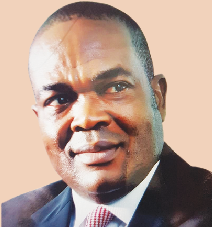
Dr. Joshua Awesome is a Coaching Psychologist/Executive and Business Performance Coach who has supported over 100,000 professionals across Africa and the globe. He can be reached via: joshua@africainmind.org