Nigeria is advocating the development of a continent-wide payment card that would enable direct transactions between African currencies, eliminating the need for conversions through the U.S. dollar and other intermediary currencies as part of efforts to deepen regional trade and reduce transaction costs.
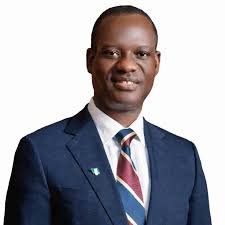
The proposal was made by Taiwo Oyedele, Nigeria’s minister of finance and coordinating minister of the economy, during a recent meeting in Abuja with a delegation from Mastercard, where discussions centred on strengthening Africa’s payment infrastructure and accelerating economic integration under the African Continental Free Trade Area (AfCFTA).
According to Oyedele, Africa has an opportunity to transform the way cross-border payments are conducted by creating a system that allows currencies on the continent to interact directly without reliance on third-party settlement currencies.
At present, most cross-border card payments within Africa are routed through currencies such as the U.S. dollar. This process often involves multiple currency conversions, increasing costs and creating inefficiencies for consumers and businesses alike.
For instance, when a Nigerian cardholder makes a payment in Ghana, the transaction is typically converted from Ghanaian cedis into U.S. dollars before being converted again into naira. The multiple exchange processes expose users to additional costs and exchange-rate fluctuations.
Speaking during the meeting, Oyedele said a dedicated African payment card could simplify transactions and strengthen economic ties among countries across the continent.
“We hope that, for example, we have a payment card that you can use to pay from naira to Kenyan shillings, to South African rand, without a third currency. And we know you can make it possible,” he said.
He noted that reducing dependence on intermediary currencies would improve transaction efficiency, lower costs for businesses and consumers, and support the broader objective of increasing intra-African trade.
Beyond cross-border payments, Oyedele also called on Mastercard to expand access to consumer credit in Nigeria, arguing that obtaining credit cards remains difficult even for individuals with stable incomes and strong financial standing.
The minister acknowledged the rapid growth of Nigeria’s financial technology sector but stressed that the industry still has considerable room for expansion.
He pointed out that Nigeria is home to five of Africa’s nine fintech unicorns, a development that reflects the country’s growing influence in the continent’s digital finance ecosystem.
“Our fintech sector is quite developed, but we know that we can do much better. We can be much bigger.It is interesting to know that Africa has nine unicorns, and five of them are in Nigeria. So we know that the possibilities are even bigger,” Oyedele said.
The push for a seamless African payment system comes at a time when the continent’s cross-border payments market is projected to experience rapid growth.
According to a recent report by venture capital firm Oui Capital, Africa’s cross-border payments industry is expected to expand from approximately $329 billion in 2025 to nearly $1 trillion by 2035.
The report attributes the projected growth to increasing fintech adoption, rising mobile money usage, expanding intra-African trade flows and the gradual implementation of AfCFTA across member states.
Despite the positive outlook, significant challenges remain. Fragmented financial systems, multiple currency conversions, high transaction fees and settlement delays continue to hinder efficient movement of money across African borders.
Analysts say addressing these bottlenecks through innovative payment infrastructure and greater financial integration could unlock substantial economic opportunities, enabling businesses and consumers to transact more easily across the continent while supporting the ambitions of Africa’s single market agenda.