Business A.M
No Result
View All Result
Tuesday, July 14, 2026
  • Login
  • Home
  • Technology
  • Finance
  • Comments
  • Companies
  • Commodities
  • About Us
  • Contact Us
Subscribe
Business A.M
  • Home
  • Technology
  • Finance
  • Comments
  • Companies
  • Commodities
  • About Us
  • Contact Us
No Result
View All Result
Business A.M
No Result
View All Result
Home Energy

Nigeria’s Aiteo wins Libya’s oil block as foreign firms return to Africa’s largest oil reserve holder 

Output reaches 1.49m bpd, showing 12-yr high since 2013

by Ben Eguzozie
June 28, 2026
in Energy, Frontpage
Nigeria’s Aiteo wins Libya's oil block as foreign firms return to Africa's largest oil reserve holder 
Nigeria’s Aiteo won the Libyan Murzuq M1 oil block, giving an African company a place in the latest exploration push as foreign companies return to Africa’s largest oil reserve holder.
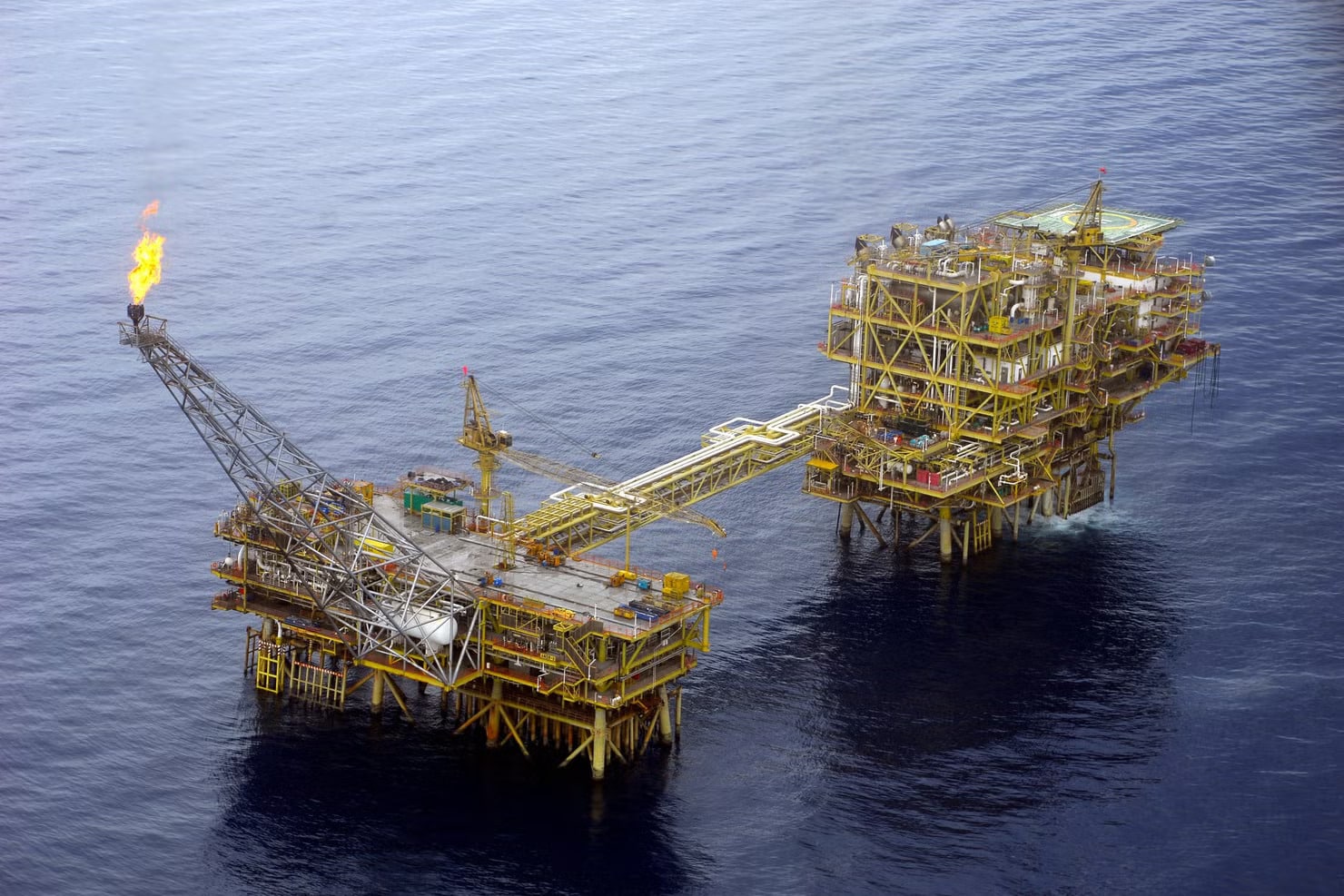
With crude and condensate output reaching 1.49 million barrels per day (bpd), Libya’s oil production has climbed to its highest level since 2013, a 12-year record, strengthening the country’s position among Africa’s top producers as foreign firms return to a sector built on the continent’s largest proven oil reserves.
Aiteo Nigeria, one of Africa’s largest indigenous, integrated energy conglomerates, was founded in 1999 by pan-African businessman Benedict Peters, the company operates across the entire energy value chain, from exploration and production to bulk petroleum storage, refining, and power generation.
Headquartered in Nigeria, with key locations in Abuja, Port Harcourt, Warri, London, and Geneva, Aiteo won the Murzuq M1 block in the new exploration blocks recently awarded, making it the only African company to participate in Libya’s oil return. The country now approaches its target output of 1.5 million bpd.
Last February, the NOC awarded new oil and gas exploration blocks to foreign companies in its first licensing round since 2007.
The winners included Chevron, Eni, QatarEnergy, Repsol, Türkiye Petrolleri, and Aiteo Nigeria (the only African company) as Libya sought to revive exploration and draw capital back into its upstream sector.
The awards covered five blocks out of about 20 offered across onshore and offshore areas, including acreage in the Sirte and Murzuq basins.
However, petroleum industry watchers said, the limited number of awards showed that investors are still cautious to enter in a Libya country that is almost not far from political instability.
The new oil output surge strengthens Libya’s position among Africa’s top oil producers, highlighting its vast reserves, estimated at 48 billion barrels.
Libya holds Africa’s largest proven crude reserves, estimated at about 48 billion barrels, roughly 41 percent of the continent’s total, according to the U.S. Energy Information Administration.
Africa’s total proven crude reserves are put at approximately 120 to 125 billion barrels, which accounts for roughly 7.5 percent of the world’s total. Over 90 percent of these reserves are concentrated within the member states of the African Petroleum Producers’ Organization (APPO).
The Libyan production boost follows increased efforts by the country’s National Oil Corporation to reposition the petroleum sector, as well as the returning of international oil companies to the war-torn North African nation
Despite ongoing political instability and operational challenges, the country’s petroleum sector has shown resilience, continuing to recover output.
The National Oil Corporation (NOC) said crude oil and condensate output rose to 1,487,723 barrels per day, putting Libya close to its target of 1.5 million barrels per day.
Massoud Sulaiman, chairman of NOC described the production level as a major achievement for Libya’s oil sector and praised workers across fields and production sites for sustaining output despite operational challenges. He also credited technical departments for monitoring operations, removing obstacles and supporting staff at production sites.
The new level places Libya among Africa’s biggest oil producers, alongside Nigeria, Algeria and Angola, strengthening the recovery of a sector that remains central to the country’s economy.

ALSO : Renewables account for 15% of global energy use despite record growth, REN21 Says

Much of its recoverable oil lies in the Sirte and Murzuq basins, making the country’s production recovery important for domestic revenue, regional supply and global crude markets.
Reports quoting NOC’s chairman Massoud Sulaiman said Libya’s crude production stood at 1,438,560 barrels per day, while condensate output touched 49,163 barrels per day, according to the state oil company.
Data from the U.S. Energy Information Administration indicated that five European countries, including Italy and Spain, took 71 percent of Libya’s crude exports in the first nine months of 2025.
According to Libya Herald, Italy received 13,434,662 tonnes of Libyan crude in 2025, accounting for nearly 25 percent of the country’s total crude imports.
The NOC said it wants to continue raising output before the end of 2026, a target that would increase oil revenue for an economy still heavily dependent on crude exports.
Industry watchers adduced the latest production milestone to the resilience of Libya’s oil sector, in a recovery push more than a decade after the country entered a period of political uncertainty following the death of Muammar Gaddafi in 2011.
Rival administrations, disputes over state institutions and recurring interruptions at oil fields, terminals and refineries, Libya’s oil sector has continued to recover output, attracting renewed interest from international energy firms.
Meanwhile Sulaiman the NOC chairman said they were working to restore refining capacity, saying in May that it aimed to restart the Ras Lanuf refinery, a 220,000 bpd facility within a year after resolving a long-running dispute over the facility.
The refinery has been idle since 2013, with its return considered by energy observers as coming to strengthen Libya’s downstream sector, supporting domestic fuel supply.
Ben Eguzozie
Ben Eguzozie
Previous Post

India’s telco Jio, eyeing $4bn IPO, targets Africa expansion, starting with Ghana 

Next Post

The steel plant that could change how Nigeria powers industrial growth

Next Post
The steel plant that could change how Nigeria powers industrial growth

The steel plant that could change how Nigeria powers industrial growth

  • Trending
  • Comments
  • Latest

CBN to issue N1.5bn loan for youth led agric expansion in Plateau

July 29, 2025

How UNESCO got it wrong in Africa

May 30, 2017
NGX taps tech advancements to drive N4.63tr capital growth in H1

Insurance-fuelled rally pushes NGX to record high

August 8, 2025

Glo, Dangote, Airtel, 7 others prequalified to bid for 9Mobile acquisition

November 20, 2017

6 MLB teams that could use upgrades at the trade deadline

Top NFL Draft picks react to their Madden NFL 16 ratings

Paul Pierce said there was ‘no way’ he could play for Lakers

Arian Foster agrees to buy books for a fan after he asked on Twitter

State

State Police by design

July 14, 2026
NAAPE moves to shield pilots, engineers with loss-of-licence insurance scheme

NAAPE moves to shield pilots, engineers with loss-of-licence insurance scheme

July 14, 2026
Global airlines are investing heavily in economy class cabins as competition for passengers shifts beyond ticket prices to the quality of the travel experience, prompting carriers to modernise fleets, redesign cabins and enhance onboard services in a bid to strengthen customer loyalty and improve long-term profitability. The renewed focus reflects a transformation in the aviation industry, where economy class, despite offering lower fares than premium cabins, remains the largest contributor to passenger volumes and an increasingly important driver of commercial performance. With millions of travellers continuing to prioritise affordability, airlines are finding that modest improvements in comfort and convenience can translate into stronger repeat business, improved customer satisfaction and higher ancillary revenues. As a result, carriers are directing substantial investment towards upgrading economy cabins through newer aircraft, ergonomically designed seats, advanced inflight entertainment systems, onboard connectivity, enhanced catering and improved cabin service. Industry analysts say the strategy is becoming a key differentiator as airlines compete more aggressively for passengers on both regional and long-haul routes. Unlike business and first-class travellers, whose numbers are relatively limited, economy passengers account for the overwhelming majority of airline traffic, making their overall travel experience increasingly central to airlines' growth strategies. Rather than relying solely on fare reductions to attract customers, airlines are seeking to build stronger brand loyalty by improving the value passengers receive throughout their journeys. "Passenger expectations have changed significantly. Travellers increasingly compare airlines based not only on ticket prices but also on comfort, reliability, connectivity and the overall onboard experience," aviation analysts note. Several of the world's leading airlines have already embraced the strategy. Carriers including Singapore Airlines, Qatar Airways, Emirates, Turkish Airlines, All Nippon Airways (ANA), EVA Air and Cathay Pacific have invested significantly in upgrading their economy cabins through improved seating, larger entertainment libraries, enhanced meal services and customer-focused cabin experiences. Although each airline has adopted different approaches, the underlying objective remains the same: making economy travel more comfortable for the largest segment of their customer base while strengthening long-term commercial competitiveness. Fleet modernisation is playing a critical role in that transformation. Next-generation aircraft such as the Boeing 787 Dreamliner, Airbus A350 and Airbus A321neo are enabling airlines to improve the passenger experience while simultaneously lowering operating costs. Compared with older aircraft, these models offer quieter cabins, larger windows, improved air quality, better humidity control and greater fuel efficiency, creating benefits for both passengers and airline operators. The newer aircraft also reduce fuel consumption and maintenance expenses, allowing airlines to improve customer experience without significantly increasing operating costs over the aircraft's lifespan. Technology has emerged as another major area of investment. Features once reserved almost exclusively for premium cabins, including USB charging ports, wireless internet connectivity, mobile application integration and personalised digital entertainment platforms, are increasingly becoming standard in economy class. Passengers are also benefiting from greater control over their travel experience, with digital services allowing them to access entertainment, communicate onboard and manage various aspects of their journeys more conveniently. The growing investment reflects changing consumer expectations in an increasingly digital travel environment. Recent international passenger satisfaction surveys consistently indicate that airlines investing in cabin comfort, inflight technology and customer service continue to perform strongly in global service rankings. While competitive pricing remains an important consideration for travellers, customer experience has become an increasingly influential factor in airline selection, particularly on medium and long-haul routes where comfort plays a greater role in purchasing decisions. The trend is expected to reshape competition within Africa's aviation industry as airlines expand their fleets to meet growing passenger demand.

Global airlines raise economy class spending to win passenger loyalty

July 14, 2026
US

How Vulnerable Are US Financial Markets?

July 14, 2026

Popular News

  • CBN to issue N1.5bn loan for youth led agric expansion in Plateau

    0 shares
    Share 0 Tweet 0
  • How UNESCO got it wrong in Africa

    0 shares
    Share 0 Tweet 0
  • Insurance-fuelled rally pushes NGX to record high

    0 shares
    Share 0 Tweet 0
  • Glo, Dangote, Airtel, 7 others prequalified to bid for 9Mobile acquisition

    0 shares
    Share 0 Tweet 0
  • Nigeria agrees with Russia on first nuclear energy plant by mid 2020s

    0 shares
    Share 0 Tweet 0
Currently Playing

CNN on Nigeria Aviation

CNN on Nigeria Aviation

Business AM TV

Edeme Kelikume Interview With Business AM TV

Business AM TV

Business A M 2021 Mutual Funds Outlook And Award Promo Video

Business AM TV

Recent News

State

State Police by design

July 14, 2026
NAAPE moves to shield pilots, engineers with loss-of-licence insurance scheme

NAAPE moves to shield pilots, engineers with loss-of-licence insurance scheme

July 14, 2026

Categories

  • Frontpage
  • Analyst Insight
  • Business AM TV
  • Comments
  • Commodities
  • Finance
  • Markets
  • Technology
  • The Business Traveller & Hospitality
  • World Business & Economy

Site Navigation

  • Home
  • About Us
  • Contact Us
  • Privacy & Policy
Business A.M

BusinessAMLive (businessamlive.com) is a leading online business news and information platform focused on providing timely, insightful and comprehensive coverage of economic, financial, and business developments in Nigeria, Africa and around the world.

© 2026 Business A.M

Welcome Back!

Login to your account below

Forgotten Password?

Retrieve your password

Please enter your username or email address to reset your password.

Log In
No Result
View All Result
  • Home
  • Technology
  • Finance
  • Comments
  • Companies
  • Commodities
  • About Us
  • Contact Us

© 2026 Business A.M