

From a dizzying height of almost 35 percent at end-December 2024, Nigeria’s headline inflation rate as given by the National Bureau of Statistics (NBS) dropped to 14.06 percent in October 2026. To achieve this more than 60 percent decline, the NBS had to rebase the calculation of the Consumer Price Index (CPI)—which measures the rate of inflation—as well as change its methodology in early 2025.
Consequent upon these measures, the headline inflation rate crashed to 15.15 percent at end-December 2025; it has continued declining since then. In Economics science, a high inflation rate means the general prices of goods and services (in an economy) are rising rapidly, causing money to lose its purchasing power faster than normal.
In 2023, the two key policies of President Bola Ahmed Tinubu administration literally castrated Nigeria’s local currency—the Naira— making its value crash by about 300 percent. Specifically, the removal of fuel subsidy on May 29, 2023, and the full floatation of the Naira, both triggered runaway inflation. Petrol subsidy removal pushed the price of Premium Motor Spirit (PMS) from below N200 per litre at the pump to over N800 per litre; and further to about N1,500 per litre as of today.
Similarly, the kindred policy of Naira floatation crashed the exchange rate of the currency from below N500/US$ to almost N2000/US$ in the foreign exchange (FX) market—before dropping to about N1400/US$ currently. And as a highly import-dependent economy, the crash of the local currency in the FX market led to huge imported inflation; more so, with the importation of so much PMS for local use.
Although some of these scenarios have been altered by recent developments in the economy, including the effective take-off and operation of the Dangote Refinery—a few core drivers of the runaway inflation trend remain potent. Among these, the food crisis—that has deteriorated to food insecurity—is tormenting millions of Nigerians. In point of fact, the declining CPI report of the NBS notwithstanding, more Nigerians are being driven into poverty and destitution.
From the 133 million multidimensionally poor Nigerians given by the NBS study in 2022, both the World Bank and the International Monetary Fund (IMF) have alerted Nigeria that its economic reforms are impoverishing more of its citizens. Indeed, the World Bank has projected Nigeria’s poverty rate at 63 percent this year—meaning that 139 million to 140 million Nigerians would sink into poverty (‘Nigeria Poverty and Equity Brief’, by the World Bank).
This gives an inverse relationship between the ‘declining’ inflation rate and the rising poverty level in the country. Thus, while the President Tinubu administration has been publishing and celebrating the ‘dropping’ CPI all these while, millions of Nigerians consider those figures as mere ‘paper work’. This is because virtually every sector is in crisis: agriculture (food insecurity); healthcare (high cost of medicines); transportation crisis; housing crisis, and general insecurity.
Today, no matter the alterations or changes in CPI methodology, food inflation figures have remained high—at about 20 percent in the NBS’ October 2026 data. And all of a sudden, the Federal Government of Nigeria (FGN) has woken up from its slumber to ‘fight’ food insecurity. It has announced plans to ‘crash’ food prices by releasing three million bags of fertiliser, distributing stored grains, and increasing investment in agricultural production.
Agriculture and Food Security Minister, Abubakar Kyari, made this known in Abuja on Thursday, November 19, 2026, at the presentation of the 2026 Wet Season Agricultural Performance Survey Report (APS), and unveiling of “a plan to lower food costs, stabilise the market, boost domestic production, and achieve food sovereignty.”
Kyari announced that grains purchased and stored under the Bank of Agriculture’s Guaranteed Minimum Price programme would soon be released into the market “as part of efforts to prevent excessive price increases.” To this end, the minister said the FGN would soon announce the modalities for distributing the stored commodities.
While the government is proposing to ‘fight’ the “excessive price increases” of food items—a core driver of hyperinflationary trend—the FGN has also suddenly struck a deal with the Organised Labour to pay N70000 per month as transport ‘support’ to civil servants. Effective this month, the allowance is to be paid for six consecutive months in the first instance.
Allied to this is also a deal to “reduce public transport fares by about 40 percent.” The FGN on Thursday, November 19, 2026, signed an agreement with China’s Yutong Bus Company and Nigerian partner, YP Automobile, to introduce compressed natural gas—CNG-powered buses and establish a local assembly plant. However, details of the plant’s investment value, construction schedule and production commencement date are yet unknown.
In yet many other ways of managing the cost-of-living crisis, the FGN has embarked on several ‘transfer payments’ to various segments of the Nigerian populace. There is the Fifty Thousand Naira grant being given out to Nigerians at the lowest wrong of the socio-economic ladder.
There is also the FGN’s Family Strengthening and Development Programme under which vulnerable households are identified, and given a grant of One Hundred Thousand Naira (N100000) each. The programme, coordinated by the Hope for Indigenous Family Support Initiative’s Coordinating Office under the Federal Ministry of Youth Development, is designed to cushion the effects of economic hardship, arising from high food prices and economic reforms’ fallouts.
According to a statement by the programme’s management board, the intervention was announced by the ministry on September 10, 2026, with selected beneficiaries expected to receive N100,000 in financial support.
There is yet a number of such palliatives—in cash and kind—being dolled out by the FGN—all to assuage the worsening plight of the citizenry, at a time of consistent disinflation. In other words, the reported disinflation by the NBS has not reflected in the strengthening of the purchasing power of most Nigerians, who were impoverished by President Tinubu’s reforms’ outcomes. Hence, the potpourri of crises management initiatives on the part of the FGN. But for how long?
- business a.m. commits to publishing a diversity of views, opinions and comments. It, therefore, welcomes your reaction to this and any of our articles via email: comment@businessamlive.com

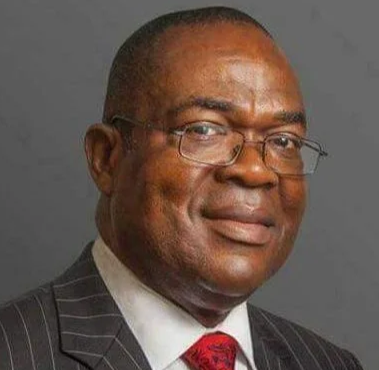
Marcel Okeke, a practising economist and consultant in Business Strategy & Sustainability based in Lagos, is a former Chief Economist at Zenith Bank Plc. He can be reached at: obioraokeke2000@yahoo.com; +2348033075697
(text only)





Nigeria’s declining inflation and worsening cost-of-living paradox