- Global natural gas demand up 1.7% to 4,202 bcm in 2025
- Global LNG trade rose to a record 580 bcm
- Nigeria exported 20 bcm of LNG in 2025
Nigeria’s position in the global gas market is coming under renewed scrutiny as record worldwide demand, geopolitical disruptions and a growing appetite for liquefied natural gas reshape the economics of energy security.
Global natural gas demand climbed to an all-time high of 4,202 billion cubic metres (bcm) in 2025, up 69 bcm, or 1.7 percent, from a year earlier, while global LNG trade rose to a record 580 bcm, according to the Global Gas Report 2026 published by the International Gas Union (IGU) and Snam, with analysis from Rystad Energy.
Nigeria exported 20 bcm of LNG in 2025, placing it among the world’s significant LNG suppliers, although well behind the United States, Qatar, Australia and Russia. The report puts US LNG exports at 150 bcm, Qatar at 111 bcm and Australia at 109 bcm.
The numbers underline both the opportunity and the challenge confronting Nigeria: global demand for gas is expanding, but competition among suppliers is intensifying while geopolitical shocks are increasingly capable of disrupting established trade routes.
The report says the global gas system entered 2026 from a position of relative strength after years of investment in LNG capacity, storage and supply diversification. But that resilience was tested by the disruption in the Strait of Hormuz, which constrained about 20 percent of global LNG supply, equivalent to roughly 3 per cent of total global gas supply.
The shock has been felt particularly heavily in price-sensitive emerging markets in Asia and Africa. Global LNG trade fell four percent year-on-year to 284 bcm during January-June 2026, with the report attributing the decline largely to the disruption.
For Africa, the implications extend beyond the immediate supply shock.
African natural gas demand increased by 6 bcm, or 3.4 percent, in 2025, reaching about 174 bcm. But the report expects African demand to remain broadly flat in 2026, increasing by only about 0.3 bcm, or 0.2 percent, as higher prices and supply disruptions weigh on consumption.
That contrast — rising underlying demand but weak near-term growth — highlights the central problem facing gas-rich African economies. Resources alone do not guarantee access to affordable energy or export revenue. Infrastructure, investment, domestic demand and the ability to withstand international price and supply shocks are increasingly decisive.
Nigeria’s infrastructure challenge
The report points to developments in Nigeria that could help unlock more of the country’s gas potential.
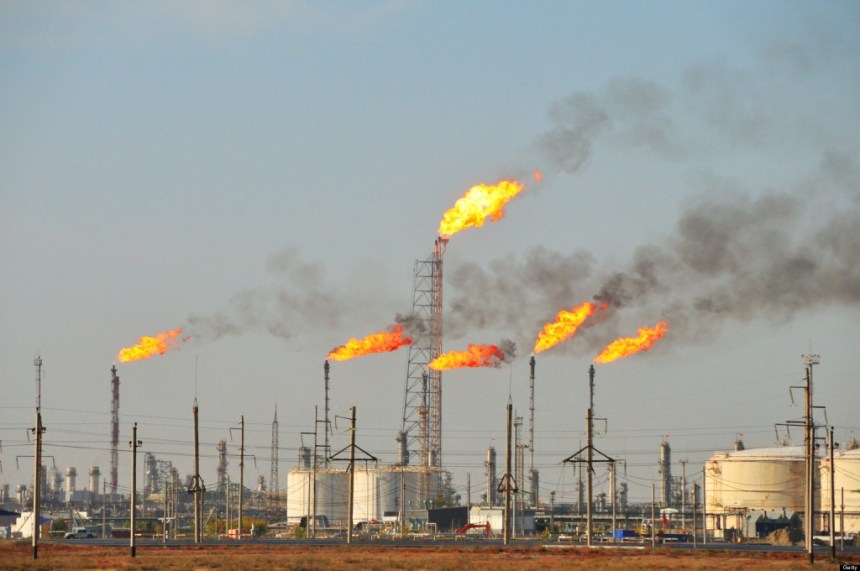
In 2025, the Nigerian government issued permits to 28 companies to develop flare-gas utilisation projects under the Nigerian Gas Flare Commercialisation Programme. At the same time, the Midstream and Downstream Gas Infrastructure Fund signed a memorandum of understanding with the African Export-Import Bank aimed at mobilising as much as $500 million over four years for gas infrastructure development.
Those initiatives matter because Nigeria’s opportunity is not confined to LNG exports.
Greater investment in gathering, processing, transportation and domestic distribution could allow more gas currently stranded or flared to enter productive use, while strengthening the country’s ability to supply power and industry.
The global market is simultaneously creating a powerful incentive for such investment.
Natural gas demand in 2025 was driven by Asia, the Middle East and Europe, while power generation remained the largest end-use sector, accounting for 34 percent of global demand, or 1,448 bcm. The report also identifies data centres, artificial-intelligence infrastructure and rising cooling requirements as emerging sources of electricity demand that could further increase the need for reliable and flexible gas-fired power generation.
For Nigeria, that creates a potentially important strategic intersection: the country needs more reliable domestic electricity while international markets continue to seek LNG.
A changing LNG map
The global LNG market is also becoming more competitive.
The United States overtook Russia in 2025 to become the world’s largest net natural-gas exporter, exporting 167 bcm, while its LNG supplied more than half of Europe’s LNG imports. Global LNG trade increased by 43 bcm during the year to 580 bcm.
The expansion of US LNG, combined with new supply from Qatar and other producers, means Nigerian gas projects will increasingly compete for capital and customers in a market where buyers have more options.
Yet the same diversification that increases competition may also create opportunities for producers with reliable supply.
The report estimates that global gas demand could reach between 4,516 bcm and 4,575 bcm by 2030 if recent demand trends continue. That would require further investment in production, liquefaction, transportation, regasification and storage.
For Nigeria, the question is therefore less whether the world will need gas and more whether the country can convert its resource base into dependable supply before competing producers capture the incremental demand.
The bigger risk
The report’s central message is that energy security is becoming inseparable from infrastructure resilience.
The Strait of Hormuz disruption produced a much smaller price shock than the energy crisis of 2022 because the global system had more diversified supplies, additional LNG capacity and greater storage availability.
That lesson carries particular weight for Nigeria.
A country seeking to expand LNG exports while solving domestic power shortages needs infrastructure capable of serving both markets. It also needs stable investment conditions, competitive project economics and the ability to move gas from fields to processing facilities, power plants, industrial users and export terminals.
The global gas market is signalling that demand will remain significant. The investment race is now about determining which producers will be able to supply that demand reliably, competitively and with lower emissions.
Nigeria already has the resource base and remains a significant LNG exporter.
The next phase of the country’s gas story will depend on whether it can build the infrastructure and investment framework needed to turn that geological advantage into sustained economic value.