
Onome Amuge
When tourists visit Tuscany in Italy, they don’t just admire the scenery, they crush grapes, taste wine, and learn how farming sustains a centuries-old culture. In Kenya, visitors now pay to experience coffee harvesting on local estates. Across India, thousands visit fruit orchards, tea plantations, and dairy farms every month.
This emerging global movement, known as agritourism, is quietly transforming rural economies worldwide. It’s a sector that blends agriculture and tourism, allowing visitors to experience farming as an adventure, a learning journey, and a lifestyle. But while other countries are cashing in on this multibillion-dollar phenomenon, Nigeria is barely scratching the surface.
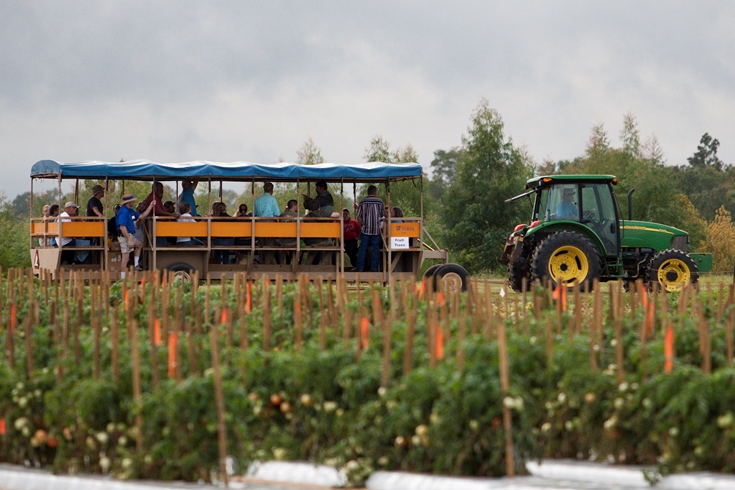
At its simplest, agritourism means opening farms to visitors. But it’s more than a stroll through green fields. It includes farm tours, harvest festivals, workshops, tastings, local craft exhibitions, and even farm-stay lodges where guests live like farmers for a few days.
Globally, this combination of culture, leisure, and education is now one of the fastest-growing travel segments. According to research by IMARC Group, the global agritourism market was worth $73.2 billion in 2024 and is projected to grow to $205.6 billion by 2033, expanding at 10.9 per cent annually.
Driving this trend is a worldwide hunger for authentic experiences, the kind that reconnect people with nature and local communities. Yet for Nigeria, a nation of fertile land, diverse crops, and colourful traditions, agritourism remains a sleeping giant.
“Farming and culture are part of our DNA. But we’ve never fully explored how to make them an experience people will pay for,” says Kolawole Adeniji, CEO of Niji Group, one of Nigeria’s leading agribusiness firms.
Why agritourism matters for Nigeria now
Agriculture remains the backbone of Nigeria’s economy, employing over one-third of the population. Yet, most farmers are seen to live below the poverty line. Tourism, on the other hand, contributes just 4.5 per cent to Nigeria’s GDP, far below its potential in a country with such cultural and ecological diversity. Agritourism sits at the intersection of these two sectors and is considered a hybrid model that can multiply value.
When tourists visit a farm, they don’t just buy food; they buy stories, memories, and identity. They spend on transportation, accommodation, local food, crafts, and festivals. This spending flows directly into rural communities, creating jobs and infrastructure.
Experts argue that if Nigeria were to invest strategically in agritourism, it could trigger a rural renaissance, revitalising local economies, reducing rural-urban migration, and creating new career paths for young people.
According to Ayo Adebajo, an economist at the University of Ibadan, agritourism offers a chance to turn subsistence farming into an experience economy. It keeps rural youth employed, revives local pride, and brings new money into villages.
From Tanzania’s tea plantations to Morocco’s coffee farms, African nations are already seeing the benefits of merging agriculture with tourism. Rwanda has turned its coffee tours into premium tourist attractions. Kenya’s farm lodges and eco-estates now attract global visitors looking for sustainable travel options.
In the United States, agritourism contributes more than $900 million to annual farm revenues. In Europe, thousands of small farms have reinvented themselves as experiential destinations, a model supported by government incentives and rural tourism funds. But Nigeria, despite its 34 million hectares of arable land, remains absent from this global trend.
Analysts say this is due to a mix of poor infrastructure, weak policy support, insecurity, and lack of investor awareness.
“Our rural areas are rich in culture and produce, but they are isolated.Visitors can’t access many farms because of bad roads, insecurity, or lack of accommodation. Agritourism cannot thrive without accessibility,” said Moji Davids, group managing director of Xtralarge Farms and Resorts.
One of the most identifiable roadblocks to agritourism’s success in Nigeria is the poor road network. Most of the country’s farms are located in remote or poorly connected areas, making them inaccessible to tourists.
Farmers also face erratic electricity, limited internet, and inadequate water supply, all of which affect their ability to host visitors. Then there’s insecurity. From kidnapping to farmer-herder clashes, rural Nigeria has become increasingly volatile, discouraging both tourists and investors.
However, some stakeholders are already looking for solutions. Trust Henry Ogboi, president of the World Agritourism Organisation (WAO), said his organisation is working with local authorities to identify safe agritourism corridors, consisting of clusters of rural communities where tourism can grow under proper security arrangements.
“We’re partnering with security agencies to secure agribusiness zones. Safety is the foundation. Once we ensure it, investors will come, and tourists will follow,” Ogboi said.
Ogboi’s group has been championing the creation of agritourism villages, which are more like purpose-built hubs that combine farming, hospitality, education, and recreation.
“These villages would serve as mini-ecosystems. You can visit a farm, learn how food is grown, eat local meals, stay in eco-lodges, and buy handmade products, all in one place,” he said.
According to WAO projections, establishing agritourism villages across Nigeria’s six geopolitical zones could create over 500,000 direct and indirect jobs in five years, while boosting local food production and exports.
Ogboi also called for Nigeria to lead the creation of a global agritourism regulatory body, which could operate under the United Nations framework to ensure standards, transparency, and fair trade across the industry.
While the government is yet to deliver significant agritourism centres, the private sector is already experimenting.
Xtralarge Farms and Resorts, based in Ibadan, offers visitors weekend retreats that include farm work, cooking local dishes, and seminars on agribusiness. The model has drawn hundreds of visitors and inspired similar ventures across southwestern Nigeria.
Nigeria’s youth demographic which includes over 60 per cent of the population, has been identified as agritourism’s biggest asset. This is as young people are increasingly seeking careers that combine technology, creativity, and sustainability.
According to Oluwabunmi Adeyemi, founder of Trippers by Bidaymi AMA Ltd, an innovative travel and event company dedicated to revolutionizing tourism across Africa, this generation is the future of agritourism.
Adeyemi recently published a groundbreaking research titled “The Importance of Agricultural Tourism,” showing how agritourism can drive sustainable development and education in Africa.
“Tourism is not just about relaxation anymore; it’s about learning and impact. Agriculture tells a story of innovation, tradition, and resilience, and that story deserves to be shared with the world,”he said.
His research cites Ondo State’s cocoa farms as prime examples of potential agritourism destinations, where tourists can learn about the entire cocoa process,from cultivation to fermentation to chocolate tasting.
He also linked agritourism to several UN Sustainable Development Goals (SDGs), including decent work, sustainable communities, and responsible consumption.
Experts say agritourism could do for rural Nigeria what oil did for Lagos and Port Harcourt, but in a more sustainable way. In countries like India, governments support agritourism through grants, tax reliefs, and marketing campaigns. Experts say Nigeria could replicate that model by including agritourism in the National Tourism Development Plan and offering low-interest loans for rural tourism startups.
Nigeria’s diverse agro-ecological zones are seen to offer endless possibilities for creative agritourism products. These include”
- Cocoa tours in Ondo where visitors can see chocolate being made.
- Rice field experiences in Kebbi, teaching visitors the stages of cultivation.
- Palm wine and cassava festivals in Delta and Ekiti, celebrating traditional food heritage.
- Fishing experiences in Niger Delta villages.
- Shea butter workshops in Kwara and Niger States, led by women cooperatives.
Each experience, experts say, tells a piece of Nigeria’s cultural story, and could become an exportable tourism brand if properly packaged.
Beyond money, agritourism offers a way to reconnect Nigerians with the land. In a country often divided by class and geography, shared experiences around food and farming can build community and national pride. Moreover, by promoting eco-friendly farming and conservation, agritourism aligns with Nigeria’s climate and sustainability goals.
“We have to show that agriculture is not just survival; its heritage. If we preserve and celebrate it, we protect both our culture and our environment,” Adeyemi stated.
Financial institutions also have a role to play. Agritourism projects can be capital-intensive, requiring loans for land development, lodging facilities, and marketing. Stakeholders suggest creating a dedicated Agritourism Fund , similar to the CBN’s intervention funds in agriculture and manufacturing , to support startups in this niche.
Nigeria’s potential in agritourism is as vast as its farmlands. From the yam fields of Benue to the spice gardens of Kano, from cocoa in Ondo to oil palm in Cross River, every region has a story to tell ,and visitors are waiting to hear it. But stories untold do not sell themselves. They need vision, investment, and marketing.
Analysts assert that If Nigeria can bridge the gap between its agricultural richness and tourism potential, it could build not just a new industry, but a new identity that is rooted in sustainability, creativity, and community.








