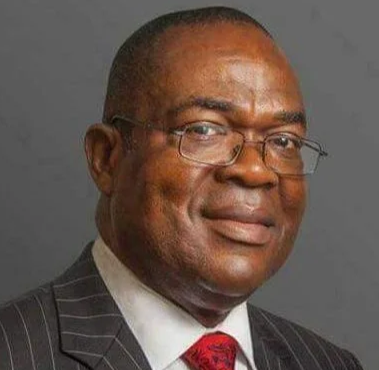
Since his assumption of office as Nigeria’s substantive Minister of Finance and Coordinating Minister of the Economy on April 23, 2026, Taiwo Oyedele has been experimenting with several economic policy frameworks to get the ‘gains’ of President Tinubu’s reforms to impact Nigerians. He has been forthright in asserting that Nigerians deserve to have ‘better life’ resulting from the series of socio-economic reforms of the government of the day.
In pursuit of this, the minister has been exploiting every opportunity to adopt some short-term economic frameworks to initiate government programmes and activities that could rub off (positively) on the wellbeing of the citizenry. He started with admission of some weaknesses and failures of the reforms; and formed a ministerial panel to review the entire reform package of the Tinubu administration, with a view to making amends where (ever) necessary.
In the past seven months or so, Oyedele, it seems, has made available to Mr. President some bits of ‘novelty’ to try to move the country from macroeconomic stability to improved wellbeing for the citizenry. Thus, in the build-up to the nation’s 66th independence anniversary (October 1, 2026), the Tinubu administration singled out ‘crashing’ cost of transportation as key to meaningfully reducing the very painful high cost of living in the land.
As coordinating minister of the economy, the plan had Oyedele’s imprimatur as a critical measure to assuage the pains of hunger and impoverishment visited on millions of Nigerians by government reforms. Under this initiative, the Federal Government of Nigeria (FGN) was to massively deploy compressed natural gas (CNG)-powered mass transit lorries across the country. At the same time, petrol (premium motor spirit, PMS) was to be sold at a discount of N66 per litre (at the pump) at all NNPCL fuel stations.
Allied to this programme was the ‘hurried’ agreement between the government of the day and the Nigerian Labour Congress (NLC) for each worker to be paid N70,000 transport allowance, effective November 2026. This stipend is to last for six months in the first instance. But from all indications, the fuel discount initiative ended up a failure: there were not many lorries to go round, nor did the NNPCL keep its own part of the bargain. It rather raised the price of PMS mid-way into the month (November).
On their own part, the NLC and the Trade Union Congress (TUC) got into a lingering disagreement over the propriety and sustainability of the ‘token’ allowance from the government. While the TUC rejected the allowance as an exercise in tokenism, the NLC believes it should be accepted even as negotiations for a living wage goes on. At present, the proposal remains botched.
While all these are yet hanging, the FGN also came up with sharing of the sum of fifty thousand naira to the poor and down-trodden. The federal government says the “cash grant” is coming under its National Emergency Relief and Stabilisation Intervention (NERSI). But the mode of the identification and selection of the very poor and vulnerable Nigerian households has remained contentious. The country has no credible social data nor reliable personal identification mode; a gap that usually turns the monetary handouts to political patronage.
The other day, too, Minister Oyedele, through the National Economic Council (NEC) chaired by Vice President Kashim Shettima, got an endorsement for a 90-day “economic action plan.” The plan, according to Mr. Oyedele, aims to translate Nigeria’s macroeconomic reforms into immediate relief for citizens grappling with the high cost-of-living crisis.
This unprecedented three-month plan, according to the minister, is to attain food affordability, completion of high-impact projects, resolution of investment bottlenecks, regulated household support, and reduction of transport costs, among others. These objectives are to be jointly pursued by the three-tiers of government, even as all of them are almost fully preoccupied with ongoing campaigns for January/February 2027 general elections.
Thus, wrongly or otherwise, this bouquet of initiatives and programmes by the FGN at this point in time is being widely perceived as a mere vote-buying gambit. And truly, with so much that is stuffed in the 90-day plan, it proves almost certain that the government is merely up to some propaganda. Moreover, the 90-days is only equal to the number of days outstanding for presidential election campaigns in the country.
And as if to keep Nigerians inundated with this potpourri of economic policies, programmes and frameworks, Mr. Oyedele, utilised the opportunity of the recent 32nd economic summit of the Nigerian Economic Summit Group (NESG) in Abuja, to announce yet another framework. Tagged “Nigeria Economic Policy Framework (proposed)”, the framework identifies seven priorities: stability, productivity, enterprise, capital, people, markets, and institutions.
According to Oyedele, together, “these pillars aim to build a productive, competitive, diversified and inclusive economy that creates quality jobs, raises household real incomes and promotes shared prosperity.” Under the proposal, government agencies would conduct mandatory impact assessments before implementing major economic measures.
“These assessments would identify the problems requiring intervention, provide supporting evidence, estimate costs, specify intended beneficiaries and establish conditions for potentially terminating the measures.” The framework also aims to promote fair competition and improve coordination among government institutions.
Oyedele emphasised that the proposed framework does not constitute a development plan or a catalogue of investment projects; instead it establishes an economic doctrine to guide government decisions over the long term. “Authorities are also considering giving some of its principles a legal foundation to reduce policy reversals between successive administrations,” he said.
No doubt, at a cursory reading, this proposed “Nigeria’s Economic Policy Framework” looks potentially a significant intervention in the country’s economic governance architecture. As can be inferred from the finance minister’s presentation, it is an attempt to establish a durable national system for making economic decisions, evaluating their consequences, assigning institutional responsibility and measuring whether economic growth actually improves the lives of Nigerians.
However, it is a notorious reality that Nigeria does not need more economic policies; it needs greater consistency between policies, more credible implementation, transparent measurement of results and stronger accountability for economic outcomes. In Nigeria, economic policies are often announced with a lot of political visibility but the underlying assumptions, implementation responsibilities, performance benchmarks and exit conditions are hardly sufficiently transparent.
Still, regarding minister Oyedele’s document, can a framework intended to survive successive administrations become truly binding in a democratic setting? Can the federal government secure the buy-in and dutiful implementation of the framework by the sub-nationals without compromising constitutional autonomy? And what independent mechanism will prevent the framework becoming one of the well-written government documents with limited influence on actual decisions?
These questions are most pertinent under the President Bola Ahmed Tinubu administration that has sufficiently shown a lot of recklessness in economic and fiscal governance. The simple annual plans —Appropriation Acts— have become documents that are subject to the whims and caprices of the President and his cabinet. In the past three years, monetary and fiscal policies have almost been acting as countervailing forces to each other. Ministries, Departments and Agencies (MDAs) have (each) been operating in ‘silos’, almost to the exclusion of the ‘rest’ of the government.
In this milieu and governance ecosystem, the Taiwo Oyedele proposal can only be a wild dream; a kite for the gullible public to be pursuing at this point in time. Nothing more!
- business a.m. commits to publishing a diversity of views, opinions and comments. It, therefore, welcomes your reaction to this and any of our articles via email: comment@businessamlive.com

Marcel Okeke, a practising economist and consultant in Business Strategy & Sustainability based in Lagos, is a former Chief Economist at Zenith Bank Plc. He can be reached at: obioraokeke2000@yahoo.com; +2348033075697
(text only)