Barely six months to Nigeria’s 2027 general elections, and few days to the commencement of campaigns, the Federal Government of Nigeria (FGN) and its economic policymakers seem to have entered ‘injury time.’ In the game of football (in particular), injury time is implemented by the referee to make up for time lost due to substitutions, disciplinary penalties (yellow and red cards), injury to players, arguments with the referee and other delays in the course of play.
According to the campaign timetable for the 2027 general elections issued by the electoral umpire—the Independent National Electoral Commission (INEC)—campaigns for the Presidential and National Assembly elections begin on Tuesday, 19 August 2026, and close 15 January 2027, exactly 24 hours before the elections scheduled for 16 January 2027. Campaigns for governorship and other positions commence in September, 2026.
Since the beginning of this year, politicians, and the political leadership of the country have practically diverted all their attention to political scheming and strategising in pursuit of the general elections. On the economic front, the powers that be merely clung to, and flaunted only statistics showcasing macroeconomic stability. Thus, the Nigerian economy, in recent times, has been subjected to quick patches under conditions akin to an injury time in the game of football.
The FGN, in the mode of injury time, has been setting up motley committees, including the one to reform the entire economic reforms, so far. In the injury time, almost every ministry, department and agency (MDA) is hurriedly putting together one initiative or another for official launch before the political campaigns commence. To handle the injury time in the economic realm, President Bola Ahmed Tinubu effected a change of baton at the apex of the economic management team (EMT), by replacing Wale Edun with Taiwo Oyedele—a tax czar—as the minister of finance and coordinating minister of the economy.
Although all critical stakeholders, including the World Bank, the IMF, global rating agencies, and development partners have given credit to the FGN for achieving the stability of the macroeconomy, they have also warned to no end about the resultant impoverishment, hunger and suffering arising from the reforms. Apparently at its wits’ end on what else to do (better) to meaningfully improve the people’s lot, the FGN has entered an injury-time mode, putting quick patches here and there on the economy.
Head of the EMT, Oyedele, on his own, and as rep of the president, since assumption of office in April, has been setting up and/or inaugurating numerous committees on the economy. But as the committees go to work, the EMT (indeed the FGN) is running out of time, as full-blown electioneering is just a few days away. What will the scorecard of the Tinubu administration be, that it would show the people during the six-month campaign?
Apparently running against time, President Tinubu and his arrowhead, Oyedele, seem to have adopted a new ‘trick’ of buck passing: using every opportunity to blame the subnational governments for the Nigerian economy ‘stagnating’ at stability only. The economy has attained “growth without development.” Tinubu, the other day, while speaking to traditional rulers from Ibadan, Oyo State, had to lecture state governors on how not to utilise their resources in building ‘empty’ flyovers.
Although President Tinubu was addressing a group on a courtesy call to him, he used the occasion to criticize the governors for embarking on elephant projects, stressing that they (governors) now receive four to five times what used to be their revenue allocation under the immediate past federal administration. He told his visitors that the state governments should take development to the grassroots, not the federal government. The president even pointed to the states now regularly paying salaries of their civil servants, as well as entitlements of their pensioners—as evidence of the gains of the FGN’s reforms.
As if taking a cue from President Tinubu, Oyedele deployed the same method at the ‘Delta State Economic and Investment Summit’, where he said that “while the federal government can deliver macroeconomic stability, the responsibility for translating that stability into economic prosperity rests largely with state and local governments.” Oyedele said macroeconomic stability alone cannot guarantee genuine economic transformation, stressing that decisions capable of creating jobs, attracting industries and stimulating local production must be taken by state governments that understand their comparative advantages.
According to him, “The centre secures economic stability; the state converts stability into shared prosperity, and local governments deliver it as the tangible highest standard of living for every family. That division of labour is where true fiscal restructuring takes place.” Echoing President Tinubu, Oyedele said the FGN’s reforms had significantly increased revenues accruing to states and local governments, enabling them to pay salaries, clear pension arrears, and invest more in infrastructure and human development.
But, has the FGN’s reforms, apart from the vaunted stability, provided a sufficient enabling environment for persons, households and businesses to thrive? The tight monetary policy of the Central Bank of Nigeria (CBN), for instance, has in several ways been stifling local businesses and entrepreneurship. In point of fact, the high benchmark interest rate in the economy—the Monetary Policy Rate (MPR)—set by the apex bank for upwards of three years, has hampered the accessibility and affordability of credit to Small and Medium-size Enterprises (SMEs).
The full floatation of the naira three years ago—in a bid to unify exchange rates in the economy—practically dealt a death blow on the local currency—leaving it now thoroughly undervalued. One of the net effects of this has been a high dose of imported inflation, as economic agents struggle to keep their activities going. Many businesses have had to either whittle down their operating capacity, keep incurring huge losses or shutdown, and leave Nigeria.
Infrastructural decay in Nigeria remains worrisome: whether the roads, railways, sea or airports, the story is the same—decrepit facilities. Energy or power supply remains in a worse state, leaving businesses and households to depend on their (own) generating sets almost all the time. In desperation or frustration, many businesses and organisations have been ‘migrating’ to renewable energy sources (especially solar energy)—cutting off from the national grid.
The ever-worsening insecurity in Nigeria remains a palpable threat to all persons and businesses. The rising spate of kidnapping, terrorism, banditry, brigandage, among other social ills, is almost rendering the entire country unlivable. Hundreds of thousands of farmers have been displaced from their (ancestral) lands by the bandits and terrorists; with many of them now living in internally-displaced persons (IDPs) camps across the country.
With all these, is it safe to say that the FGN has provided the enabling environment for the state and local governments to cause real development at the grassroots? Apart from the threat of insecurity, prices of petrol (PMS) or diesel, cost of funds, and other operating costs remain outlandish for businesses to gainfully set up in the sub-urban and rural communities—and create jobs.
Truly, the onus is yet on the FGN to keep reforming its reforms to improve the lot of the people. The current injury time mode or buck passing brings no light at the end of the tunnel. The Nigerian economy remains dangerously on a precipice!
- business a.m. commits to publishing a diversity of views, opinions and comments. It, therefore, welcomes your reaction to this and any of our articles via email: comment@businessamlive.com

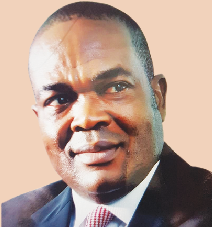
Marcel Okeke, a practising economist and consultant in Business Strategy & Sustainability based in Lagos, is a former Chief Economist at Zenith Bank Plc. He can be reached at: obioraokeke2000@yahoo.com; +2348033075697
(text only)