GERONTOCRACY is still firmly rooted in Africa. The three elections that occurred since the past few months attest to this. Not a far-fetched phenomenon. The impact of hidden hands is also likely undeniable in all three. It is not the sit-tight leadership that is the only problem. More disturbing is the complicity and double standard of regional and international intergovernmental agencies that seem to condone the perpetrators under the guise of so-called democracy. They tend to behave like the worst of democracy is better than the best of military regime. The same set of agencies are not only quick to condemn military coups, they are quick to pronounce sanctions on the governments run by the military juntas.
As if expecting the results of the recent Uganda’s election to still prop up the incumbent, the chairperson of African Union Commission, Mahmoud Ali Youssouf, has rushed to commend the conduct of the elections and has congratulated Yoweri Kaguta Museveni on his re-election, even acknowledging that Museveni scored 71.61 percent of the votes cast during the presidential elections held on January 15, 2026. The chairperson, who ignored the fact that Museveni is clocking 40 years in office in 2026, expressed “sincere appreciation to H.E Goodluck Jonathan, former President of the Federal Republic of Nigeria, for his sterling leadership of the Joint African Union/; Common Market of Eastern and Southern Africa (COMESA)/Inter-Governmental Authority on Development (IGAD) Election Observation Mission to Uganda.”
Youssouf, according to the message, “further reiterates the commitment of the African Union Commission to continue to support the promotion of democracy and effective governance in the continent, while applauding the people of Uganda for their commitment to consolidating democratic gains, peace, security, and development.” By this message, it is either Youssouf or his AU lacks knowledge of the reality in Uganda, or he is simply trying to be politically correct or, worse still, he could be pretending or willfully ignorant.
Yoweri Museveni, in addition to having served for four unbroken decades as the president of Uganda, is about 82 years now on autopilot of no term limit as he goes into another tenure of five years in his seventh term as president. His continued hold on power shows clearly his aversion to a change in leadership as his election was reportedly marred with high-handedness of security operatives against opposition supporters, mob violence and death of no fewer than seven people.
In Cameroon, an election that was decided in favour of Paul Biya was highly disputed. While Issa Tchiroma, the leading opposition figure, claimed victory, shortly after the October 12, 2025 presidential election ended, the electoral body gave President Paul Biya a victory at 54 percent in officially published results. This is expected to enable him to continue his exceptionally long tenure that began in November 1982. In addition to over 43 years in office, Biya has therefore secured another seven-year term, bringing him to the eighth term since he has broken term limits. By this, Biya easily becomes the world’s oldest head of state and longest-serving non-royal national leader. This victory was also speedily recognised by the AU, ignoring the nationwide disputes and violent clashes that followed the announcement of results.
Although, in his press release, Youssouf, the AU chairperson, expressed grave concerns “about the reported violence, repression and arrests of protesters and political actors in connection with the election results.” He nonetheless noted “the official proclamation by the Constitutional Council of the Republic of Cameroon on the final results of the presidential election.” His message was categorical and unambiguous. “To this effect, the Chairperson extends congratulations to His Excellency Paul Biya on his victory, as the re-elected President of the Republic of Cameroon,” calling on “all institutional and political actors to exercise restraint and work towards the preservation of social cohesion, peace and stability in Cameroon.”
He urged the Cameroonian authorities to accord topmost priority to inclusive national dialogue and consultation with all political stakeholders in order to reach consensus in the spirit of national unity, peace and collective security.” To further underscore the AU chairperson’s complicity, there was nothing that looks in any way like a reprimand of Biya for any of the alleged or acknowledged electoral crisis. Rather, Youssouf merely “reaffirms the African Union’s commitment to continue to support the people of Cameroon in the quest to consolidate democracy, social justice, and the rule of law.” This was a mere statement that carried no weight in practice.
On November 1, 2025, the same Youssouf issued an official statement, claiming that he took note of the announcement of the results of the presidential election in the Republic of Côte d’Ivoire and extended “his congratulations to His Excellency Mr. Alassane Ouattara on his re-election.” This same chairperson saw nothing wrong in the electoral process and the fact that Ouattara has turned despotic by seeking the fourth term, again having broken term limits in his country’s constitution. As if insensitive to the yearnings of the Ivorians, Youssouf commended “the participation of the Ivorian people in the electoral process, as well as the efforts undertaken by the competent institutions to ensure the conduct of the vote.” As usual, he encouraged “all political and social actors to continue their commitment to peace, dialogue and national cohesion.”
Emphasising the usual platitudes, he added that “the African Union Commission reaffirms its readiness to support Côte d’Ivoire in its efforts to consolidate democratic governance, stability and sustainable development.” It is doubtful if he meant any word in this statement as a pattern has become apparent. While refusing to cooperate with the AES countries currently under military rule, “the Chairperson reiterated the African Union’s determination to continue working alongside the Ivorian authorities in promoting a peaceful and prosperous region.” Meanwhile, Ouattara is now 84 years of age but younger politicians are not allowed to replace him.
Tanzania held its presidential election on October 29, 2025. Suluhu Hassan won the vote with more than 97 percent, as major opposition candidates were barred in an election marred by violence, resulting in deaths and destruction. Although 65 years old Suluhu Hassan is much younger than these old cargoes, she has shown the trappings of a despot as well through alleged “evidence of extrajudicial killings, disappearances, arbitrary arrests.” Although she blamed the violence on foreigners, she recently pardoned hundreds of young people who had been arrested.
The same African Union that tolerates those despots and their election violence is openly intolerant of the military leaders in the AES countries. While earlier condemnations of the AES countries were issued by Youssouf’s predecessor, Moussa Faki Mahamat, the sanctions and suspensions of all three countries from the African Union remain as they are currently ineligible to vote in AU sessions. What is yet to be clear is that the AU continues to demand a return to constitutional order. The current AU chairperson has issued several recent condemnations to combat the “dangerous trend” in the region, including the Benin coup attempt of December 2025. Youssouf “strongly and unequivocally” condemned an attempted coup in Benin on December 7, 2025, calling it a grave violation of AU principles. Guinea-Bissau was not spared by the AU’s condemnation as he urged the military a swift return to normalcy. It is pertinent to point out that democracy in Africa still remains a mirage and a stable military government may be a lot better than these wasteful civilians in power.

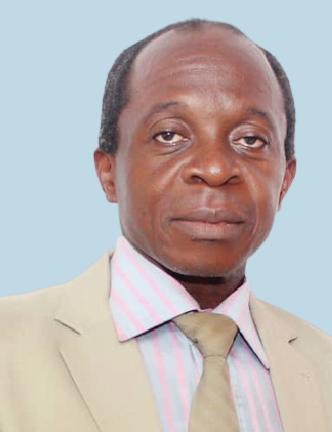
Dr. Olukayode Oyeleye, Business a.m.’s Editorial Advisor, who graduated in veterinary medicine from the University of Ibadan, Nigeria, before establishing himself in science and public policy journalism and communication, also has a postgraduate diploma in public administration, and is a former special adviser to two former Nigerian ministers of agriculture. He specialises in development and policy issues in the areas of food, trade and competition, security, governance, environment and innovation, politics and emerging economies.