Access to affordable and reliable energy is fundamental to sustainable development and improved living standards. Throughout history, mankind has continually evolved from primitive methods of generating fire to modern energy technologies that support domestic, commercial and industrial activities. Today, energy security remains a major concern worldwide, driven by population growth, technological advancement and increasing demand.
Among the essential sources of domestic energy is Liquefied Petroleum Gas (LPG), commonly known as cooking gas. LPG is a mixture of hydrocarbon gases, primarily propane and butane, with small quantities of pentane depending on its source. As a cleaner-burning fuel, LPG has become the preferred cooking energy for millions of households, replacing firewood and kerosene in many rural, semi-urban and urban communities across Nigeria.
The growing adoption of cooking gas is a positive development. Compared with traditional fuels, LPG produces fewer emissions, reduces indoor air pollution and supports global efforts to lower carbon emissions. Although LPG is still a fossil fuel, it is widely recognised as an important transition fuel in the journey towards cleaner energy.
However, increasing demand should not translate into unaffordable prices, especially in a country blessed with one of the world’s largest natural gas reserves. Ensuring the affordability of cooking gas should remain a key public policy objective. The government has a responsibility to create an enabling environment that encourages private investment across the LPG value chain—from production and storage to transportation, distribution and retail.
The private sector remains the backbone of Nigeria’s economy. Small and medium-sized enterprises (SMEs) contribute significantly to employment creation and economic growth. Their collective impact on national productivity is substantial, making it imperative for the government to support rather than hinder their operations. Stable policies, improved infrastructure, easier access to financing and favourable investment incentives would encourage more local investors to participate in the LPG business, thereby increasing supply and promoting competitive pricing.
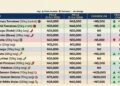
The persistent fluctuations in cooking gas prices are therefore a source of concern. At a time when Nigerians are already burdened by inflation and declining purchasing power, the rising cost of LPG places additional pressure on household incomes. Access to clean cooking energy should not become a luxury.
The government should urgently review the factors driving these price increases and implement practical measures to stabilise the market. Incentives that encourage domestic production, processing, storage and distribution of LPG would strengthen local supply and reduce dependence on external market shocks. Public-private partnerships and investment-friendly policies could also accelerate expansion across the LPG value chain.
While international developments, including tensions in the Middle East and possible disruptions to global shipping routes such as the Strait of Hormuz, may influence global energy markets, Nigeria should be better insulated from such external shocks because of its abundant natural gas resources. A nation so richly endowed with gas should not continually expose its citizens to excessive cooking gas prices.
Affordable cooking gas is not merely an economic issue; it is a social necessity. Making LPG accessible and affordable will improve public health, reduce dependence on firewood, protect the environment and enhance the quality of life for millions of Nigerians. It is therefore time for government and industry stakeholders to work together to ensure that the country’s natural gas wealth translates into tangible benefits for every Nigerian household.
- business a.m. commits to publishing a diversity of views, opinions and comments. It, therefore, welcomes your reaction to this and any of our articles via email: comment@businessamlive.com

Sunny Nwachukwu (Loyal Sigmite), PhD, Fellow (ICCON, CSN, SM), a pure and applied chemist with an MBA in management, is an Onitsha based industrialist, and former vice president (finance), Onitsha Chamber of Commerce. He can be reached on +234 803 318 2105 (text only) or schubltd@yahoo.com