The National Pension Commission (PenCom) is positioning to bring an estimated nine million transport workers into the formal pension system through a proposed partnership with the National Union of Road Transport Workers (NURTW), a move that could significantly deepen pension penetration among Nigeria’s informal sector workforce.
The initiative, which centres on the Personal Pension Plan (PPP) under the Contributory Pension Scheme (CPS), is also expected to support the acquisition of modern mass-transit vehicles through innovative financing arrangements designed for transport operators across the country.
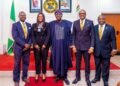
The proposed collaboration emerged during a courtesy visit by Musiliu Akinsanya, national president of the NURTW, to Omolola Oloworaran, director-general of PenCom, at the Commission’s headquarters in Abuja.
Speaking during the engagement, Akinsanya said the union’s extensive nationwide network, comprising an estimated nine million transport workers operating in motor parks, logistics corridors, interstate routes and urban transport systems, provides a strategic platform for extending pension coverage and promoting financial inclusion among workers in the informal economy.
According to him, the union has developed a three-pronged partnership framework aimed at transforming the welfare and long-term financial security of transport workers.
The framework proposes the mass enrolment of transport workers into the Personal Pension Plan, the introduction of an automated daily pension contribution system linked to existing transport revenue collection channels, and the establishment of a National Transport Workers Mobility Enhancement Programme that would facilitate access to modern vehicles through structured financing mechanisms.
A central feature of the proposal is the creation of a sustainable financing model that would enable transport operators to acquire buses and other transport assets with support from development finance institutions, commercial banks and other stakeholders.
Under the arrangement, daily collections from transport operators would be processed through existing union structures, allowing participants to simultaneously meet vehicle financing obligations while making regular contributions to their Personal Pension Plan accounts.
Akinsanya noted that the model is expected to strengthen loan repayment performance, reduce financing risks for lenders and encourage a culture of savings among transport workers, many of whom currently lack access to formal retirement planning structures.
He added that the initiative could provide a practical pathway for integrating millions of informal-sector workers into Nigeria’s pension ecosystem while improving access to affordable transport financing.
Responding to the proposal, Oloworaran welcomed the initiative, describing it as a potentially transformative intervention capable of accelerating pension inclusion across the informal sector.
She commended the NURTW leadership for seeking sustainable solutions that combine social protection with economic empowerment for its members, noting that the proposal aligns with PenCom’s broader objective of expanding pension coverage beyond the formal workforce.
The PenCom director-general reaffirmed the Commission’s commitment to engaging with the union and other relevant stakeholders to explore practical implementation pathways for the initiative.
She stressed that widening pension coverage remains a major priority for the Commission and forms part of ongoing efforts to strengthen financial inclusion, improve retirement security and enhance the economic well-being of Nigerians.
Describing the initiative as one of the most ambitious pension inclusion drives targeted at informal-sector workers in recent years, she said its successful implementation could substantially increase the country’s pension contributor base while providing retirement security for millions of transport workers.
Beyond its pension objectives, she noted that the programme could also establish a sustainable framework for modernising public transportation through improved access to vehicle financing and infrastructure support.
Both PenCom and the NURTW expressed optimism that the partnership could evolve into a flagship national programme capable of delivering broad socio-economic benefits, while reinforcing efforts to extend social security coverage to underserved segments of Nigeria’s workforce.