
Business A.M
No Result
View All Result
Saturday, October 17, 2026
  • Login
  • Technology
  • Finance
  • Comments
  • Companies
  • Commodities
  • ONLINE & DIGITAL CONTENT PACKAGE
Subscribe
Business A.M
  • Technology
  • Finance
  • Comments
  • Companies
  • Commodities
  • ONLINE & DIGITAL CONTENT PACKAGE
No Result
View All Result
Business A.M
No Result
View All Result
Home The business traveller & hospitality

Rwandair: Ambitious airline takes on East Africa to become key player in region

by Admin
January 21, 2026
in The business traveller & hospitality

The East African nation of Rwanda has long been touted as one of the continent’s fastest-growing centres for business and commerce, having made impressive leaps forward over the past few decades to get to the place where it is today, writes Alexander Mitchell for Simple Flying.

Under the authoritarian rule of Paul Kagame, many have pointed out that Rwanda is aiming to follow a Singapore-esque path toward development, in which societal liberalisation and many forms of social progress have been prioritised in favour of economic growth.

Compared to many of its African neighbours, the small, landlocked country has made some impressive strides, and the nation’s capital, Kigali, has consistently been rated one of the continent’s best when it comes to ease of doing business. But despite many of the country’s most noteworthy economic achievements, there are still several places in which the country, and its capital city specifically, still have the opportunity for improvements.

A flag carrier is a key catalyst for long-term growth

One such opportunity relates to the growth of the nation’s airline industry, which in many ways is a key catalyst for economic growth.

Many developing nations that have successfully followed the Singapore-style growth model have been able to do so on the backs of strong national airlines, which have made it extremely easy and appealing for foreign companies to send their employees abroad for business.

Airlines like Singapore Airlines, Etihad Airways, Qatar Airways, and Turkish Airlines have been key catalysts for growth and are major contributors to the rise of business hubs like Singapore, Abu Dhabi, Doha, and Istanbul.

There are even examples in Africa where this kind of model has been successful. In Ethiopia and Rwanda’s neighbour Kenya, national airlines like Ethiopian Airlines and Kenya Airways have been essential for building connectivity in the region.

If Rwanda is going to become the business hub for East Africa that the nation’s government wants it to be, the development of a strong national airline, Rwandair, is essential, and, as a result, it is unsurprising that leadership figures within the country have a bold vision for how the carrier will expand over the coming decade. Let’s take a deeper look at Rwandair’s expansion strategy and see what the future might hold for this young and ambitious airline.

Founded as small state-owned carrier

In the years following the 1994 Genocide against the Tutsi people, the government attempted multiple times to revive the defunct national airline Air Rwanda. Many different private companies were interested in helping launch such an airline, and ultimately a partnership was launched with Ugandan SA Alliance Air. Eventually, the government took over full operations in 2002, launching a new airline, Rwandair Express, in 2002.

During the early years of operation, the carrier primarily connected different airports within the country and also connected the nation to many of its closest neighbours in Africa. The airline soon began basing its operations out of a major hub at Kigali International Airport (KGL).

Strategic shift at turn of the decade

In 2009, the airline rebranded as RwandAir Limited, which is how the carrier remains today, and was part of an overarching transformation vision sought to help kickstart the nation’s development. According to the New Times, a Rwandan newspaper, the name shift helped the carrier portray itself as a serious multinational airline.

Starting in May 2010, the airline’s new CEO, Rene Janata, launched a frequent flyer programme and soon began ordering new aircraft, making it very clear that the once-small carrier had bold ambitions of becoming a legacy airline. By the end of that year, the airline began receiving Boeing 737-500 aircraft, which were leased from General Electric Capital Aviation Services (GECAS).

Over the next few years, the airline began acquiring even more modern aircraft and rapidly expanding its route network. The carrier was one of the first airlines in Africa to operate Boeing 737 Next Generation aircraft and began replacing its older regional fleet with modern Bombardier CRJ900NG aircraft.

Today, the aircraft’s fleet includes a combination of widebodies and narrowbodies, allowing it to serve destinations across the globe, and includes all the following passenger aircraft:

Aircraft type:

Number in RwandAir fleet:

Airbus A330-200

2

Airbus A330-300

1

Boeing 737-700

1

Boeing 737-800

6

Bombardier CRJ900ER

2

De Havilland Dash 8-400

2

Executing first few steps of long-term vision

But RwandAir’s goal of becoming a global airline will take much more than just fleet modernisation, and over the past ten years, the airline has made a few key strides to achieve this goal. The first such move was officially joining the International Air Transport Association (IATA), which took place back in 2015.

The airline soon began operating services from Cotonou International Airport (COO) to destinations across West Africa, having been given seventh freedom rights in 2017.

In February 2020, global aviation powerhouse Qatar Airways gave RwandAir its strongest sign of international growth yet, purchasing a 49 percent stake in the company, according to The Africa Report.
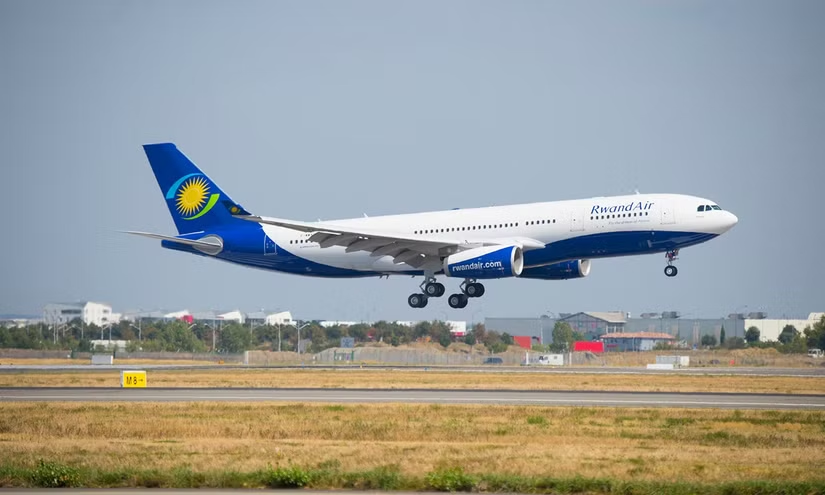
In September 2022, the airline announced its intention to join the global Oneworld alliance, something which would drastically bolster the airline’s global standing.

With alliance membership on the horizon, a modern and dynamic fleet, as well as a major presence in both East and West Africa, Rwandair could certainly be on its way to becoming one of the continent’s most important carriers. We will have to wait and see what steps the airline takes next on its path towards global prominence.


Admin
Admin
Previous Post

Explained: Why food tastes different when flying

Next Post

Google Flights helps budget travellers find low-cost flights with ‘Cheapest’ tab 

Next Post

Google Flights helps budget travellers find low-cost flights with 'Cheapest' tab 

  • Trending
  • Comments
  • Latest

How UNESCO got it wrong in Africa

May 30, 2017

CBN to issue N1.5bn loan for youth led agric expansion in Plateau

July 29, 2025
MMA2 enters new commercial era after 20-year concession dispute

MMA2 enters new commercial era after 20-year concession dispute

August 28, 2026
NGX taps tech advancements to drive N4.63tr capital growth in H1

Insurance-fuelled rally pushes NGX to record high

August 8, 2025

6 MLB teams that could use upgrades at the trade deadline

Top NFL Draft picks react to their Madden NFL 16 ratings

Paul Pierce said there was ‘no way’ he could play for Lakers

Arian Foster agrees to buy books for a fan after he asked on Twitter

Rivers, China's CNCECC sign deal for $3.5bn methanol, fertiliser plant

Rivers, China’s CNCECC sign deal for $3.5bn methanol, fertiliser plant

October 17, 2026
Methane rules spread across 67% of global production as Nigeria faces compliance test 

Methane rules spread across 67% of global production as Nigeria faces compliance test 

October 17, 2026
Onafriq, a pan-African payments company, is set to discontinue its Baxi agent banking business in Nigeria after five years, citing naira depreciation, rising operating costs and intensifying competition that have weakened the segment’s profitability. The planned shutdown will affect the agent banking operations conducted through Baxi under Onafriq Nigeria Payments Limited. However, the decision does not signal the company’s withdrawal from Nigeria, as it intends to retain its cross-border payments network and card issuing services in the country. In a statement, Onafriq said changes in Nigeria’s operating environment since 2024 had significantly altered the economics of its offline agent banking business, making the existing model unsustainable. The move marks a strategic shift for the company, which entered Nigeria’s agent banking market to expand access to financial services through a network of agents providing transaction services outside traditional bank branches. Onafriq attributed the decision to a combination of macroeconomic pressures and structural changes in the country’s payments industry. According to the company, naira depreciation and inflation have affected transaction volumes, increased operating expenses and undermined the sustainability of its agent banking operations. The growing adoption of instant account-to-account transfers has also changed the mix of transactions handled by agents, while heightened competition among payment service providers has put further pressure on margins. These developments have made it increasingly difficult for the business to remain viable under its existing operating structure, prompting the company to reassess its long-term strategy. Dare Okoudjou, founder and chief executive officer of Onafriq, said the decision to close the business was difficult, particularly given the efforts of employees, agents and business partners who helped build the Baxi network. “We entered Nigeria with conviction and commitment, but did not achieve the outcome we set out for. Closing this business was a difficult decision to arrive at, one that affects colleagues, agents, and business partners across Nigeria who poured their hearts and soul into building out the Baxi network,” Okoudjou said. Despite the closure, he reaffirmed the company’s commitment to the Nigerian market, noting that the group would continue to serve customers through its payments network and card issuing operations. Onafriq entered Nigeria’s agent banking market in 2021 through the acquisition of Baxi, also known as Capricorn Digital Limited. The company said it continued investing in the business through 2023, with efforts focused on expanding and strengthening its agent network. However, a subsequent review of the business’s long-term prospects and financial sustainability led to the decision to wind down the operation. As part of the transition, Onafriq said agents onboarded through the Baxi platform had been moved to another principal bank, a step intended to facilitate continuity for the affected agents. The company has also directed agents to transfer their funds to their preferred principal bank within 30 days, adding that its teams would provide support throughout the transition process. Employees whose roles are linked to the agent banking business will also be consulted and supported during the wind-down, with Onafriq pledging to treat affected workers fairly.

Onafriq winds down Baxi as Nigeria’s agent banking economics worsen

October 17, 2026
LCFE links petroleum trading to capital market in pricing transparency drive

LCFE links petroleum trading to capital market in pricing transparency drive

October 17, 2026

Popular News

  • How UNESCO got it wrong in Africa

    0 shares
    Share 0 Tweet 0
  • CBN to issue N1.5bn loan for youth led agric expansion in Plateau

    0 shares
    Share 0 Tweet 0
  • MMA2 enters new commercial era after 20-year concession dispute

    0 shares
    Share 0 Tweet 0
  • Insurance-fuelled rally pushes NGX to record high

    0 shares
    Share 0 Tweet 0
  • Glo, Dangote, Airtel, 7 others prequalified to bid for 9Mobile acquisition

    0 shares
    Share 0 Tweet 0
Currently Playing

CNN on Nigeria Aviation

CNN on Nigeria Aviation

Business AM TV

Edeme Kelikume Interview With Business AM TV

Business AM TV

Business A M 2021 Mutual Funds Outlook And Award Promo Video

Business AM TV

Recent News

Rivers, China's CNCECC sign deal for $3.5bn methanol, fertiliser plant

Rivers, China’s CNCECC sign deal for $3.5bn methanol, fertiliser plant

October 17, 2026
Methane rules spread across 67% of global production as Nigeria faces compliance test 

Methane rules spread across 67% of global production as Nigeria faces compliance test 

October 17, 2026

Categories

  • Frontpage
  • Analyst Insight
  • Business AM TV
  • Comments
  • Commodities
  • Finance
  • Markets
  • Technology
  • The Business Traveller & Hospitality
  • World Business & Economy

Site Navigation

  • Home
  • About Us
  • Contact Us
  • Privacy & Policy
Business A.M

BusinessAMLive (businessamlive.com) is a leading online business news and information platform focused on providing timely, insightful and comprehensive coverage of economic, financial, and business developments in Nigeria, Africa and around the world.

© 2026 Business A.M

Welcome Back!

Login to your account below

Forgotten Password?

Retrieve your password

Please enter your username or email address to reset your password.

Log In
No Result
View All Result
  • Technology
  • Finance
  • Comments
  • Companies
  • Commodities
  • ONLINE & DIGITAL CONTENT PACKAGE

© 2026 Business A.M




