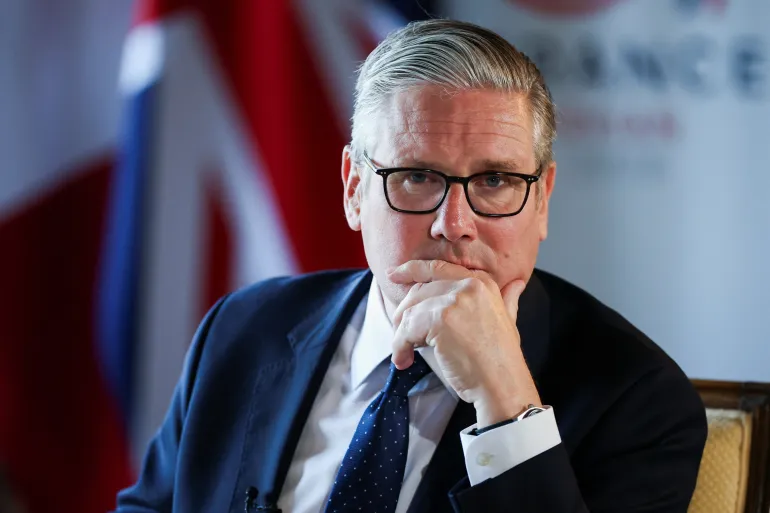
Britain is heading into another leadership transition at a delicate moment for its economy after Prime Minister Keir Starmer announced his resignation, triggering a contest for control of the governing Labour Party and reopening questions about the country’s policy direction, investment climate and fiscal strategy.
Starmer’s decision to step down after less than two years in office marks the latest chapter in Britain’s prolonged period of political volatility and leaves investors, businesses and financial markets assessing what leadership change could mean for economic policy at a time when the country continues to grapple with sluggish growth, elevated public debt and persistent cost-of-living pressures.
The outgoing prime minister confirmed Monday that he had informed King Charles III of his intention to resign and instructed Labour’s National Executive Committee to begin the process of electing a new party leader. While Starmer will remain in office until a successor emerges, the announcement effectively launches a high-stakes contest that could reshape Britain’s economic agenda ahead of Parliament’s return in September.
His departure also means Britain is preparing for its seventh prime minister in just over a decade, extending a period of political turnover that has become one of the defining features of the post-Brexit era.
Leadership change revives policy questions
For businesses and investors, the immediate concern is less about personalities and more about policy continuity.
Since winning a decisive general election victory in 2024, Starmer’s administration sought to position itself as a pro-growth government focused on rebuilding investor confidence, restoring relations with European partners and accelerating infrastructure investment.
However, the government struggled to maintain political momentum amid a series of policy reversals, public spending disputes and growing dissatisfaction among voters over living standards.
The resignation now introduces fresh uncertainty over the future direction of fiscal policy, industrial strategy, trade negotiations and public investment programmes that businesses have been relying upon for planning decisions.
While Labour remains in power, the identity of Starmer’s successor could influence everything from tax policy and infrastructure spending to housing reforms and energy transition programmes.
Markets watching Labour succession battle
Attention is already turning toward potential contenders, particularly Andy Burnham, whose recent electoral success has strengthened his position as a leading candidate for the party leadership.
Burnham’s expected return to Parliament following a major by-election victory has intensified speculation that Labour could pursue a different political and economic approach under new leadership.
Although the leadership contest is unlikely to alter Britain’s fundamental economic framework, investors will be watching closely for signals regarding public spending, fiscal discipline, welfare policy and relations with the private sector.
The timing is especially significant because Britain is attempting to attract long-term investment into sectors including renewable energy, advanced manufacturing, technology and infrastructure.
Any perception of policy instability could complicate those efforts.
Economic challenges remain unresolved
Starmer’s resignation comes as Britain continues to face a difficult economic environment despite some improvement in inflation and labour market conditions.
Economic growth remains modest by historical standards, while productivity challenges, weak business investment and fiscal pressures continue to weigh on the country’s long-term outlook.
Businesses are also monitoring the government’s approach to taxation and public spending as policymakers attempt to balance demands for improved public services against constraints imposed by elevated debt levels.
For many economists, the leadership contest will be judged largely on which candidate can offer the most credible strategy for accelerating growth without undermining fiscal stability.
The next prime minister will inherit an economy still adjusting to the long-term consequences of Brexit, changing global trade patterns and an increasingly competitive international investment environment.
End of a turbulent premiership
Starmer leaves office after a tenure marked by both political achievements and significant setbacks.
He is widely credited with rebuilding Labour into an election-winning force and ending 14 years of Conservative rule. His administration pursued policies aimed at strengthening ties with European allies, supporting Ukraine, improving social welfare outcomes and advancing economic reforms.
However, those achievements were overshadowed by internal party tensions, unpopular policy decisions and growing pressure from political rivals.
Among the controversies that weakened his position were disputes over welfare reforms, criticism surrounding defence spending plans and backlash over key political appointments.
The rapid rise of Reform UK also created new electoral challenges, eroding Labour’s support base and increasing pressure on the prime minister’s leadership.
What ultimately emerged was a growing perception within parts of the Labour Party that a change of leadership was necessary ahead of the next phase of government.
A defining moment for Britain
Beyond the immediate political implications, Starmer’s resignation represents another reminder of how profoundly British politics has changed since the Brexit referendum a decade ago.
The country has experienced an unprecedented succession of prime ministers, reflecting deep divisions over economic management, public services, immigration and Britain’s role in the world.
For businesses, investors and financial markets, the priority now is stability.
The coming leadership contest will determine not only who occupies Downing Street but also how Britain approaches some of its most pressing economic challenges, including boosting productivity, attracting investment, managing public finances and restoring long-term growth.