The $15m wedding trilogy that took African luxury global

Onome Amuge

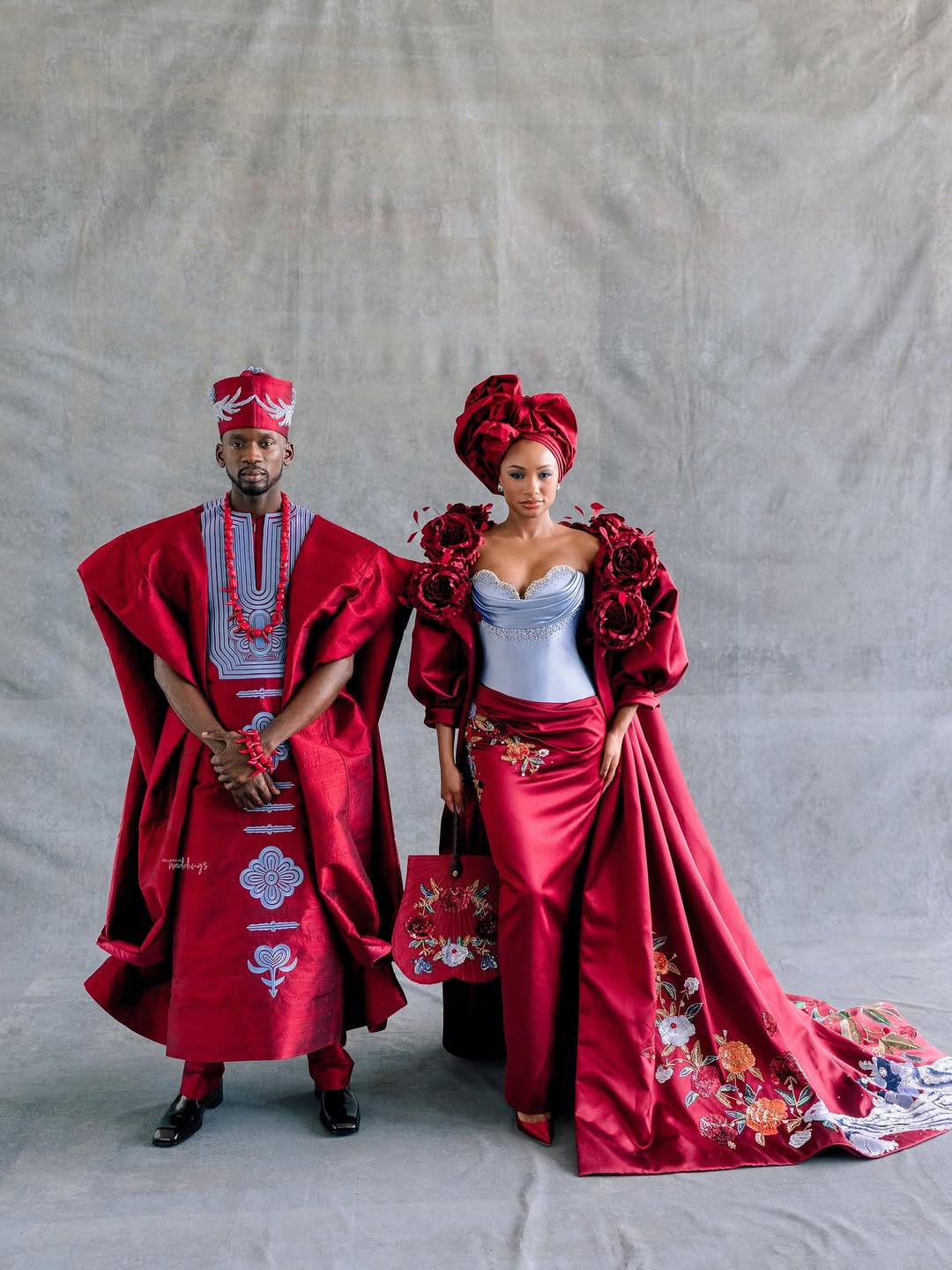
In an age where celebrity nuptials often blur into exercises in excess, the marriage of actress and style icon Temi Otedola to Afrobeats entrepreneur-turned-star Tosin “Mr Eazi” Ajibade stood apart not only for its scale, but for its precision. What unfolded over three continents between May and August this year was less a wedding than a trilogy consisting of a civil vow in Monaco, a Yoruba engagement in Dubai, and a grand white wedding in Iceland under the auroras.

Yet behind the spectacle lies a case study in how a new generation of African talent, capital, and culture are rewriting the grammar of global luxury.

Act I: Monaco – the private overture

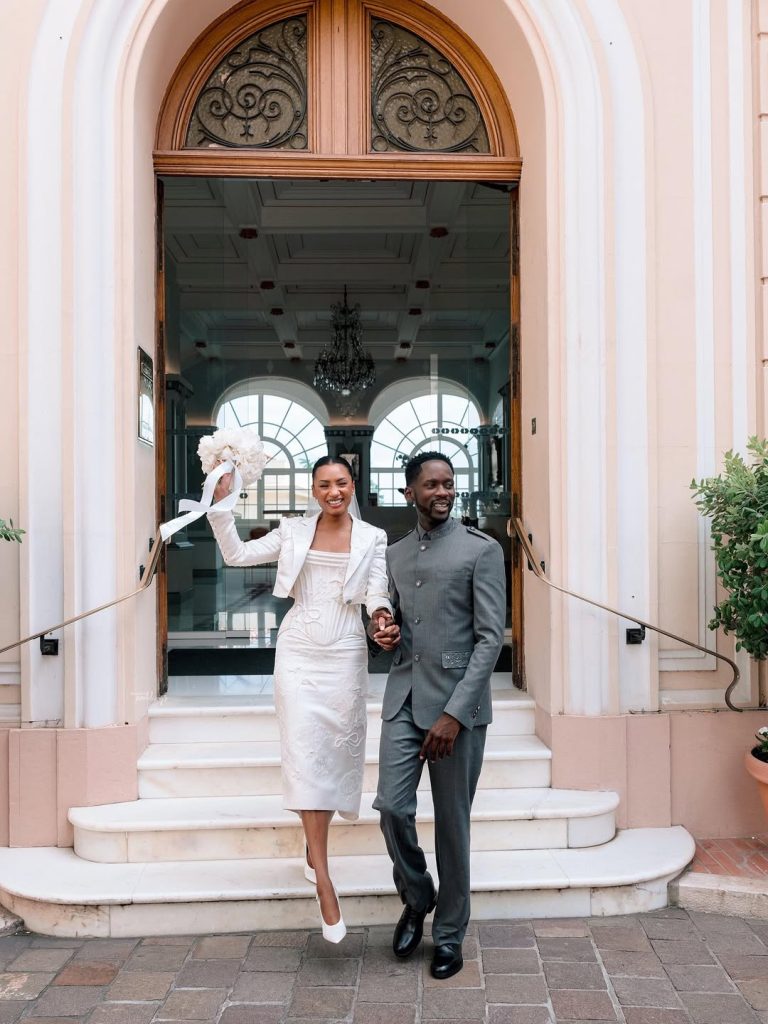
The first chapter was strikingly intimate. On May 9, 2025, in Monaco’s Marie de Monaco town hall, the couple exchanged vows in front of just two witnesses. The date was deliberate, as it would have marked the 61st birthday of Eazi’s late mother.

Temi wore a sharp white Wiederhoeft suit, accented by fresh, minimalist makeup. Eazi opted for Louis Vuitton tailoring, symbolic of his affinity for European luxury. Afterward, they dined quietly at the Hôtel de Paris, overlooking the Monte Carlo Casino.

“It felt right to start there, just us,” Temi later remarked.

This first act, costing a fraction of what was to come, reflected the duality of the trilogy. The union is considered a deeply personal core wrapped in ever-expanding rings of spectacle.

Act II: Dubai – heritage in technicolour

If Monaco was a whisper, Dubai was a roar. On July 5, the Otedola family villa at Dubai Hills Estate became a theatre of Yoruba tradition, set against desert skies.

Roughly 80 guests attended, among them billionaire industrialists Aliko Dangote and Abdul Samad Rabiu, alongside Nigeria’s leading tech founders. For Temi’s father, oil magnate Femi Otedola, who bought the villa years earlier, the property transformed into the ultimate stage for his daughter’s engagement.
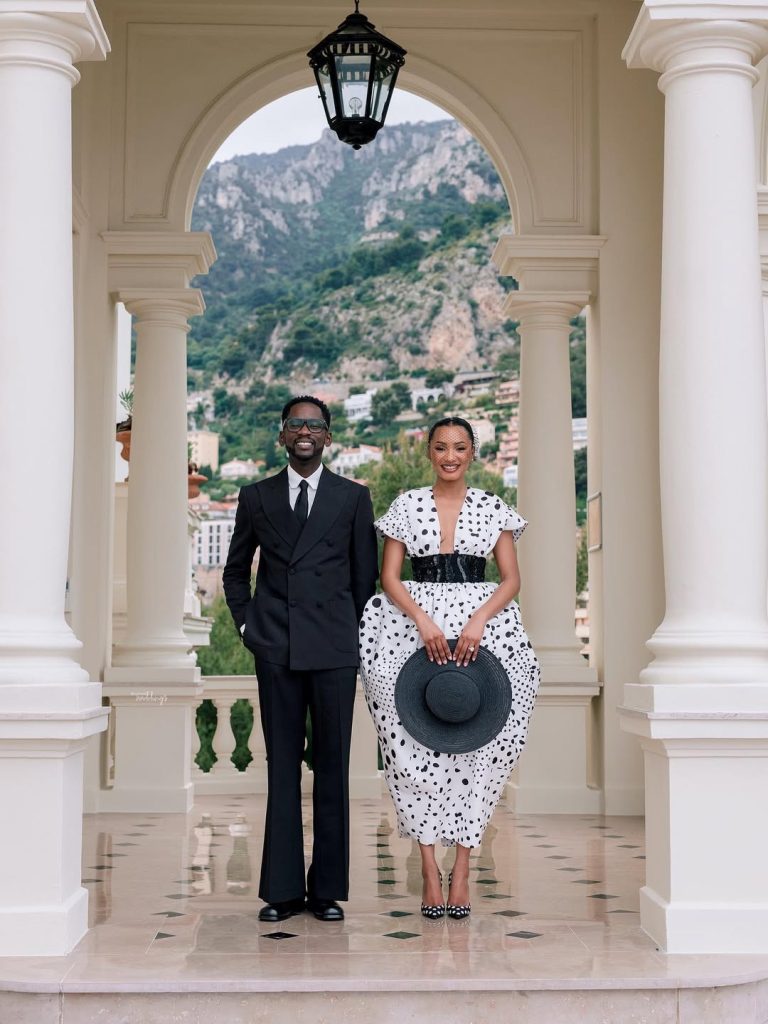
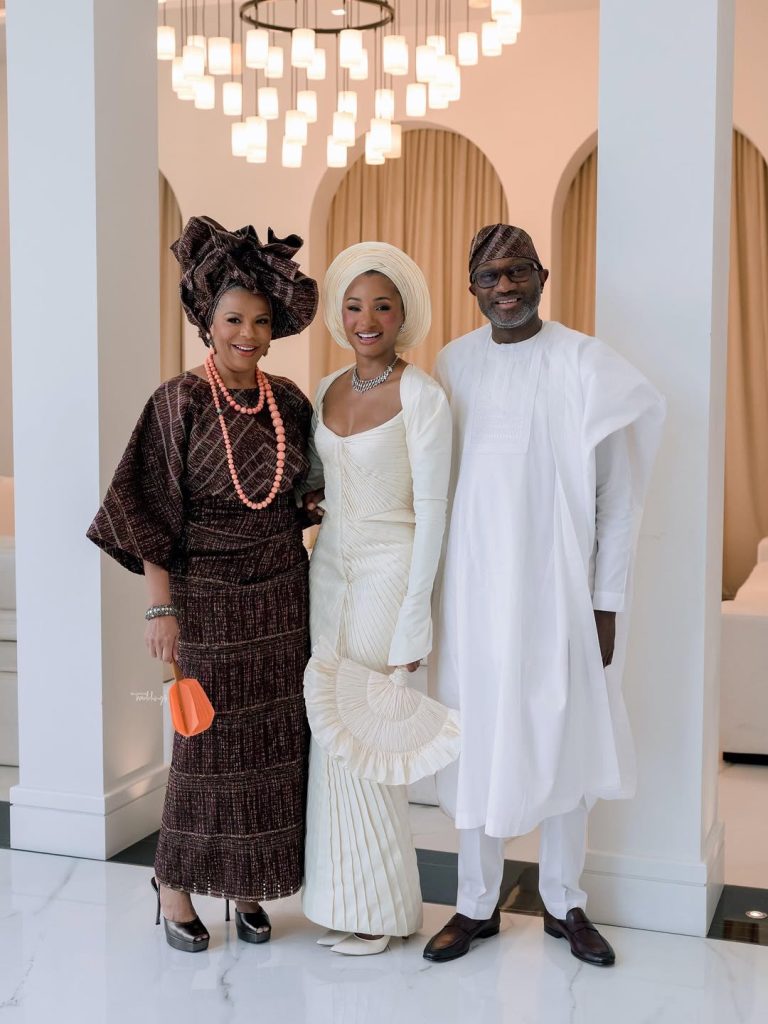
According to reports, the production required 17 days to erect a massive tent, complete with floral gardens and staging. Guests dressed in coordinated burgundy aso ebi, while the bride cycled through multiple couture looks, including Zac Posen, Miss Sohee, and Lisa Folawiyo, the latter incorporating akwa ocha fabric from her husband’s maternal heritage in Anambra.

King Sunny Ade and his full band provided live entertainment, linking generations of Yoruba music with contemporary Afrobeats. After midnight, the celebration shifted underground to the basement of a second villa, where Diplo joined DJ Edu for a Choplife Soundsystem-led afterparty.

Notably, the price tag of this act alone reportedly ran into several million dollars, driven by logistics, couture commissions, and the sheer concentration of high-net-worth guests.

Act III: Iceland – love under the lights

The trilogy concluded on August 8 in Reykjavík’s Hallgrímskirkja Cathedral, where Pastor Tash Kusi of HTB London presided. Temi walked down the aisle in a custom Fendi gown, later changing into House of Giles for the reception. Eazi alternated between Saint Laurent and Alexander McQueen.

But Iceland’s capricious weather nearly derailed the event. Four days before the ceremony, a storm ripped apart the glass reception tent at Kleif Farm. The couple chartered a cargo plane to import replacement materials; 48 hours later, with double crews, the structure was rebuilt.

The eventual setting was breathtaking, as an ice and fire theme, curated by Temi herself, paired with an Icelandic menu and cocktails. French pianist Sofiane Pamart performed during dinner. Then, as a surprise, John Legend emerged to sing during the father–daughter and first dances.

The reception closed at 1 a.m., but revelry continued at the Edition Hotel, where the couple opened Club TT. Guests danced until dawn, before a farewell day at Hamsvik Hot Springs under rare auroras.
The business of a $15m trilogy

Insiders estimate that the trilogy cost about $15 million, making it one of the most expensive private weddings of the decade. By comparison, the 2018 wedding of Indian industrialist Mukesh Ambani’s daughter was estimated at $100 million, while the nuptials of Priyanka Chopra and Nick Jonas in the same year were thought to exceed $4 million. 

The Otedola–Eazi trilogy stood out not only for its price tag but also for how it blended African heritage with global luxury, serving as a statement about identity as much as wealth. The main cost drivers were extensive venue logistics, which involved importing catering, décor, and staging across three countries; a wardrobe of custom couture sourced from Paris, New York, and Lagos; marquee entertainment featuring Sunny Ade, Diplo, and John Legend; and lavish guest experiences, including private jets, luxury accommodation, and carefully curated post-event hospitality.

But in a deeper sense, the trilogy showcases how African creative capital is asserting itself globally. Mr Eazi, once known for Afrobeats hits, is today also an investor and entrepreneur, with stakes in music tech and venture capital. Temi Otedola, beyond her acting career, is part of Nigeria’s most high-profile business dynasty. Their wedding became both a cultural export and a branding exercise, watched closely across fashion and entertainment industries.
While critics may dismiss a $15m trilogy as extravagant, the couple have insisted the events were designed with symbolic meaning. Monaco paid tribute to Eazi’s mother. Dubai connected Temi to Yoruba tradition and her father’s home. Iceland reflected the couple’s shared love of the country they have visited for years.

In that sense, the trilogy was less a display of wealth than a portfolio of narratives: of memory, of heritage, and of global belonging.

For Africa’s rising generation of cultural entrepreneurs, the Otedola–Eazi wedding trilogy may well become a template, not of what to spend, but of how to tell a story through capital, couture, and creativity.


Leave a Comment

The $15m wedding trilogy that took African luxury global

Onome Amuge

In an age where celebrity nuptials often blur into exercises in excess, the marriage of actress and style icon Temi Otedola to Afrobeats entrepreneur-turned-star Tosin “Mr Eazi” Ajibade stood apart not only for its scale, but for its precision. What unfolded over three continents between May and August this year was less a wedding than a trilogy consisting of a civil vow in Monaco, a Yoruba engagement in Dubai, and a grand white wedding in Iceland under the auroras.

Yet behind the spectacle lies a case study in how a new generation of African talent, capital, and culture are rewriting the grammar of global luxury.

Act I: Monaco – the private overture

The first chapter was strikingly intimate. On May 9, 2025, in Monaco’s Marie de Monaco town hall, the couple exchanged vows in front of just two witnesses. The date was deliberate, as it would have marked the 61st birthday of Eazi’s late mother.

Temi wore a sharp white Wiederhoeft suit, accented by fresh, minimalist makeup. Eazi opted for Louis Vuitton tailoring, symbolic of his affinity for European luxury. Afterward, they dined quietly at the Hôtel de Paris, overlooking the Monte Carlo Casino.

“It felt right to start there, just us,” Temi later remarked.

This first act, costing a fraction of what was to come, reflected the duality of the trilogy. The union is considered a deeply personal core wrapped in ever-expanding rings of spectacle.

Act II: Dubai – heritage in technicolour

If Monaco was a whisper, Dubai was a roar. On July 5, the Otedola family villa at Dubai Hills Estate became a theatre of Yoruba tradition, set against desert skies.

Roughly 80 guests attended, among them billionaire industrialists Aliko Dangote and Abdul Samad Rabiu, alongside Nigeria’s leading tech founders. For Temi’s father, oil magnate Femi Otedola, who bought the villa years earlier, the property transformed into the ultimate stage for his daughter’s engagement.

According to reports, the production required 17 days to erect a massive tent, complete with floral gardens and staging. Guests dressed in coordinated burgundy aso ebi, while the bride cycled through multiple couture looks, including Zac Posen, Miss Sohee, and Lisa Folawiyo, the latter incorporating akwa ocha fabric from her husband’s maternal heritage in Anambra.

King Sunny Ade and his full band provided live entertainment, linking generations of Yoruba music with contemporary Afrobeats. After midnight, the celebration shifted underground to the basement of a second villa, where Diplo joined DJ Edu for a Choplife Soundsystem-led afterparty.

Notably, the price tag of this act alone reportedly ran into several million dollars, driven by logistics, couture commissions, and the sheer concentration of high-net-worth guests.

Act III: Iceland – love under the lights

The trilogy concluded on August 8 in Reykjavík’s Hallgrímskirkja Cathedral, where Pastor Tash Kusi of HTB London presided. Temi walked down the aisle in a custom Fendi gown, later changing into House of Giles for the reception. Eazi alternated between Saint Laurent and Alexander McQueen.

But Iceland’s capricious weather nearly derailed the event. Four days before the ceremony, a storm ripped apart the glass reception tent at Kleif Farm. The couple chartered a cargo plane to import replacement materials; 48 hours later, with double crews, the structure was rebuilt.

The eventual setting was breathtaking, as an ice and fire theme, curated by Temi herself, paired with an Icelandic menu and cocktails. French pianist Sofiane Pamart performed during dinner. Then, as a surprise, John Legend emerged to sing during the father–daughter and first dances.

The reception closed at 1 a.m., but revelry continued at the Edition Hotel, where the couple opened Club TT. Guests danced until dawn, before a farewell day at Hamsvik Hot Springs under rare auroras.

The business of a $15m trilogy

Insiders estimate that the trilogy cost about $15 million, making it one of the most expensive private weddings of the decade. By comparison, the 2018 wedding of Indian industrialist Mukesh Ambani’s daughter was estimated at $100 million, while the nuptials of Priyanka Chopra and Nick Jonas in the same year were thought to exceed $4 million. 

The Otedola–Eazi trilogy stood out not only for its price tag but also for how it blended African heritage with global luxury, serving as a statement about identity as much as wealth. The main cost drivers were extensive venue logistics, which involved importing catering, décor, and staging across three countries; a wardrobe of custom couture sourced from Paris, New York, and Lagos; marquee entertainment featuring Sunny Ade, Diplo, and John Legend; and lavish guest experiences, including private jets, luxury accommodation, and carefully curated post-event hospitality.

But in a deeper sense, the trilogy showcases how African creative capital is asserting itself globally. Mr Eazi, once known for Afrobeats hits, is today also an investor and entrepreneur, with stakes in music tech and venture capital. Temi Otedola, beyond her acting career, is part of Nigeria’s most high-profile business dynasty. Their wedding became both a cultural export and a branding exercise, watched closely across fashion and entertainment industries.

While critics may dismiss a $15m trilogy as extravagant, the couple have insisted the events were designed with symbolic meaning. Monaco paid tribute to Eazi’s mother. Dubai connected Temi to Yoruba tradition and her father’s home. Iceland reflected the couple’s shared love of the country they have visited for years.

In that sense, the trilogy was less a display of wealth than a portfolio of narratives: of memory, of heritage, and of global belonging.

For Africa’s rising generation of cultural entrepreneurs, the Otedola–Eazi wedding trilogy may well become a template, not of what to spend, but of how to tell a story through capital, couture, and creativity.

[quads id=1]

Get Copy

Leave a Comment