In 1996, I wrote a book titled, “Bank Failures in Nigeria: History, Causes and Remedies”. That was a period when the Nigerian financial system was facing instability challenges due to the failures of many banks and financial institutions. These challenges included the inability of the banks to meet their obligations to their customers, the erosion of their capital base, insider abuses by the management and board members of the banks, poor quality of assets, persistent illiquidity, weak and incompetent management and board, insolvency etc. Many Nigerian banks continued to operate under dire and distress financial conditions until 2004 when the Central Bank of Nigeria (CBN) under Professor Chukwuma Soludo as governor embarked on banking consolidation and recapitalisation. In that exercise, the minimum capital requirement was raised from N2 billion to N25 billion. It was an uphill task and seemingly insurmountable requirements for many banks. Industry analysts then criticized the ambitious requirements and doubted its success bearing in mind that the time for compliance was limited — 18 months.
Excitedly, at the end of the exercise, 25 banks out of 89 existing banks met the minimum capital. The exercise created disruptions in the financial system such as forced mergers and bank failures. This creative destructive approach was needed to rebuild and restore confidence in the banking sector and create a sound banking system.
The success of the exercise can be attributed to the robustness, catalytic, absorptive capacity, resilience and high-impact performance of the Nigerian capital market. Banks floated initial public offers (IPO) of their shares on the floor of the Nigerian Exchange. Contrary to the expectations of industry analysts, these IPOs were fully subscribed and some oversubscribed. The banks, bustling with the new injected capital, engaged in splendid financing, including margin lending to stockbrokers and capital market operators. This led to a bubble burst in the Nigerian stock market in 2008. To curb the deteriorating financial conditions of the banks, the CBN imposed a ban on margin lending and also directed the banks to resume a uniform financial year from January to December starting from December, 2009 in order to unmask the true financial conditions of the banks.
It is in this condition that the latest banking recapitalisation in Nigeria by the Central Bank of Nigeria (CBN) 2024 -2026 can be assessed. By its circular dated 28th March, 2024, titled; Review of minimum capital requirements for Commercial, Merchant and Non-Interest banks in Nigeria, the Central Bank of Nigeria prescribed a revised minimum capital for banks in Nigeria. The new minimum capital required commercial banks with international license to raise their capital to N500 billion; banks with national license, N200 billion; banks with regional license, N50 billion; merchant banks, N50 billion; non-interest banks with national license, N20 billion; non-interest banks with regional license, N10 billion.
The circular went further to recommend the following options through which the banks can meet the required capital. They are to inject equity through private placements, rights issue and offer for subscriptions. The options also included mergers and acquisitions as well as upgrade and downgrade of license authorisation. In announcing the scorecard of the recapitalisation exercise, the CBN Governor, Mr Olayemi Cardoso stated: “Nigerian banks in spite of navigating subsidy removals and exchange rate reforms, attracted N4.65 trillion in new capital, nearly 27 percent from foreign investors while also expanding their footprints across African markets.’’
The CBN Governor went further to say: “As African banks and financial systems become increasingly interconnected, collaboration and regulations are not optional but essential to safeguard stability and ensure shared prosperity. Our stance on corporate governance is unequivocal, zero tolerance for violations. By ending years of regulatory forbearance, we have reinforced accountability, tightened supervision and elevated compliance standards across the sector.” He announced that 33 banks met the recapitalisation threshold set by CBN.
In its own scorecard titled, “Successful N4.65 Trillion Banking Recapitalization: A test of resilient Nigerian Capital Market”, the Securities and Exchange Commission, SEC, assessed the exercise. In the foreword to the scorecard, the director-general of SEC, Timi Agama described the exercise as a summon to the capital market. “A summon to demonstrate that the market infrastructure we have built, the investor community we have cultivated and the regulatory architecture we have constructed are equal to the demands of genuine national transformations. Two years on, the verdict is resoundingly affirmative. The Nigerian capital market mobilised N4.65 trillion in twenty-four months, onboarded hundreds of thousands of new investors through digital platforms, sustained secondary market performance at record-breaking levels and maintained the integrity and transparency standards that underpin enduring investor confidence. This is not a modest achievement. It is a structural proof of concept and its significance extends far beyond the banking sector.”
The regulators have done an excellent job and have delivered on their mandates. The ball is now in the court of the banks. Statistics from Financial Markets Dealers Association (FMDA) indicate that the banking sector liquidity rose to N4.15 trillion at the end of April, 2026 compared to N306.54 billion in April, 2024 representing a 1,325 percent increase. The major challenge for the banks is how to deploy the enormous new capital with them to generate good returns to their shareholders and contribute to the growth and development of the economy. The traditional prime lending sectors for Nigerian banks are the oil/ gas and trade financing which focuses on import financing. Today, the oil and gas sector is facing challenges. It is estimated that the exposure of the banks to the oil and gas sector is to the tune of N21 trillion. The impairment charges in the books of the banks due to NPL to the oil and gas sector is about N3.2 trillion by 2025 financial statements. The power sector is also highly geared as the Gencos, Discos are all highly leveraged. The stock market has been upbeat in the last two years raising the market capitalisation to N162 trillion. It is a good investment opportunity but we pray that the bubble burst of 2008 created by the banks does not happen again.
Lending to the real sector such as agriculture, manufacturing and solid minerals is a veritable avenue to enhance the growth of the economy and reduce poverty but it has its own impediments. With the Monetary Policy Rate (MPR) at 26.50 percent, operators in that sector cannot borrow at this high interest rate and make meaningful returns hence many MSME are unable to borrow. Financing agribusiness especially commodities financing is a market which the banks have not explored very well. This is the time to do so in view of its multiplier effects on the economy.
On the other hand, government policies are not helping matters, for example, many rice millers and producers bought paddy rice at very high prices in 2025 for rice production. By the time their rice was ready for the market, the government had lifted the ban on rice importation which crashed the price of rice pushing the rice millers into colossal losses.
All these leave the banks with the narrow alternatives of investing in government treasury bills, FGN bonds, forex speculations and lending to the subnational governments. These crowd out the private and real sectors in the scale of credits. Nigeria’s private sector credits as a share of GDP is at 17 percent compared to sub-Saharan African average of 25 percent. There is a growing disconnect between the financial system and the productive sectors of the economy. Sectoral allocation of credits is also skewed with services accounting for about 55 percent of total credits, 15 percent to manufacturing and five percent (5%) to agriculture. Nigeria is a country whose economy consists of a huge informal sector. Hence the need to pursue financial inclusion of the informal sector. This will entail creating micro-credits to meet the needs of the unbanked poor. The upside of this is that it creates large deposits of savings, investible funds and wealth generation. This is one way to reduce poverty and enhance growth and development. Our banks have always complained of the high costs of creating mico-credits compared to corporate lending. The fintech companies like Opay, Moniepoint, Palmpay, Flutterwave etc have demonstrated that this is viable.
This scenario of capital inflow is playing out in the whole of Africa according to Africa Finance Corporation (AFC), which in its article, “The Africa we build, from capital to Systems” stated that in Africa, “the issue is no longer a shortage of capital but a systemic failure in its deployment. Domestic financial resources including bank assets, pension funds, insurance pools and sovereign capital now exceed $4 trillion. However, these funds have not translated into the scale of industrial output or employment needed to support Africa’s rapidly growing population. Capital is accumulating across Africa, but it is not creating jobs at scale. That is the disconnect we must fix. Despite the growth in financial systems, the AFC found out that capital is largely concentrated in low risk short term instruments such as government securities. This trend limits the flow of long-term financing into critical sectors like infrastructure, manufacturing and industrial processing.”
ALLWELL UMUNNAEHILA
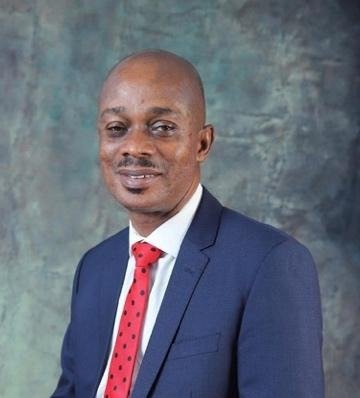
Dr. Allwell Umunnaehila, a chartered stockbroker, financial, economic and management consultant, holds a Ph.D in Business Administration from Babcock University, Nigeria and he is CEO, AllwellBrown Consulting Ltd. He is an author, a seasoned scholar, an investment trainer, who is a Fellow of Chartered Institute of Stockbrokers (CIS), member, Capital Market Academics (CMA), and a licensed Securities Dealer Nigerian Exchange and Securities and Exchange Commission, Nigeria. He can be reached on aumunnaehila@allwellbrownconsulting.com
- business a.m. commits to publishing a diversity of views, opinions and comments. It, therefore, welcomes your reaction to this and any of our articles via email: comment@businessamlive.com