
TIMING IS OF ESSENCE in diplomatic relations. Events can spiral out of control if not managed on time and in a proper manner. West Africa has been a hotbed of terrorism in the past nearly two decades for a variety of reasons, ranging from climate to mineral resources and, more importantly for actualisation of religious expansionist agenda. It has been surmised that the failure of Nigeria to rein in the armed bad actors has given rise to an expansion in territorial influence of the perpetrators of what is generally regarded as insecurity in the West African sub-region. This has also been linked to the emergence and formation of the Alliance des États du Sahel (AES) or Confederation of Sahel States made up of Mali, Burkina Faso and Niger, three countries with common security challenges, which came under military leadership as a result of what has been construed as failure of civilian leadership to contain the growing insecurity in that region.
Unapologetically, the military leaders of the three countries elected to pull out of the traditional Economic Community of West African States (ECOWAS) in January 2025, forming their own regional alliance, the AES. Since their formation, the AES countries have severed their traditional relationship with France and switched their alignment to Russia, particularly for military support. On the commercial side, the three countries have stopped the exploitation of Niger’s uranium or gold in Burkina Faso and Mali.
They have kicked out French military troops from their territories as it appears like those soldiers were actually providing intelligence information to France in ways detrimental to Mali, Burkina Faso and Niger. The spread of insecurity has also been suspected or associated with the presence of and involvement of the French military.
Nigeria’s failure to provide the regional leadership against insecurity has proved to be deliberate and self-inflicted, with an ever-widening impact on other countries of lesser economic might and population. Whether it is called insurgency, banditry, terrorism or genocide, one thing is common: unprovoked attacks on, and killing of, innocent and unarmed populace by armed attackers. Reasons initially adduced began with environmental and climate change, absence of herbage for grazing animals and criminal activities involving kidnapping for ransom, all of which were explained away as having economic root causes. What was to later emanate was the religious expansionist agenda of Islamic jihadists who target mainly Christians and moderate Muslims that resist their extremist doctrines. Local politics in which the opposition party that desperately wanted to take over power at the centre took the form of importing armed fighters from many other African countries to help win elections through violence. Beginning with Boko Haram in the Nigerian northeastern state of Borno, 276 mostly Christian, with some Muslim, schoolgirls aged from 16 to 18 were kidnapped in Chibok on the night of 14 to 15 April,2014, in what was presented as a political smokescreen to portray a sitting president as incapable of ensuring security within his country.
The opposition won the election, but a fertile environment for a groundswell of terrorist activities was already created. Muhammadu Buhari, a retired military General that got a lot of sympathisers on the wrong assumption and failed expectations that he would end insecurity, became the very enabler of the same as he practically ignored the crisis while the bad actors had a field day, killing, kidnapping and raiding target communities at odd hours of the night, leading to displacement of hundreds of thousands of people.
While Buhari failed to rein in the armed attackers, his successor in office, Bola Tinubu, turned out to preside over a much less secure country as the assailants got more and more emboldened, killing, maiming and taking hostages for ransom.
The attacks on Christian communities have become more brazen to the extent that it attracted the attention of the United States. President Trump, who earlier designated Nigeria as a Country of Particular Concern during his first term as president, had to redesignate Nigeria again after his successor, Joe Biden had taken Nigeria’s name off that list. His pronouncement of redesignation, made on October 31, 2025 elicited a frenzy of knee jerk reactions from Nigeria’s government, with vehement denials of the accusations of genocide against Christians, although without a veritable empirical proof to back up their defence.
The veneered politics of silence, complicity, connivance and active in-house sabotage of war against terrorism became unmasked, especially with President Trump’s threat of military action against the terrorists as prominent sympathisers of those culpable began to openly condemn the military action so threatened, calling it an invasion of a sovereign country. The interest generated by the US prompted the visit of some US officials who corroborated their earlier claim of genocide against Christians, leading to pressure on Tinubu to begin to tackle the crisis head-on. Within days, the defence minister that had no military background was booted out and immediately replaced by a retired army general. But the same Tinubu that he and his supporters hid under the sovereignty argument against Trump’s threatened invasion did the unthinkable. After the coup d’état of December 7, 2025, in Benin, led by Lieutenant Colonel Pascal Tigri, was announced on national television, Patrice Talon purportedly sought the protection of France whereupon Emmanuel Macron requested Tinubu to send Nigerian military to Benin to quell the coup.
Posturing about sovereignty, democracy and leadership in West Africa has only just been demystified and the hypocrisy involved laid bare by the latest action, one that would further down doubt in other countries’ minds. Without hesitation, Tinubu’s military action on Benin was swift and decisive; the coup quelled, Talon — a Western ally — protected and “democracy” preserved.
That was where the whole issue got more intriguing and interesting. Tinubu, by his own and his supporters’ definition of sovereignty and invasion, had just invaded Benin and breached its sovereignty. This would probably have been argued and rationalised for a few reasons, especially if Niger’s earlier misadventure did not happen.
The failed attempt to do the same on Niger after the July 26, 2023 military takeover in Niger must have resonated with the AES. Tinubu had earlier issued an ultimatum for the military in Niger to step down or be crushed, a threat that was spurned, ignored and was never carried out afterwards. It was viewed then as Tinubu acting on the instructions of Macron, using the ECOWAS platform against Niger.
So, when, on December 8, 2025, a Nigerian military plane carrying 11 Nigerian military personnel, accused of violating Burkina Faso’s airspace, was forced to land in Bobo-Dioulasso — a region deemed dangerously close to the Ivorian border, an area known to host French military infrastructure and intelligence assets — and the personnel detained, a diplomatic red flag became obvious. That location matters in today’s highly vulnerable Sahel. It should not be surprising if Burkina Faso treats an unauthorised flight over that region, particularly by a military aircraft, as espionage, surveillance, coordination or proxy activity rather than a flight with technical hitch. So, what was initially downplayed on the Nigerian side as simple became an obvious complication as the Burkina authorities remain adamant about releasing the Air Force aircraft and the military personnel.
In regional and international diplomacy, trust is a currency. A buildup of trust deficit on Nigeria’s side has much to do with the adamant response of Burkina Faso in the diplomatic standoff. The AES bloc does not treat Nigeria as a neutral neighbour, but as a potential threat vector. Burkina Faso does not trust Nigeria. It has no reason to do so. Until Tinubu is able to prove beyond reasonable doubt that he is not on Emmanuel Macron’s house errand mission, especially on the seized aircraft mission, his detained soldiers will still remain in Burkina Faso’s custody. This is counter-intelligence rather than hostage-taking.
While Nigeria is not under any obligation to please any particular country in its diplomatic relations with others, strategic alliances speak very loudly and force some countries to engage with or disengage from others. By being close to Macron, Tinubu has unwittingly diminished Nigeria’s image among those AES countries. He has no diplomatic leverage with any of them presently, except and until proved otherwise, especially considering Nigeria’s recent external military footprint. It will be mere wishful thinking to expect Burkina Faso to simply release the 11 Nigerian military personnel without completing a full investigation.
If Nigeria had failed to understand the sensitivity of Burkina Faso to foreign allies, Burkina Faso should provide a practical lesson. Burkina Faso is currently averse to France and anything that is proxy to it.
Cumulatively, Tinubu’s diplomatic approach in the West African sub-region has been counterproductive in many ways. Two and a half years into his government, Tinubu did not appoint ambassadors into many countries of the world that are consequential politically, economically and militarily until recently when a list of career and non-career ambassadors were being rushed through the legislature for approval. To that extent, Nigeria’s engagement with Burkina Faso and the AES remains poor.
The way out of the current impasse will be the use of soft rather than hostile diplomacy. It will entail de-escalation. There is no room for any threat against Burkina Faso. Tinubu cannot mount pressure, neither can he invoke any sanction against Burkina Faso unilaterally from Nigeria or through the use of ECOWAS platform. Any attempt to use ECOWAS troops to threaten Burkina Faso risks a regional war. Unfortunately, however, this encounter is a humbling experience for a regional “giant” nation.
It is counterintuitive that Nigeria is volunteering to provide a backdoor entrance for France in a region where it is fast losing grip and has been kicked out of some countries while more are about to kick it out. Depending on how well or how poorly managed, the stability or continued crisis in West Africa will depend on Nigeria. By the current trajectory, the sub-region is heading for a widespread diplomatic crisis. Except Nigeria tones down on its relationship with France, it may lose the support and confidence of more countries in the subregion and more countries may turn against Nigeria within the subregion. West Africa might grow weaker on major indices, including even its sovereignty.

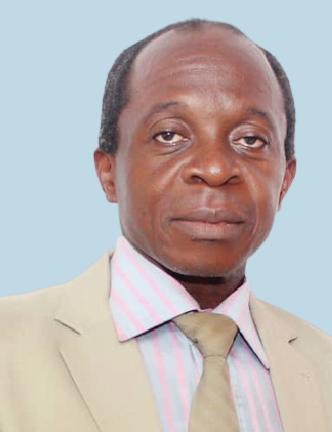
Dr. Olukayode Oyeleye, Business a.m.’s Editorial Advisor, who graduated in veterinary medicine from the University of Ibadan, Nigeria, before establishing himself in science and public policy journalism and communication, also has a postgraduate diploma in public administration, and is a former special adviser to two former Nigerian ministers of agriculture. He specialises in development and policy issues in the areas of food, trade and competition, security, governance, environment and innovation, politics and emerging economies.








Sterling Bank: Poked competition ribs, gave customers value, now a darling