Nigerians are divided on the current reforms by the government. The critics think there is nothing good about them, they point to the economic hardship in the land and the suffering of the majority of Nigerians, exasperated by the continuing insecurity that is also threatening food security, because people can not go to their farms and can not grow food. This has contributed to increased food inflation, which has refused to come down, a key component of the core inflation figure.
They also point to the continuing corruption and the waste in government, that no one is addressing. These are all genuine complaints. But it must be put in context of where we are coming from. The severity of the current economic hardship is a result of the delay in doing the needful.
Governments in the recent past refused to take the hard decisions on the needed reforms. Imagine, if the two major reforms embarked on by the current government were undertaken much earlier — getting rid of the ruinous fuel subsidies and aligning the naira with the market — the billions spent propping up the naira would have gone into our foreign reserves and would have become the backbone of support for the naira, instead of the waste it was put to. Fuel subsidy was another savings that could have been made and invested in infrastructure. These two policy reforms were also the source of the largest corruption in the economy. The delay in these policy reforms is responsible for the current hardship in the land. The harshness, in its impact, is also linked to how long it took to come to the conclusion that there was no alternative to these reforms. The fuel subsidy had to go and the naira alignment needed to be put in place.
Is this a case of a cup half full or half empty?
Let’s look at the response to the policy reforms so far. All the economic indicators are all up or down in the right direction. Inflation is trending down, even if not fast enough. This will keep interest rates at around the same level for sometime. This is not bad if interest rates don’t go up. In my opinion, I think the CBN should keep interest rates stable, until we can push inflation below 20 percent. I will admit that high interest rates don’t grow an economy, but the current high inflation should be watched carefully before making too quick a decision about lowering it. For one, it is attracting foreign investments and keeping our FX markets liquid. And borrowing cost in Nigeria is not affected much for the general population directly, because many don’t have access to bank credit anyway. The big manufacturers who borrow are the only ones really affected but they have adjusted their operations to absorb this high interest cost and in some instances, pass it off to consumers as higher prices for their goods. We have seen many of these companies reporting good earnings, despite the very difficult economic environment.
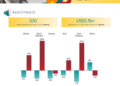
We have to also accept that the foreign portfolio investments in the stock market are always short term and create volatility in our markets. We have to embrace the danger and the opportunities they bring. For now, it is important for those foreign investment inflows to keep coming, to further stabilise our naira, while providing the short term liquidity, until our economy starts to grow well.
The current foreign exchange reserves at $41.05 billion is a good start to build our naira stability on.
The stability in our naira exchange rates is why we are seeing some flickers of long-term investments lately. There has been interest shown lately in the infrastructure space that we need to quickly catch up with our development. We have seen two large infrastructure project plans, announced this past week. One a railway from Lagos to Abuja to Kano and Port Harcourt to Lagos. There is also a super highway going from Lagos to Abuja.
The significance of these announced projects, if they ever come to fruition, is that these plans have been made by the private sector. I have always said, our large infrastructure project needs, be left to the private sector to find the finance; and do them on a commercial basis. The use case is real enough, and we have the demand to make them viable. They are beyond government budgets. The government should provide the support where needed, and help with quick regulatory approvals and right of way issues, so that the projects are not delayed on the altar of community and land issues, and then stay out of it.
The stable economic environment we are beginning to see, with the naira stable and inflation slowing, is what has allowed businesses to make long-term plans. Underneath these improvements are the lowering of petrol prices, that is propelling the domestic economy and lowering the inflation pressure. The stock market boom of the last few weeks is proof. The stock market is the nose of the economy and the first to sense the improving economy. The stock market sees it in the financial reporting of its listed companies and the increase in foreign portfolio investments.
We are also now finding breathing space with the improvement in oil production going up, currently at 1.5 million barrels per day. This will make up for the current low prices in the international oil market. The Executive Orders the president issued at the beginning of his administration, to help the industry push forward with increased production, has helped. It shows the president understands the oil industry, where he had his career.
The economy’s positive current balance of payments and the reported growth of 3.13 percent by the National Bureau of Statistics confirms the economy is in the right direction, even though we will need double digit growth to be able to bring down the high poverty levels and create employment.
The fiscal side of the economy has also implemented policies that are providing improvements. The report that government revenues were up for half-year to date, was welcome news. The coordinating minister for the economy, in his report last week, said government revenues grew from N5.2 trillion to N6.9 trillion, a 40 percent growth. Though, it is still doubtful, government will meet its own revenue targets for this year. There is hope that the newly enacted tax reforms that will start in January of 2026, will ensure that government revenues will vastly improve budget implementation next year and provide a way to quickly reduce debt levels and get the economy going full strength.
Government’s policies like CreditCorp, providing credit to civil servants, Nigeria Education Loan Fund to fund student education, and the Cash Transfer programme for the poor, are all aimed at re-inflating the economy and providing relief to the populace for the general hardship experienced in the country, resulting from these reform policies.
The SMEs tax exemption threshold that puts turnover above N50 million to be eligible for paying tax, is important to help that segment of the economy. I advocated this policy in my August 2024 article, where I said this was the best subsidy to give to SMEs. It should also be noted that they have to earn it, to enjoy it. Savings on their taxes will help them pay for higher cost of fuel and help lessen their inflation burden.
Patience is required for reforms to take hold and yield the relief the economy needs.
The government must however focus on continuing with the needed reforms. It must devote full attention to electricity and provide the energy needed to power the economy. They should also focus on fighting corruption that has corroded all aspects of our lives. As I advocated a few weeks ago in one of my articles, the fight must move more to prevention, and the look back will only bear fruit where a good work of investigation has been done.
The accused can be confronted with incontrovertible evidence, a bargain and negotiated settlement forced. This will require repayment of the loot and the settlement entered in a court judgement and the case closed permanently. This will be quick and result oriented, instead of the never ending court proceedings that take years.
There must be an attempt to cut the huge waste we ordinary people see everyday in government. A wasteful and corrupt government will not let the economy achieve its potential.
Finally, nothing beats a government that starts out with sincerity of purpose. The people will forgive mistakes, if the purpose is seen to be sincere.
- business a.m. commits to publishing a diversity of views, opinions and comments. It, therefore, welcomes your reaction to this and any of our articles via email: comment@businessamlive.com

Victor Ogiemwonyi, a retired investment banker, is a former Governing Council member of the Nigerian Stock Exchange (NSE), now Nigerian Exchange Group (NGX Group). He sent this contribution from Ikoyi, Lagos. He can be reached via comment@businessamlive.com and marketconversations.substack.com