Investors’ anxiety is mounting following reports of President Bola Tinubu’s directive to the Nigerian Education Loan Fund (NELFUND) to access approximately ₦242 billion in unclaimed dividends. The development has raised fresh concerns over the legal status of the funds, investors’ rights and the potential implications for confidence in Nigeria’s capital market.
The issue is not whether student financing deserves government support. It does. The question is whether money belonging to investors can be appropriated for another purpose without due justification and, more importantly, without following the appropriate legal process. In real terms, such a move could have dire consequences for institutional consistency, investor protection and confidence in the market.
The first question is: what happens to the Unclaimed Funds Trust Fund (UFTF) established under the existing framework? The Finance Act 2020 provides for dividends unclaimed for at least six years to be transferred to the UFTF, pending claims by their rightful owners. The Securities and Exchange Commission (SEC) subsequently reinforced the framework through its 2025 directive, while Section 93 of the Investments and Securities Act 2025 provides for the treatment of unclaimed dividends under SEC rules and regulations.
Has the UFTF been abolished, amended or replaced? If not, on what legal basis can the funds be redirected to another institution? A presidential directive may establish policy direction, but it should not casually override a statutory framework enacted by the National Assembly. If the government intends to change the destination or legal character of these funds, it should do so transparently through the appropriate legislative process.
The second question concerns NELFUND. There is no doubt that student financing requires sustainable funding. But does NELFUND lack legitimate statutory sources of income? Its enabling framework provides for funding from sources including one percent of taxes, levies and duties collected by the Nigeria Revenue Service (NRS), National Assembly appropriations, investment income, charges and fees, among others.
The question on the lips of investors and market watchers is: why should shareholders’ money become a substitute for a properly funded education-financing system? There is also a fundamental public-finance question: is this an appropriation or a transfer? Nigerians deserve to know whether the ₦242 billion is being transferred to NELFUND as a grant, loan, investment or through some other instrument. This distinction matters because unclaimed dividends are not ordinary government revenue. They represent money belonging to investors who have not yet claimed their entitlements.
The government may point to other jurisdictions where unclaimed assets are managed through public institutions. But that does not automatically provide a defence for Nigeria. The critical issue is the legal architecture governing those funds. Where governments take custody of unclaimed assets, ownership, restitution, investment and claims processes are clearly defined. Nigeria must similarly respect its own statutory framework.
The investor-confidence question is perhaps the most important. Nigeria has spent years trying to deepen participation in the capital market. The Securities and Exchange Commission (SEC), Nigerian Exchange Limited (NGX), Central Securities Clearing System (CSCS) Plc and registrars have invested significantly in electronic dividend payment and technology designed to reconnect investors with their money. Other stakeholders, including the Chartered Institute of Stockbrokers (CIS) and Association of Securities Dealing Houses of Nigeria (ASHON), have also prioritised investor education.
Indeed, the persistence of unclaimed dividends should not automatically be interpreted as regulatory failure. Legacy records, deceased shareholders, estate-administration challenges and incomplete bank-account linkages have contributed to the problem. Technology and improved market practices have, however, significantly reduced the accumulation of new unclaimed dividends.
There is therefore an uncomfortable irony: just as the capital market is deploying technology and institutional reforms to return investors’ money to them, the government appears poised to move a substantial portion of that money elsewhere. That could create a damaging perception among investors: If I invest in Nigeria and fail to claim my dividend promptly, can the government eventually deploy it for another purpose? Such a perception could undermine investor education, discourage participation and weaken confidence in the sanctity of investment. It could also establish a troubling precedent in which unclaimed funds become a convenient reservoir whenever the government needs money for a worthy social programme.
The way forward is clarity before implementation. The government should publish the legal instrument authorising the proposed transfer, explain the status of the UFTF, identify the categories of dividends affected and confirm that shareholders will retain an unequivocal right to claim their money.
Education is a national priority. So is investor protection. Nigeria should not have to choose between them. The ₦242 billion controversy is therefore bigger than student loans. It is a test of the sanctity of investors’ rights, the credibility of Nigeria’s capital-market reforms and government’s commitment to the principle that money belonging to investors must remain protected, even when the government needs funds for a worthy cause.
- business a.m. commits to publishing a diversity of views, opinions and comments. It, therefore, welcomes your reaction to this and any of our articles via email: comment@businessamlive.com

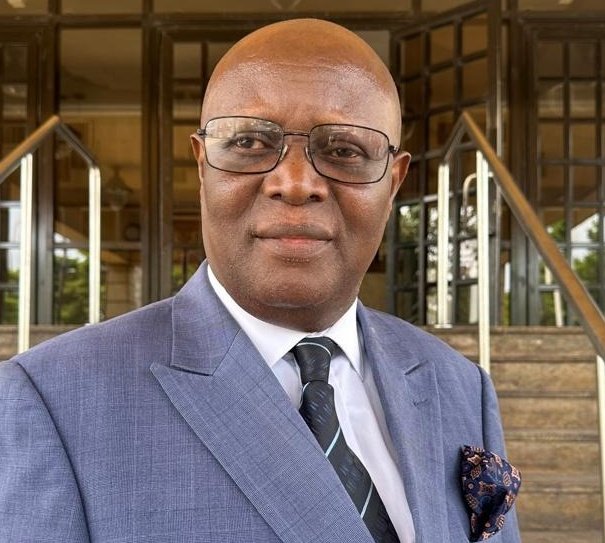
Sola Oni, an integrated communications strategist, Chartered Stockbroker and Commodities Broker and Capital market registrar, is the Chief Executive Officer, Sofunix Investment and Communications. You can reach him at onisola2000@yahoo.com