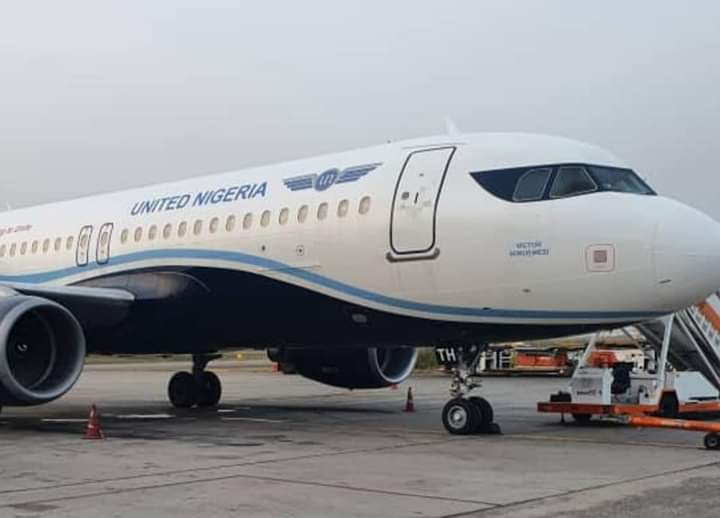
United Nigeria Airlines Company Limited is planning to raise N20 billion through its debut commercial paper issuance, becoming the first domestic airline in Nigeria to access the short-term debt market as it seeks to strengthen its finances and support an ambitious expansion programme.
The proposed issuance comprises Series 1 and Series 2 commercial papers with tenors of 270 days and 364 days, respectively, under a N100 billion commercial paper programme, according to the airline’s September 2026 investor presentation.
Meristem Capital Limited will arrange the transaction, while Cordros Advisory Services Limited, Coronation Merchant Bank Limited, FCMB Capital Markets Limited, FSL Advisory Limited and Quantum Zenith Capital & Investments Limited will serve as dealers.
The fundraising plan comes as the airline pursues a five-year growth strategy targeting expanded domestic, regional and international operations through additional aircraft, new international routes and partnerships with global travel distribution platforms.
The proposed N20 billion issuance represents the airline’s planned entry into Nigeria’s commercial paper market, offering a short-term funding route as it seeks to increase capacity and broaden its route network. However, details of the offer’s opening date, expected yields and specific allocation of proceeds were not disclosed in the information provided.
The planned debt issuance follows a substantial increase in the airline’s revenue and profitability over the past five years.
United Nigeria Airlines’ revenue rose from N10.3 billion in 2021 to N90.8 billion in 2025, while profit after tax increased from N1.3 billion to N23.8 billion over the same period.
The airline reported revenue of N95.6 billion in the first half of 2026, exceeding the N90.8 billion recorded for the whole of 2025. The performance points to a significant expansion in turnover, although the available figures do not establish whether the first-half revenue growth translated into a corresponding improvement in full-year profitability.
Its August performance also showed an increase in turnover to N19.4 billion from N14.1 billion in July. The airline returned to a net profit of N1.2 billion during the month, according to the figures supplied.
These results provide a financial backdrop to the proposed fundraising as the carrier prepares to expand its fleet and international operations. The ultimate cost of the commercial paper funding, however, will depend on the terms of the issuance and prevailing market conditions.
Ahead of the planned transaction, United Nigeria Airlines received credit ratings from Agusto & Co. and DataPro.
Agusto & Co. assigned the airline an A3 short-term rating and a BBB-minus long-term rating, with a stable outlook. DataPro assigned short-term and long-term ratings of A1 and BBB, respectively.
The ratings provide an assessment of the airline’s credit profile, although investors will also need to consider the commercial paper’s pricing, repayment structure, tenor and the company’s capacity to meet its obligations when they fall due.
The proposed issuance falls under a N100 billion commercial paper programme, which establishes the broader framework within which the airline intends to raise short-term debt. The planned N20 billion transaction is the proposed issuance amount, rather than the total size of the programme.
Fleet expansion targets 16 aircraft
The fundraising plan is linked to the airline’s wider five-year expansion strategy, which includes increasing aircraft capacity and extending its presence beyond its existing network.
United Nigeria Airlines currently operates 10 aircraft comprising Embraer ERJ 145s, Boeing 737-800s, Embraer E190s and CRJ900s.
The carrier plans to take delivery of six additional aircraft before the end of 2026. If completed as scheduled, the deliveries would increase its fleet to 16 aircraft, expanding its capacity to support additional frequencies and new routes.
The airline currently serves 14 destinations across Nigeria and Ghana and has secured approval to operate as a flag carrier to six international destinations.
Its international growth strategy also includes distribution partnerships. The company has signed global distribution system agreements with Amadeus and Sabre, allowing travel agents worldwide to access its ticket inventory. Such arrangements can widen the airline’s reach among travel sellers and support ticket sales across markets beyond its immediate operating network.
Airlines seek alternatives to bank borrowing
The proposed transaction comes amid wider use of commercial papers by Nigerian companies seeking alternatives to conventional bank borrowing.
Commercial papers are short-term debt instruments that allow eligible companies to raise funds from investors, typically to finance working capital, operating expenses and other near-term funding needs. They can provide an alternative to bank loans, although the cost of raising funds depends on market conditions, the issuer’s credit profile and the tenor of the instrument.
For United Nigeria Airlines, the debut issuance would introduce another potential funding channel as the company seeks to scale its operations. Its commercial paper debut will also test investor appetite for short-term debt issued by a domestic airline, a sector in which aircraft capacity, operating costs and cash-flow requirements are central to financial performance.
The proposed N20 billion raise, alongside the airline’s revenue growth and planned fleet expansion, places funding access at the centre of its next phase of development. The terms of the offer and the deployment of the proceeds will be important in determining how effectively the financing supports its growth ambitions.