According to the Lagos State Waste Management Authority (LAWMA), Lagos generates an estimated 13,000–16,000 metric tonnes of municipal solid waste daily. For a mega-city of more than 22 million people, this is both a mounting logistical burden and an overlooked economic resource. Collecting and transporting the waste requires roughly 1,300–1,600 trips per day of 10-tons capacity compactor-truck, adding pressure to congested roads and disposal facilities at Olusosun (Ojota site), Solous (Igando site), Epe, Ikorodu and Badagry sites. Expanding collection fleets helps with the turn around time, but cannot indefinitely sustain a system built around just dumping.
The alternative is to treat waste as fuel. With a properly designed waste-to-energy (WtE) infrastructure, Lagos could potentially develop 300–350 MW of gross electric power generation capacity, equivalent to approximately 2.6–3.0 TWh of energy delivered annually at continuous nominal operation. Valued at the prevailing benchmark Band A tariff of ₦209.50/kWh, that energy represents a theoretical ₦551 billion–₦629 billion or an average of ₦590 billion annual retail-equivalent value. However, for the WtE facility infrastructure itself, actual revenue depends on net electricity delivered, contracted wholesale tariffs and other revenue streams. Nevertheless, the ₦590 billion value illustrates the scale of the opportunity buried at these dumpsites.
The starting point in capturing this value is understanding the waste composition. The World Bank PROBLUE programme’s 2024 Lagos waste-management assessment indicates a predominantly organic stream, with approximately 52–58 percent biodegradable material and 14–18 percent plastics. High moisture content reduces the fuel’s net calorific value to roughly 7.5–9.5 MJ/kg. Deploying conventional thermal plants in Lagos cannot simply assume that every tonne will yield the same energy as drier waste elsewhere.
Lagos therefore needs regional transfer stations and materials recovery facilities around the Lekki–Epe corridor, Ikorodu, Ikeja and Apapa. These would separate recyclable materials, manage organic fractions and prepare suitable residual waste for conversion. Front-end sorting, moisture management and appropriate emission-control systems must be designed into each project from inception.
Rather than attempt one enormous plant, modular conversion hubs processing approximately 1,000–1,500 tonnes daily would be optimal, with parallel operating lines for reliability. An initial programme handling 4,000 tonnes per day could establish a commercially meaningful generation base, subject to detailed feedstock testing and engineering.
Using the European Investment Bank’s JASPERS advisory benchmarks of $125,000 to $162,500 per daily tonne of waste capacity, deploying a 4,000 tonnes-per-day Waste-to-Energy facility across Lagos requires an estimated $500 million to $650 million. The operating costs sits around $25–35 per tonne processed, including auxiliary startup fuel requirement. A 30–36-month delivery period from financial close to commercial operation is a planning target, contingent on permits, financing, procurement and grid connections. However, these figures must be validated locally through bankable feasibility studies before investors can rely on them.
A good project commercial structure is as important as technology. Projects could be financed through build-own-operate-transfer (BOOT) concessions, public-private partnerships (PPP) or blended finance involving institutions such as IFC, Afreximbank and the African Development Bank. Lagos has already explored waste conversion through initiatives involving the Dutch-backed Harvest Waste consortium and Lafarge Africa. The next step is to turn such ambitions into enforceable contracts and operating assets.
A WtE facility should not depend on electricity sales alone. Its commercial model should combine long-term power purchase agreements with predictable municipal tipping fees, potentially benchmarked at ₦5,000 per tonne. Additional income may come from eligible verified emission reductions and the sale of usable recovered materials, provided environmental standards and product quality are met.
For illustration, a wholesale electricity generation price of ₦125/kWh ($0.093/KWh ) for the WtE plant, would produce a very different revenue outcome from the ₦209.50/kWh end-consumer retail-equivalent benchmark. The WtE project must model net exportable energy, plant availability, auxiliary consumption, debt service and payment security to understand the values at each point of the value chain.
Creditworthy industrial clusters, free trade zones and commercial estates could provide attractive electricity off-takers through bilateral contracts, subject to applicable licensing, network access and wheeling arrangements. Foreign-currency financing also calls for carefully negotiated tariff indexation and risk allocation; simply denominating local electricity bills in dollars does not eliminate affordability or regulatory risk.
The benefits for a WtE project extend beyond megawatts. Diverting waste from open dumpsites could reduce uncontrolled fires, odour, disease vectors and contamination risks to groundwater. Better transfer infrastructure could also shorten waste-haul routes and relieve pressure on Lagos roads. Properly engineered air-pollution controls—including scrubbers, fabric filters and continuous emissions monitoring—are essential to prevent a new environmental problem while solving an old one.
This transition must also include informal waste pickers. Integrating them into licensed materials recovery facilities as trained, paid workers would preserve livelihoods, improve sorting and build community support. Waste-to-energy should complement recycling and waste reduction, not displace valuable material recovery.
To unlock investment, the state should establish reliable waste-supply agreements, transparent tipping-fee mechanisms, credible environmental oversight and clear rules for electricity off-take and network access under the evolving electricity-market framework. The success of these projects requires independently verified waste data, realistic generation forecasts, enforceable payment security and community engagement from the outset.
Lagos possesses the raw material, industrial demand and investment rationale for a new urban energy industry. What remains is disciplined execution: matching technology to local waste, phasing capital deployment and converting policy commitments into bankable infrastructure. Done properly, waste-to-energy can transform a costly municipal liability into cleaner neighbourhoods, skilled jobs, reliable power and a significant new economic value chain.
A practical first milestone would be an open and transparent competitive procurement for a pilot hub, supported by an independent waste-characterisation campaign and a published framework for land, permits, gate fees and power sales. This would give prospective investors and lenders comparable data and allow the state to test public acceptance before committing to multiple sites. Above all, performance should be measured by waste safely diverted, net electricity exported, emissions compliance and verifiable financial returns—not merely the headline megawatts announced.
Turning waste into baseload electricity is more than an environmental strategy, it is a masterclass in resource optimisation, economic wealth creation, and energy independence. By forging a collaborative alliance between the Lagos State Government, visionary institutional investors, and expert engineering partners, we can unlock hundreds of billions in economic value, power our industries, and pioneer a sustainable blueprint for mega-cities across Nigeria and Africa. The future is bright, and the raw fuel to power is already arriving at Lagos dumpsites everyday: we must take the initiative.
- business a.m. commits to publishing a diversity of views, opinions and comments. It, therefore, welcomes your reaction to this and any of our articles via email: comment@businessamlive.com
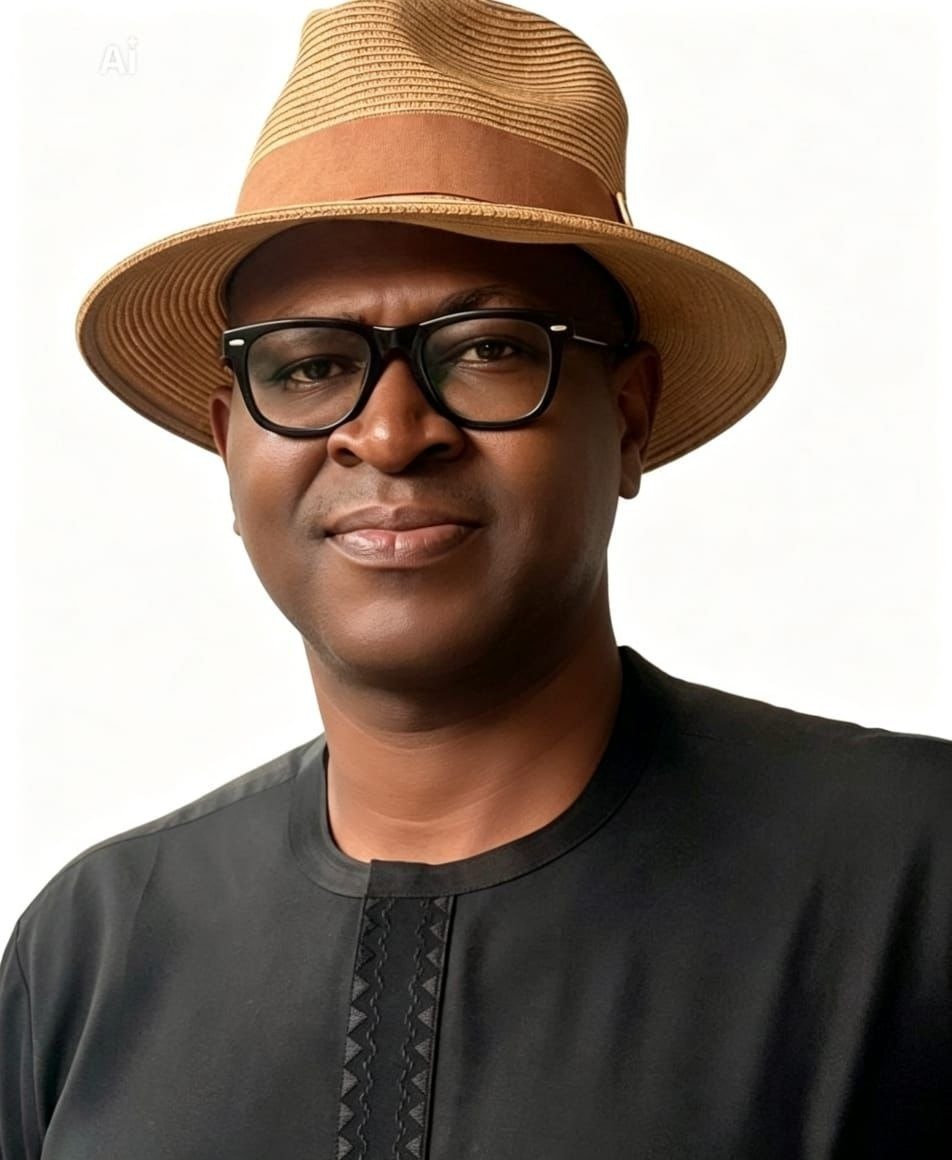
Masah Emmanuel Ikus is a Power and Energy Infrastructure Strategist and the Principal Consulting Partner at EMI Resources Limited. A University of Lagos-trained Electrical Engineer with an EMBA from Lagos Business School, he possesses over 27 years of experience managing complex infrastructure projects across the ICT, Oil & Gas, and Power sectors, specialising in the design of decentralised power systems and solar integration. He currently advises investors, project sponsors, and public institutions on leveraging Nigeria’s energy deficit into bankable commercial opportunities. He can be contacted via masahikus@gmail.com