Onome Amuge
Nigeria’s digital footprint is fast becoming a barometer for its creative and economic shifts and fashion is leading the trend. New Google Search data released on Thursday reveals how Nigerians are using the internet not just to consume global style, but to reinterpret it, blending heritage with modern aesthetics in ways that reflect deep cultural confidence.
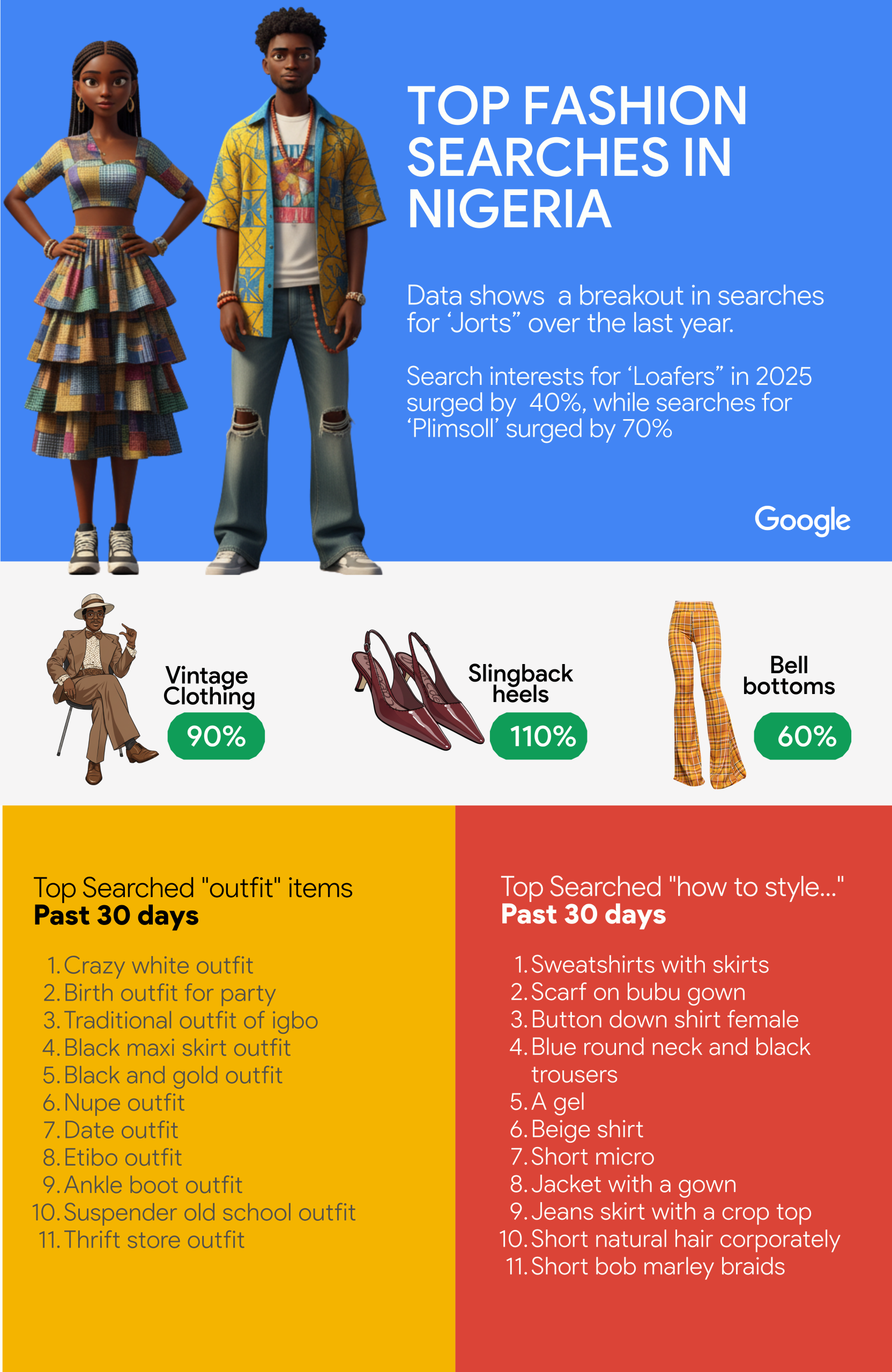
The data, published ahead of Lagos Fashion Week, showcases how search behaviour in Africa’s biggest economy is shaping and reflecting fashion’s future. According to Google, search interest in vintage clothing rose by 90 per cent between August and September 2025 compared with the same period last year. Queries for “vintage scarf”, “vintage jacket”, and even retro silhouettes such as the Zoot suit (+310%) and Tube top (+140%) point to a digital revival of nostalgic fashion.
At the same time, the return to vintage is being matched by a growing curiousity about traditional Nigerian dress. Top searches for “outfit” include phrases like “Traditional outfit of Igbo” and “Nupe outfit”, showing that digital interest in local culture remains robust.
This fusion of past and present, traditional and global, is what Olumide Balogun, Google’s director for West Africa, describes as a “digital footprint of culture.” “The surge in searches for vintage styles, combined with a deep interest in traditional attire, shows a generation that is simultaneously embracing global nostalgia and celebrating local heritage,” he said in a statement accompanying the data release.
The top searched apparel items in Nigeria over the past 30 days include gowns, jeans, suits, hoodies, and skirts — staples that mirror a young, urban, and mobile demographic. But it’s the “how to style” category that offers one of the most prominent insights into consumer intent. Searches like “Scarf on bubu gown”, “Jacket with a gown”, and “Sweatshirts with skirts” reveal a nuanced hybridisation, with local silhouettes meeting Western layering techniques, traditional fabrics paired with streetwear aesthetics.
That cross-cultural agility is reshaping both local design and retail demand. Designers and e-commerce platforms increasingly rely on Google data to anticipate trends and restock inventory. In an economy where inflation pressures have eroded disposable income, understanding what consumers are actually looking for.
Footwear data shows similar dynamism. Interest in slingback shoes rose 110 per cent in the past 30 days, while Wellington boots saw a 310 per cent surge compared with last year. The rise of these styles points to changing weather patterns, outdoor fashion’s growing popularity, and the influence of digital influencers promoting adaptable, statement footwear.
Meanwhile, “breakout” items like Jorts (denim shorts) and Nightshirts (+180%) highlight the influence of casual comfort, reflecting post-pandemic style trends that prioritise ease over formality.