Years ago, while visiting Maiduguri, a city in Nigeria, a colleague in the Women’s Protection and Empowerment team asked if she could speak to me in private.
She was concerned about a decision being pushed by headquarters. A cash transfer programme was being designed and the proposal was to target women as the recipients.
I asked her what was wrong with that.
She told me headquarters had said there was evidence that giving cash directly to women produced better outcomes for families. She then explained something about her community that I had not understood.
In her community, she explained, the man was expected to be the primary financial provider for his family. Giving money directly to women could therefore have consequences that were not obvious from the evidence being used to design the programme. She explained that women receiving money would often spend it on things such as jewellery and clothing. If women began using the money to take on responsibilities traditionally associated with their husbands, it could also affect the husband’s authority and role within the family.
I remember thinking about what she had just told me. The evidence being used by headquarters was not necessarily wrong. The problem was that it was being applied without enough understanding of the environment in which the programme would operate. The people designing the programme knew something important. They simply did not know everything they needed to know.
I have been thinking about that experience again because of the growing debate about artificial intelligence.
Bill Gates recently highlighted several concerns about AI, from the disappearance of entire categories of jobs to the possibility of AI giving dangerous capabilities to bad actors, and the effect of AI companions on how children learn to relate to other people. His broader concern was whether governance is keeping pace with the technology. Around the same time, the Financial Times reported unease among some engineers and researchers about whether anyone, including those developing advanced AI systems, fully understands where the technology is headed.
Those debates are important, but I find myself thinking about AI in a slightly different way: what will it mean for our ability to understand systems?
I have spent much of my career working with governments, humanitarian organisations and development partners in environments where systems are under enormous pressure. In those settings, evidence and data matter enormously. So does good analysis. But more information does not necessarily mean more understanding.
AI is already taking our ability to process information much further. It can look across enormous amounts of data, identify patterns and make connections at a speed that no human team can match.
For governments, that could be incredibly useful. A health ministry, for example, could potentially analyse years of information on health workers, disease patterns, medicine supplies, population movements and government spending to understand why some parts of the health system perform better than others. Humanitarian organisations could examine displacement, food prices, markets, employment and public services and identify relationships that might otherwise be missed. Development organisations could examine what happened to a programme several years after the funding ended, rather than simply reporting what was delivered while the grant was active.
That is a significant opportunity, but there is a danger if we assume that better analysis automatically gives us better understanding.
A system is not just its data. It is also the people, relationships, institutions, history, culture, incentives and power that shape how it behaves. Some of that is difficult to capture in any dataset.
That was essentially what my colleague in Maiduguri was telling me. The cash transfer evidence may have been sound, but the people applying it did not have the full context.
AI may tell us that an intervention worked in several countries and show us what they had in common. It may even identify patterns that human researchers had missed. But that still leaves important questions. Why did it work? Was it the intervention itself, or stronger government institutions behind it? Did communities respond differently? Were there local incentives that made the difference? What happened in the places where it did not work?
These questions matter particularly in Africa, where important information often sits with communities, businesses, traditional institutions and local officials rather than in official datasets. Sometimes the person who understands why something is not working is simply the person who has been there long enough to see it. That kind of knowledge is difficult to put into a model.
The humanitarian sector has known this for a long time. We have seen programmes that looked good on paper struggle when they met the reality of a particular place, while the same approach produced very different results somewhere else. Sometimes the problem was the programme, sometimes the institution or the incentives around it, and sometimes the people designing it had simply misunderstood how the system worked.
This is why the knowledge of people working inside those systems matters. Country teams often know things headquarters does not. Communities know things country teams do not. Local officials may understand constraints that never appear in a project report.
The challenge is bringing these different forms of knowledge together. AI doesn’t eliminate the need for people who understand systems. It increases the value of those people.
I see enormous potential in AI for the governments, development institutions and humanitarian organisations I have spent much of my career working with. The technology could help us understand health systems over many years rather than through the narrow window of a project. It could help identify where resources are going, where systems are breaking down and where seemingly unrelated problems are connected. It could also help us understand why some programmes continue to produce results after external funding ends while others disappear when the project closes.
That last point is particularly important to me because much of my own thinking about aid has come back to a simple question: what remains when the funding ends?
AI could help us answer that question much better, but I think we should apply the same question to AI itself: what remains when the technology is introduced?
Does the ministry know how to use it? Does it control the data? Can it question what the system is telling it? Does it have the people and resources to maintain it? Most importantly, does the technology leave the institution stronger?
If the answer is no, then we may simply have created another parallel system.
There is enormous potential for AI in Africa. It could help governments improve public services, support businesses, strengthen health and education systems and make better use of limited resources. But Africa should not approach AI simply as another technology that someone else develops and we then learn how to use.
There is a bigger issue of agency. Who owns the data? Who decides what problems the technology should address? Who builds the systems? Who understands how they work? Who decides when the machine is wrong? And whose knowledge is missing?
These are not abstract questions because dependency is not only about money. It can also be about knowledge and technology.
If African institutions become dependent on systems they cannot properly interrogate, data they do not control and expertise that sits outside the continent, we could end up creating another form of dependency while believing that we are embracing a new technology. The opportunity is to use AI to strengthen African institutions and African decision-making.
That means investing in African researchers and developers, improving the quality of African data and strengthening universities and public institutions so they can use these technologies and question them when necessary.
It also means recognising something that aid organisations sometimes forget. Local knowledge is not an anecdote that you add to the evidence at the end.
It is part of the evidence.
AI can help us see things we have never been able to see before. It can process information at a scale that would have been unimaginable only a few years ago and challenge assumptions we did not even know we were making. But it cannot remove the need for judgement or make context disappear.
That is why I am excited about what AI could do for the kinds of systems I have spent my career working in, while remaining cautious about how we use it. I can see the possibility of better decisions, stronger institutions and a much deeper understanding of why some systems work and others do not. I can also see how easily we could confuse analytical power with understanding.
My colleague did not have a better dataset than headquarters or a more sophisticated analytical tool. She had something else: she knew the system from the inside.
What she told me did not make the evidence irrelevant. It gave the evidence context.
As AI becomes more powerful, that distinction matters. The machine may be able to see more than any of us have ever been able to see, but seeing is not the same as understanding.
For Africa, the ambition should be bigger than simply becoming a better consumer of AI. It should be about building the capacity to shape it, question it, improve it and decide where it belongs. That means making sure African institutions have the data, skills, infrastructure and authority to use AI on their own terms.
Because the most important person in the room may not be the person with the biggest dataset.
It may be the person who knows what the dataset has missed.
- business a.m. commits to publishing a diversity of views, opinions and comments. It, therefore, welcomes your reaction to this and any of our articles via email: comment@businessamlive.com

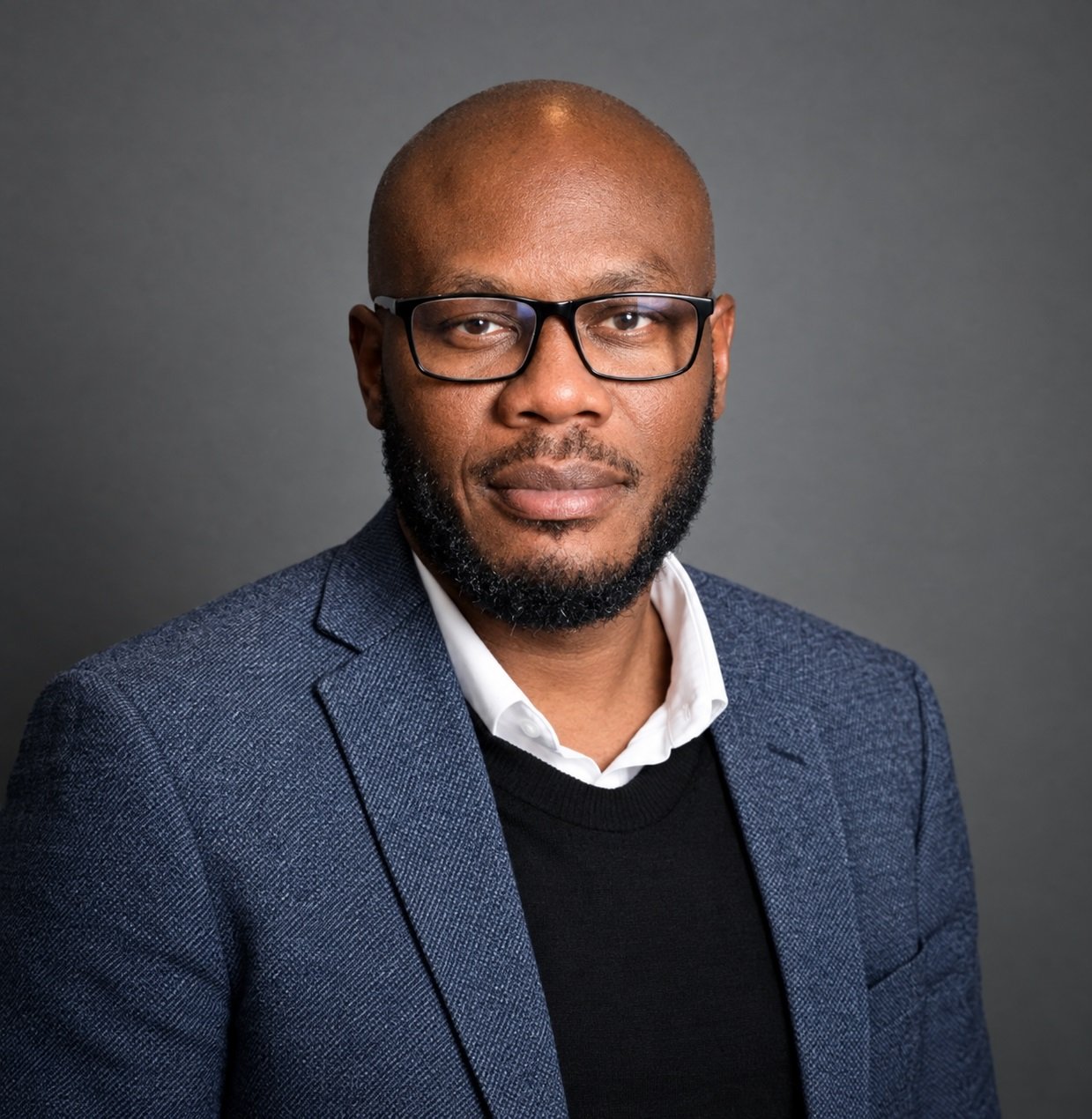
Dr. Wale Osofisan, PhD, is a seasoned governance strategist and policy analyst with over 23 years of experience advancing African-led, evidence-based solutions to political transitions, humanitarian crises and development challenges.