
When I visited the greenhouse farm in Jalingo, Taraba State, recently, I was struck by something that is easy to overlook when we talk about agriculture in Nigeria: the possibility of doing things differently and doing them at a scale that can make a real difference.
Ziv Gadya and his team took me through the operation, explaining the production process from beginning to end. Across five hectares of greenhouse space, I saw tomatoes, cucumbers and bell peppers in red and yellow varieties being cultivated under controlled conditions. It was not simply a matter of walking through rows of healthy crops. What interested me was the organisation behind the production: the systems, the technical knowledge, the people and the attention to detail required to keep the operation running.
The facility was well maintained, and the work taking place there was serious. This is not a small demonstration plot intended to make a point. It is an agricultural operation with the ambition of producing consistently and supplying markets beyond Jalingo and Taraba State.
This is very important because Nigeria does not lack agricultural potential. What it has struggled to build, in sufficient numbers, are well-managed agricultural enterprises that can turn that potential into reliable production, jobs, commercial opportunity and ensure the country is food secure.
The Taraba greenhouse was inaugurated in September 2025 following a remodelling of the facility. The occasion brought together all six governors of the North-East states, a reminder that the project was being viewed as more than a local agricultural initiative. Borno State Governor Professor Babagana Zulum publicly welcomed its potential contribution to food security and the fight against hunger in the region. There had been setbacks along the way, but the facility was brought back into operation with technical support from the TSI team led by Ziv, Liran, Naola, Rosemary, Yamusa and Favour.
My visit offered an opportunity to see what that effort looks like in practice. The project information shared with me indicates that the greenhouse provides more than 100 permanent jobs and supports an estimated 400 to 500 indirect jobs. Those figures deserve to be understood in their proper context, but they point to something important: the economic value of an agricultural facility extends well beyond the crops harvested from it. There are jobs in handling, distribution, transport, maintenance and the many services that make production possible.
There is also a wider food security argument.
Nigeria’s population is expected to grow substantially over the coming decades. The United Nations projects that it could reach around 359 million by 2050. That is a country with an enormous amount of food to produce, move and sell. Yet food insecurity is already a daily reality for many households, particularly in parts of the North where conflict, displacement, poverty and disrupted livelihoods have made access to food more difficult.
We should not presume that a greenhouse in Jalingo can solve Nigeria’s food security challenges. It cannot. Nor should controlled-environment agriculture be presented as a replacement for the country’s vast network of smallholder farmers or conventional farming. Nigeria needs all of these. But the Jalingo experience shows how technology and better-managed production can complement existing agricultural systems, improve consistency and help supply markets throughout the year.
The importance of domestic production became clear in 2022, when the Russia–Ukraine conflict disrupted Black Sea grain exports, drove up prices and exposed the risks of relying heavily on food imports from a few international suppliers. Across Africa, rising prices put further pressure on already stretched household budgets. The lesson was not to abandon trade or pursue complete self-sufficiency, but to avoid excessive dependence on supply chains beyond national control. Food security is therefore also a national security concern: countries need domestic production capacity and the resilience to withstand external shocks.
What makes the Taraba project particularly interesting is the role of government leadership. His Excellency, Dr. Agbu Kefas, the Executive Governor of Taraba State, provided the political backing and investment catalyst that helped bring the facility into operation. That kind of leadership is extremely important. Agricultural projects often require patient capital, particularly at the beginning, when infrastructure, technology, skills and markets must come together before the business can establish itself.
Government has a legitimate role in creating those conditions. But public investment should be assessed by what it makes possible over time. The objective should be a commercially viable enterprise that can sustain production, pay its workers, maintain its equipment and reinvest in its future. Public support should help establish the foundations for that outcome, not become a permanent substitute for sound management and a viable business model.
I was also encouraged by the people I met. The technical operation has benefited from expatriate expertise, but the management personnel I encountered were Nigerian women. They were knowledgeable, confident and clearly familiar with the work taking place. I came away with the impression that the technical team had made a genuine effort to transfer knowledge rather than simply operate the facility around expatriate expertise.
That is an important part of the story. International technical support should not be measured only by the output it delivers while specialists are present. It should also be measured by the skills and capabilities that remain with the country. Nigeria needs more trained agronomists, greenhouse technicians, farm managers, agricultural entrepreneurs etc. A facility such as this can become a practical learning environment for young Nigerians entering the sector. It can demonstrate what modern production requires at scale and give people the opportunity to develop skills through actual work.
There are also opportunities to build more value around the existing operation. Seedling production, for example, could become a complementary business, supplying other farmers who want to improve their own production. Organic manure and other forms of responsible nutrient management could offer additional value, provided they are developed to meet proper agronomic standards. And there is a strong case for exploring agro processing. Tomatoes, cucumbers and peppers can be turned into products with longer shelf lives and access to different markets. This would help reduce post-harvest losses and create opportunities beyond the sale of fresh produce.
None of this happens automatically. Production must be matched by reliable buyers, transport, storage and distribution. A greenhouse can produce excellent crops, but the commercial model will struggle if produce cannot reach consumers at the right time and at a price the market can support. As the operation grows, these questions will become just as important as what happens inside the greenhouse.
Still, the possibilities are worth considering. What would it take to establish a similar facility in each of Nigeria’s six geopolitical zones? Could successful models eventually be developed in every state, adapted to local conditions, markets, water availability and the crops for which there is genuine demand?
I would not suggest that every state should simply copy and paste the Jalingo model. Agriculture is shaped by geography, climate, infrastructure and markets. What works in Taraba may need to be adapted elsewhere. But the principle is worth replicating: bring together public leadership, patient investment, appropriate technology, competent management and a clear route to market.
The point is not to build greenhouses for the sake of having greenhouses. It is to build productive enterprises that make food available, create employment, develop Nigerian expertise and generate commercial activity around them.
Jalingo is not the answer to every challenge facing Nigerian agriculture. But it offers a practical example of what can happen when leadership and investment are directed towards production, and when technical expertise is used to build local capacity.
Nigeria will need many more such examples. The country has the land, the people and the demand. What it needs is a greater willingness to invest in the systems that connect these assets to productive enterprise.
Imagine what could happen if every Nigerian state had a Jalingo of its own.
- business a.m. commits to publishing a diversity of views, opinions and comments. It, therefore, welcomes your reaction to this and any of our articles via email: comment@businessamlive.com

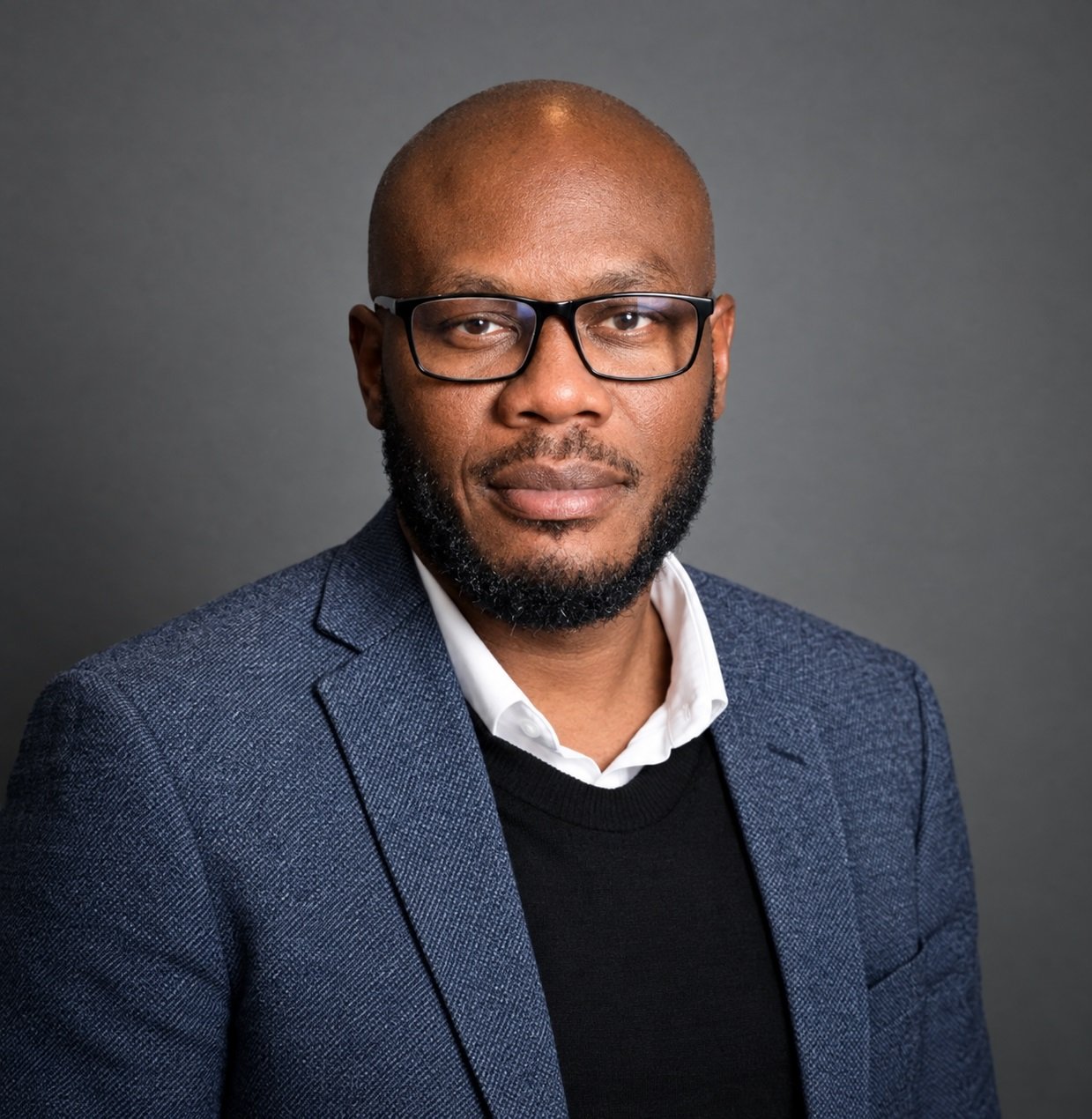
Dr. Wale Osofisan, PhD, is a seasoned governance strategist and policy analyst with over 23 years of experience advancing African-led, evidence-based solutions to political transitions, humanitarian crises and development challenges.






The road on the water — Living in Ogun State, working in Lagos (2)