Joy Agwunobi
The global market for supercapacitors is on track to reach a value of US$4.86 billion by 2036, driven by advancements in technology and increasing demand in niche applications across the automotive, power grid, and industrial sectors, according to a new report by IDTechEx.
The report, titled “Supercapacitors 2026-2036: Technologies, Applications and Forecasts”, highlights a decade-long trend of steady market growth, with the sector expected to expand at a compound annual growth rate (CAGR) of 15.3% from 2026 to 2036.
Supercapacitors are one of four primary energy storage technologies—alongside capacitors, batteries, and fuel cells—offering high power density but relatively modest energy density. They are particularly suited to applications requiring rapid charge-discharge cycles, such as hybrid vehicles, where they are often paired with batteries in hybrid energy storage systems.
According to the analysis, there are three main types of supercapacitor technologies, differentiated by their charge storage mechanisms and electrochemical characteristics, including energy density, power density, and cycle life.
The report explains that the two fundamental charge storage mechanisms in supercapacitors are capacitive storage—used in traditional capacitors—and faradaic storage, which involves a pair of redox half-reactions and forms the basis of battery technology. Supercapacitors can employ either of these mechanisms or a combination of both, depending on their design. Electric double-layer capacitors (EDLCs), the most common and commercially established type, rely solely on capacitive charge storage.
It further highlights that hybrid supercapacitors and pseudo-capacitors are still emerging technologies. Hybrid models combine both capacitive and faradaic storage, while pseudo-capacitors use purely faradaic storage. Faradaic charge storage typically delivers higher energy density but lower power density, setting the three technology groups apart in terms of electrochemical performance.
Supercapacitors are favoured in scenarios where high power output and long cycle life are more critical than high energy density.
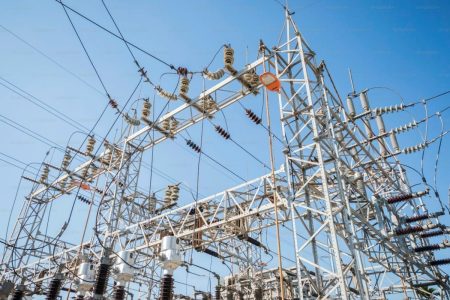
According to IDTechEx, their major application niches include uninterruptible power supply (UPS) systems for industry, data centres, and manufacturing; automotive uses such as delivering high-power bursts or capturing energy from regenerative braking in hybrid vehicles; and power grid applications, where they are deployed for functions such as power control and peak shaving.
While the automotive sector has historically dominated demand, the report predicts a shift toward power grid applications over the next decade. This transition is expected to be driven by the growth of renewable energy storage systems and the gradual phase-out of hybrid vehicles in favour of fully electric models.
Challenges and competitive landscape
Despite their strengths, supercapacitors face hurdles in competing with lithium-ion batteries, their closest rival. Limitations in energy density and higher cost per kilowatt-hour have slowed wider adoption, particularly in electric vehicles and grid-scale energy storage systems where these metrics are critical.
Batteries have also improved their power density with emerging chemistries such as solid-state, silicon-anode, and lithium-metal technologies—reducing the performance gap with supercapacitors. Although batteries are unlikely to match supercapacitors in certain high-power use cases, their lower cost per kilowatt continues to narrow the market niche for supercapacitors.
IDTechEx forecasts continued growth in the global supercapacitors market, driven by technological advancements in hybrid and pseudo-capacitors, and rising demand in the automotive and power grid sectors. However, the balance of applications is set to tilt toward the power grid segment as renewable integration accelerates and hybrid vehicles decline.