MANY COUNTRIES IN AFRICA have been suffering under political leaders that have chosen to remain in office till they die. It has therefore become a pattern that many force themselves upon their countries by all means possible, fair or foul. The outcomes have been just the same. They have either kept their countries stagnant socially and economically or have even put their countries in reverse mode. Examples abound. They either came in with charisma as political aspirants or through military coup d’état or yet through bequest.
Robert Gabriel Mugabe started out well as a charismatic leader but ended badly, turning the economy of his country, Zimbabwe, upside down. The value of the currency of Zimbabwe became one of the worst globally, comparable to that of Venezuela. At some point, it became more fashionable and convenient to use the American dollars than Zimbabwe’s currency. Against his wish, Mugabe had to be forced out of office as senility had taken over and he was merely ruling rather than governing. Maybe it would be right to state that Mugabe was saved from the inglorious hall of shame of those presidents that died in office and his country was saved from the turmoils and upheavals that usually followed the power vacuum created by the exit of many despots.
Côte d’Ivoire hasn’t been that lucky. In fact, it has been twice unlucky. Félix Houphouët-Boigny ruled the country with an iron hand, like a monarch for over 30 years from independence in 1960 until his death in 1993, leaving behind a country in crisis. Conditions in the country quickly deteriorated after his death, such that, between 1994 and 2002, there were a number of coups, a devaluation of the CFA franc and an economic recession. These climaxed with a protracted civil war that began in 2002 and ended in 2007 followed by a second civil war from 2010 to 2011, over the results of the 2010 Ivorian presidential election. The country had gone through a tumultuous decade marked by an economic downturn, a culmination of the crisis left behind by the powerful and strong man who ended up weakening his country.
A few of the despots will be mentioned in passing here among those still in power, particularly in the East, West and Central African subregions.
Teodoro Obiang Nguema Mbasogo, incumbent president of the Republic of Equatorial Guinea, has been in power since 1979. He shows no sign of stepping down for someone else. It may be that his successor will be his own son. Yoweri Museveni has been in power in Uganda since 1986. He is still ruling the country till now. He is not done yet. In Cameroon, President Paul Biya has been ruling since 1982 and, at age 92, is preparing for another election in which he is sure to win. He has been absent in office for a while only to return recently, frail. Meanwhile, the French government purportedly helped him to keep the office during his absence. Fauré Gnassingbe took over the reins of power in Togo in 2005 after his father’s death. His father took over power in a violent coup in 1967. Cumulatively, Eyadema’s dynasty has ruled Togo for 58 years out of the 65 years since independence in 1960.
Lately, Fauré, the son in power used brute force to quell the uprising and protests against his continued stay in power. Is he ready to leave? That is doubtful. Now, the man who got installed as president through external help from France and the US has been serving as President of Ivory Coast since December 2010. He is presently stuck in his own mindset. After serving two terms as provided for by his country’s constitution, he changed the constitution to allow him run for a third term. With the constitution changed, Ouattara went out to contest, and he won overwhelmingly, as usual. He has practically committed the same atrocities he earlier accused Laurent Gbagbo of committing, leading to his forceful removal to make way for Ouattara. Now, the same Ouattara has reportedly signified his intention to run for a fourth term later this year.
In all of Biya’s, Gnassingbe’s and Ouattara’s continued stay in power, French complicity has been flagged. For instance, how is France so embedded in Cameroon’s administration that it got involved in looking after Cameroon’s government while Biya was away, recuperating and convalescing? Why did Fauré turn violently against his fellow protesting Togolese? And now, Ouattara’s retention in office has created a serious crisis in Côte d’Ivoire, people are grumbling against Ouattara for his latest political moves.
In June, Togo’s President Faure Gnassingbé faced growing pressure following a government clampdown on protests calling for his resignation. His “constitutional coup,” involving the introduction of a new political structure, means he can now remain at the helm of the country without any term limits. By his latest gimmick involving constitutional changes to extend his grip on power, he may no longer be called president but he still pulls the strings and no longer has to face general elections as means of remaining in office since he now has a select few who will be doing that voting. This has been roundly rejected as shown in Togo’s opposition rallies and youth anti-government protests that led to dozens of arrests. Security forces used tear gas to disperse hundreds of protesters who blocked roads in the capital Lomé to demand his resignation. But Fauré remains resolute about remaining in office. But, at whose behest? This is where the French issue comes in.
Much earlier, in Côte d’Ivoire, Allasane Ouattara faced a test of continued tolerance of his rule. Although the mainstream media was not involved, social media raised dust. On May 21, 2025, a surfeit of rumours flooded the social media with reports claiming that Alassane Ouattara’s government was threatened in a coup. According to an extract from the Council of Foreign Relations, such spurious coup rumours briefly flooded social media, forcing the government to deny their veracity and “the fact that such political unrest seemed remotely plausible to many should give that same government pause.” A buildup to the country’s forthcoming elections in October, could be worrisome as President Ouattara is 83 years old and has been in power for over 14 years. The country’s positive economic trajectory, notwithstanding, “Ouattara’s continued political dominance is flirting with a return to disaster.” Serious unrest accompanying the last election should be a pointer to what this year’s October election could bring, particularly when a new constitution set in motion in 2016 to reset the clock on his two-term limit has now paved way for no term limits.
Such a “constitutional coup” was implemented in Guinea Conakry by President Alpha Condé, leading to waning faith in democratic governance. On a much wider note, this type of attitude and scheming to retain power outside popular acclaim have encouraged a recent flurry of coups d’état in the West and Central African region, often with many unintended consequences. But, in the case of Côte d’Ivoire, what could be the level of French complicity in ensuring that Ouattara remains in power through constitutional coup, if France truly believes in democracy?
On the flip side, member countries of the Alliance of Sahel States (AES) have at various times complained about France’s remote interference in the affairs of their states since they broke ranks with France. Mali, for instance, has alleged that there are proofs of France’s active involvement in supporting terrorism in the Sahel region. There were claims that Mali had requested for opportunities to present evidence on the UN platform but that France has consistently frustrated such a move. Some days ago, a failed coup attempt was reported in Mali, involving one French national, two Malian generals and many other soldiers. Although Malian authorities accused the French national of working as a spy, France has risen to his defence, calling him a diplomat, asking for his release. Hitherto, it has been alleged that, while the French military bases were still in Mali, terrorists were receiving ammunition supplied through the bases while the bases served as surveillance posts for French interest rather than Mali’s security.
On a regional note, what could be France’s motivation for conniving with civilian rulers who are not practising the proclaimed democracies but choose to overstay in power while the same France goes after military regimes that are trying to stabilise their own countries?
A few days ago, France acknowledged its role in decades of violent repression of independence movements in Cameroon. President Emmanuel Macron, in his July 30 letter to Cameroonian president, on findings of joint commission on the country’s colonial past, wrote that France has acknowledged its role in decades of violent repression of independence movements in Cameroon, the latest stage in a slow process of reckoning with its brutal colonial past. In it, he wrote thus: it was “up to me today to assume the role and responsibility of France in these events.” However, the letter, which neither contained any apology nor mentioned any form of reparations, conveyed the findings of a joint Franco-Cameroonian commission that investigated the colonial-era repression of independence movements from 1945 to 1971. It also took into account crimes committed by the French-allied post-independence government of Ahmadou Ahidjo in Cameroon. Biya has been involved as a French ally for so long. He served as prime minister under Ahidjo from 1975 to 1982.
The southwest Cameroon has been systematically marginalised since the country’s independence. It was first Ahidjo and then Biya that sought to systematically marginalise the Ambazonia’s English speakers in governance, education, and economic development. A buildup of resentment and anger, boiling over, had led to a resistance. The Anglophone Crisis, also known as the Ambazonia War of Independence, is still an ongoing armed conflict in the English speaking southwest part of Cameroon. French leaders have reportedly offered Cameroon’s dictator their full support as the French administration under President Macron is accused of hindering peace efforts in Southern Cameroons due to its unending support for the 92 year old Paul Biya.
Macron disclosed in the letter that: “The commission’s historians clearly established that a war took place in Cameroon, during which French colonial authorities and military forces committed various forms of violent repression in several regions of the country, a war that continued beyond 1960, with France’s support for actions taken by the independent Cameroonian authorities. It is doubtful, however, if France has repented or stopped the nefarious activities as Macron is in a unique position to urge Paul Biya to embrace inclusive peace talks to end the nearly nine-year conflict.
The role of France in propping up and sustaining regimes of oppressors is clear as crystal from the foregoing. It can therefore be asked whether France is truly a friend of Africa or its foe. It is then easy to safely assume that African countries that repose in France may be trading off a lot of what belongs to Africans for the sake of one or two individuals in authority who are kept there for the purpose of protecting French interest and not Africa’s.

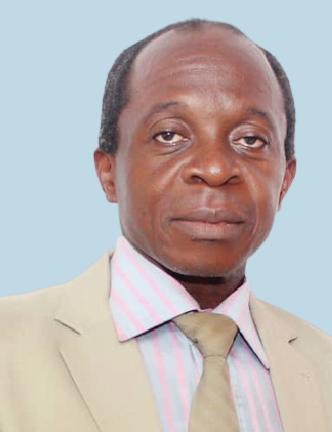
Dr. Olukayode Oyeleye, Business a.m.’s Editorial Advisor, who graduated in veterinary medicine from the University of Ibadan, Nigeria, before establishing himself in science and public policy journalism and communication, also has a postgraduate diploma in public administration, and is a former special adviser to two former Nigerian ministers of agriculture. He specialises in development and policy issues in the areas of food, trade and competition, security, governance, environment and innovation, politics and emerging economies.