In 2010 when the Assets Management Corporation of Nigeria (AMCON ) was being set up, I wrote an article in support of its creation but said seven years was sufficient time for it to resolve issues and get out of the scene. I also said that we must be careful not to make it into another parastatal.
When eventually 10 years was agreed, we felt and hoped this was a good enough time. But, unfortunately, it has actually now become a parastatal and, 15 years later, it now has 600 employees, owes the CBN N7 trillion, and has over 1,000 lawsuits. This is because its resolution status was altered, with its mandate to manage businesses and the fuzzy maths it created along the way.
AMCON became a leasing company – leasing tank farms; it became a real estate company – managing properties; it even got into managing airlines; all of which they had no business getting involved in.
Arik Airlines, for instance, was a heavily indebted company but was operating, taking in cash. Its debt was not an eligible asset for AMCON to acquire. From the testimony of one of the witnesses, in an EFCC matter in court, it was revealed that Arik had exposure to a foreign bank with facilities secured with a guarantee from Union Bank of Nigeria. Instead of letting Union Bank pay for its reckless risk taking, AMCON mysteriously took on the debt to save the foreign bank and Union Bank; thus taking Arik’s debt as an eligible asset, which it was not. In the process, it triggered all the other loans from other banks into an immediate repayable debt, crystallising into debt AMCON now had to manage. Arik was no longer able to get credit once it became an AMCON customer. This was the genesis of AMCON becoming the airline’s receiver manager, an area where they had no expertise of any type. We know what happened thereafter – the Economic and Financial Crimes Commission (EFCC) is currently prosecuting some of the people in this magical management contraption.
Over the years, AMCON also created and perfected a fuzzy maths situation. It will buy a bank loan of say N100 million for N60 million with maybe N50 million worth of collateral underlying it. AMCON would then go on to recreate it in their books as an asset of N100 million and start charging interest on it. This is despite the fact that most of the banks had already proactively inflated the original asset to the N100 million (with funny interest charges and fees); and they would then be expecting the same defaulter whose assets they had taken to come and service and repay the loan.
So, instead of AMCON selling off this loan with the underlying collateral and collecting its N60 million plus whatever they can get on top and cleaning that loan off their books, they became the new lender, holding on to the loan and charging interest. This disingenuous method was how they acquired their perpetual life.
But you can not blame them. They get almost N1 trillion infusion from banks as premiums every year, which they use to feed their bloated structure and operations, paying fat salaries and allowances. With this robust financial structure in place to feed fat on, they have no incentive to resolve and close shop.
A simple worldwide survey would show that every other banking sector resolution entity created like AMCON all over the world, whether in the United States of America or Sweden, have all done their clean up and closed shop.
The Resolution Trust Corporation set up to clean up the savings and loans crisis in the US, did its job in about five and a half years and closed shop.
The Troubled Assets Resolution programme that was set up to clean up the 2008 financial crisis in the US also did its job in six years. The initial $700 billion provided to do the clean up, only required $426.4 billion and recovered $441.7 billion, and actually making a profit of $15.3 billion.
In the case of Nigeria, its bad bank asset resolution entity, AMCON, is still going strong 15 years later.

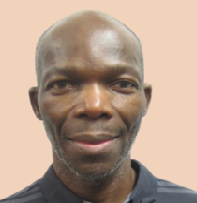
Victor Ogiemwonyi, a retired investment banker, is a former Governing Council member of the Nigerian Stock Exchange (NSE), now Nigerian Exchange Group (NGX Group). He sent this contribution from Ikoyi, Lagos. He can be reached via comment@businessamlive.com and marketconversations.substack.com