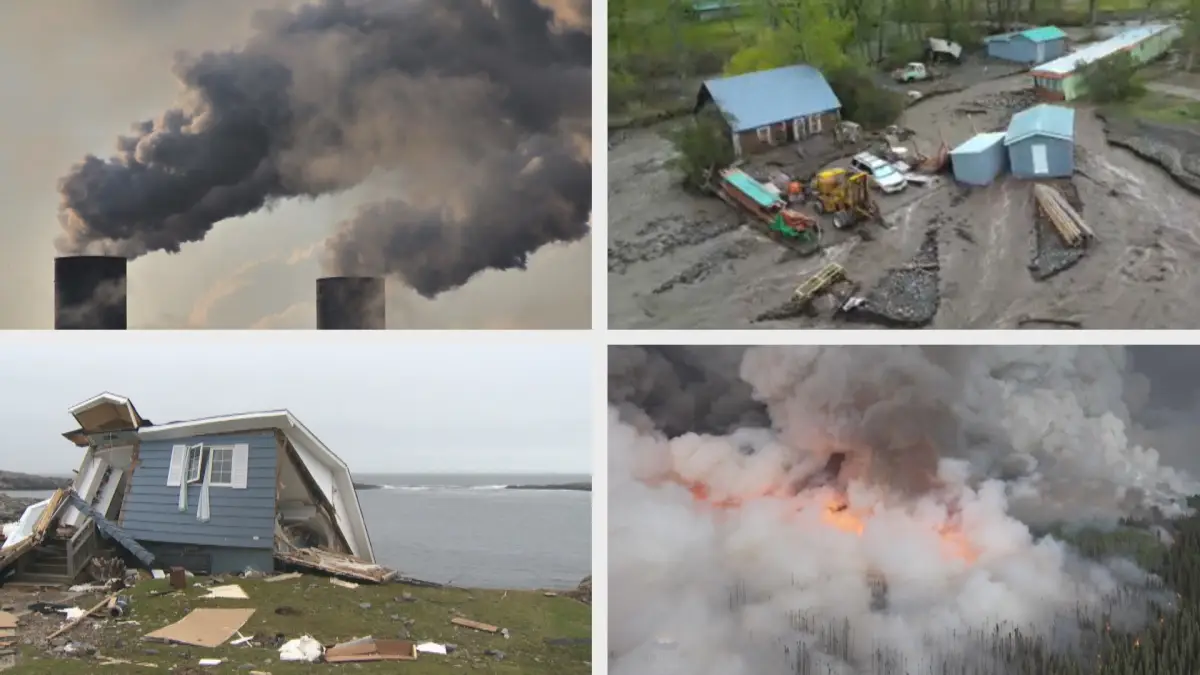
Rising climate-driven losses and a rapidly widening global protection gap are placing unprecedented strain on the traditional insurance model, heightening calls for insurers to shift toward measures that prevent risk rather than solely pay for damages after disasters strike.
This warning was issued by Brad Irick, managing executive officer and co-head of international business at Tokio Marine, who cautioned that intensifying natural catastrophes are eroding the sustainability of insurance cover for households and businesses worldwide.
Irick, in a recent article published by the World Economic Forum (WEF), explained that the long-standing approach of collecting premiums and settling claims can no longer keep pace with rising costs fuelled by increasingly volatile weather events.
According to him, “For the fifth consecutive year, global insured losses from natural catastrophes exceeded $100 billion in 2024. Yet, insurance covers merely 30 percent of total economic losses from natural disasters.The remaining 70 percent, known as the protection gap, falls upon governments, businesses and individuals ill-equipped to absorb these costs.”
Losses linked to secondary perils such as flooding, wildfires and severe storms now account for around 60 percent of catastrophe-related damage, yet conventional pricing models still struggle to incorporate their volatility. As premiums rise to reflect worsening risks, Irick explained that coverage has continued to shrink, particularly among vulnerable households. Between 2013 and 2022, a 1 percent rise in premiums reduced insurance uptake by 0.107 percent, he said.
The economic consequences are already apparent in urban regions where businesses are opting to relocate rather than absorb mounting insurance costs. This triggers a chain reaction that weakens city economies: property collateral values drop, tax revenues decline and under-insurance leaves recovery efforts severely underfunded. “If the level of insurance is not sufficient to pay for recovery, some insurance becomes as effective as none,” Irick cautioned.
Irick pointed to Broward County, Florida, as an example of how proactive resilience investments can reverse this negative cycle. Faced with recurrent flooding and a 400 percent increase in insurance pricing, local authorities and the private sector collaborated to identify and finance adaptation measures, including advanced drainage systems and protective seawalls. Independent consultants evaluated the economic impact of these upgrades and, in one instance, recorded a return on investment exceeding 9 percent, helping to build stakeholder confidence and support for new local taxes to fund the infrastructure.
Cape Town in South Africa also showcases the economic power of resilience planning. The city partnered with the Resilient Cities Network in 2016 and developed an integrated management structure capable of monitoring more than 2,000 infrastructure initiatives in real time. Improved operational efficiency contributed to a 97 percent revenue collection rate, one of the highest globally reassuring lenders of the city’s debt-repayment capacity. This track record enabled Cape Town to secure expanded financing, culminating in a credit rating upgrade from Moody’s in May 2025, despite increased borrowings to strengthen infrastructure resilience.
These successes reflect what the Resilient Cities Network describes as a “city resilience portfolio approach.” The model encourages authorities to treat climate adaptation not as isolated projects but as interconnected investments that enhance future creditworthiness, strengthen economic competitiveness and attract diverse capital sources.
Insurers evolving into resilience partners
Irick stressed that for insurers, the future lies in building capabilities that support cities in preventing losses rather than only facilitating post-disaster recovery. Working with organisations such as the Resilient Cities Network, insurers can leverage loss data, engineering expertise and financial structuring to mobilise funds for resilience.
He explained that modern technology now enables insurers to make stronger business cases for preventive strategies. Satellite imagery, internet-of-things sensors and advanced AI analytics support early-warning systems and real-time risk monitoring. Digital twin tools provide virtual replicas of cities, allowing experts to test adaptation measures and quantify their long-term value before deployment. “Everybody wins when you prevent losses,” he said.
Six practices driving transformation
Irick further highlighted that the Resilient Cities Network has identified six core principles that help cities secure financing for resilience initiatives. The first requirement is holistic planning that recognises how risk spreads across interconnected infrastructure and social systems, ensuring authorities avoid treating climate threats in isolation. This approach is supported by strong stakeholder coordination so that businesses, communities, and policymakers are engaged from the earliest stages of project development.
He explained that the third element involves a capital allocation strategy built around long-term design and sustainability, making resilience investment a continuous priority rather than a short-term response to emergencies. Cities also need a robust data strategy capable of accurately calculating the financial returns of adaptation, allowing them to present resilience spending as a revenue-positive investment rather than a fiscal burden.
Effective project management constitutes another essential component, with cities required to track and execute multiple initiatives simultaneously, maintaining both operational efficiency and delivery timelines. Finally, transparency through consistent reporting and accountability builds trust among financiers, enabling cities to demonstrate that funds are being properly deployed and outcomes are being achieved.
Cities that institutionalise these practices, Irick noted, are more successful in attracting investors and securing dependable funding channels to support disaster-proof infrastructure.
Irick emphasised that the insurance industry cannot afford to retreat in the face of intensifying climate risks. The sector’s financial health, he argued, depends on reducing exposure through smarter prevention strategies. If insurers fail to innovate, both coverage availability and long-term profitability will deteriorate.
“Capital flows to where it is treated well,” he added, pointing out that preventive action provides clearer investment pathways than unpredictable post-disaster spending. He urged insurers to take a more active role in fortifying communities, because “what the industry does now matters more than ever.”
Irick concluded that the world requires an insurance system capable not only of absorbing disasters but also of preventing them. With coordinated action between insurers, governments and resilience stakeholders, he believes urban centres can close the protection gap, safeguard economic growth and strengthen society’s ability to withstand the growing threat of climate-driven catastrophes.