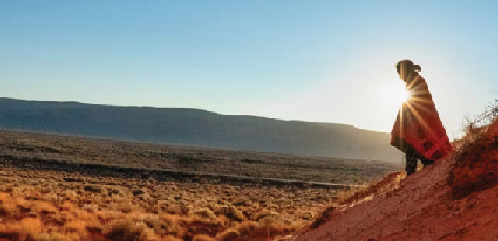
New research finds that foreign direct investment near Indigenous land is linked to more clashes and deaths, challenging the view that FDI normally benefits host countries.
Economists and policymakers often chalk up foreign direct investment (FDI) as a force for progress, promising new jobs, infrastructure such as roads and power lines, and faster economic growth. But new research from Wharton’s Witold Henisz and doctoral student Doron Tadmor, alongside Anne Spencer Jamison of Copenhagen Business School, shows that when FDI collides with Indigenous land rights, conflict is more likely than cooperation with local communities.
These are areas that Indigenous peoples live on or claim as their own, such as Oak Flat in Arizona or the Niyamgiri Hills in India. The paper, published earlier this year in the Journal of International Business Studies, examined 757 foreign investment projects between 2003 and 2020 that were on or near such territories.
It found that on average, the capital inflow was followed by about 10 additional armed conflict events and about 0.5 additional deaths in the following year where the investment occurred. The rise in conflict began the year the investment arrived and could last for up to three years thereafter.
“If companies ignore historical grievances, foreign investment can quickly turn into operational and financial trouble,” says Henisz, who is vice dean of the Impact, Value, and Sustainable Business Initiative. “That risk is especially high in the green transition, since so many critical minerals lie on or near Indigenous lands.”
The team found causal evidence consistent with the link by combining the investment data with a global map of Indigenous land across 193 countries, as well as GDELT media event data to identify and count conflict events between armed non‑state groups (“rebels” in the event‑coding) and governments or corporations.
The study challenges the belief that foreign investment usually benefits host countries. The authors link the conflict to deep grievances, weak legal protections, and governments siding with multinational companies.
Henisz says: “When foreign investment focuses only on cutting costs and chasing quick returns for shareholders, it often sparks conflict with other stakeholders. FDI is not good or bad in itself. But FDI that ignores the social and political context is bad.”
Stronger Safeguards for Indigenous Land Rights
In the study, conflict was most common when foreign investments changed the land heavily, such as through mining. Rebel groups — whom the authors infer may be acting on behalf of Indigenous communities based on event-coding and location — targeted both governments and companies. And while resource projects were the flashpoints, the research found the same pattern across other industries, too.
This was not just a coincidence. The researchers compared areas with similar economies, politics, and geography — and found the conflict rose especially where Indigenous land and foreign investment overlapped, with larger effects on Indigenous and adjacent areas.
The researchers also showed that legal protection makes a big difference. In countries with strong safeguards for Indigenous rights, the conflicts did not increase. Where protections were weak, foreign investment was linked to more violent clashes.
Though the paper is global in scope, it referenced cases in India and Mexico as examples, and Henisz notes that countries such as Australia and Canada have stronger legal frameworks.
“The problem is that in much of the world, governments don’t have this,” he adds. “That’s where firms need to step up. Even without a formal requirement, ignoring Indigenous peoples and their land claims leads to conflict.”
The stakes are only rising as the push for a green transition drives global demand for minerals like copper, lithium, and nickel — many of which lie beneath or near Indigenous lands.
How to Reduce Foreign Direct Investment Risks
The study gives executives a blunt warning: Moving into such land without careful preparation and dialogue can spark conflict that hurts both profits and livelihoods. The costs can be severe.
One example is mining company Vedanta’s plan to extract bauxite — the ore used to make aluminum — in eastern India’s Niyamgiri Hills. The Dongria Kondh tribe viewed the hills as sacred, and local and international groups resisted the mine. It was stalled, costing Vedanta about $10 billion.
“It can be hard for outsiders to grasp that a mountain or a river carries deep religious or spiritual meaning,” says Henisz. “That attachment makes agreements over land especially difficult.”
He points to the recent U.S. Supreme Court decision allowing Rio Tinto and BHP to advance a huge copper project in Arizona, despite Native American claims it will destroy the sacred Oak Flat site. The Apaches and other groups vowed to keep fighting, urging Congress to intervene — a reminder, Henisz says, that even with legal approval, projects that ignore Indigenous voices face lasting resistance and instability.
He also points to steps companies can take to reduce these risks, noting the importance of Free, Prior, and Informed Consent (FPIC), which means communities are fully informed and give permission before any project begins.
Other measures the researchers recommend include ongoing talks with local leaders, fair agreements to share benefits, and hiring or buying from local suppliers, to obtain a “social license to operate.”
The authors warn governments not to assume Indigenous consent. Without real participation, conflict is more likely, hurting both companies and communities. They add that these struggles are part of a wider backlash against globalization by groups who feel ignored.