Last week Saturday in Accra, Ghana, a cross section of Africa’s political, business and diplomatic community gathered to honour Dr Akinwumi A. Adesina, the immediate past President of the African Development Bank as he received the African Lifetime Achievement Award organised by The Heritage Times. The room brought together, His Excellency President John Mahama of the Republic of Ghana, the former President of Botswana, His Excellency Dr. Seretse Khama Ian Khama, continental business leaders, development partners, family, friends and colleagues who have seen his work across different chapters of public service. The evening was more than a ceremony. It was a reminder of what principled leadership can achieve on a continent where development outcomes often depend on the strength of institutions and the people who lead them.
A leadership record rooted in delivery
Across his career, Dr Adesina has shown a consistent pattern. He takes institutions as he finds them and leaves them stronger and more capable of delivering for Africans. As Nigeria’s Minister of Agriculture, he led reforms that expanded access to inputs, strengthened value chains and empowered millions of farmers. At the African Development Bank, he inherited a capital base of 93 billion dollars. Under his leadership, the Bank secured a historic expansion to 318 billion dollars, the largest in its history. This stronger balance sheet allowed the Bank to scale infrastructure financing, expand energy access, support food security and invest in human capital, reaching 565 million Africans. These are not symbolic achievements. They are structural contributions that have reshaped Africa’s development landscape.
A vision anchored in evidence, not sentiment
In his acceptance speech, Dr Adesina made a point that deserves wider reflection. Optimism about Africa must be grounded in data, not emotion. Citing IMF projections, he noted that Africa is expected to record 4.2 percent real GDP growth in 2026, making it the fastest growing region in the world. More importantly, this growth is part of a sustained trajectory, not a temporary rebound. His argument was clear. Africa is not a frontier waiting to be discovered. It is an investable reality. The continent holds 30 percent of the world’s known critical mineral reserves yet receives less than five percent of global investment flows into those sectors. The gap, he argued, is not risk. It is mispricing. This reframing matters. It shifts the conversation away from charity to capital, from vulnerability to value, from aid to investment.
A continent producing its own champions
Dr Adesina highlighted the rise of African corporate champions such as Dangote, MTN, Safaricom and Jumia. These firms are not anomalies. They are indicators of a structural shift. They show that African companies can operate at global scale, innovate at global standards and compete in global markets. This is the Africa that is emerging. One defined by scale, resilience and readiness.
GAIS and the next phase of Africa’s growth
One of the most forward-looking moments of the evening was Dr Adesina’s articulation of the Global Africa Investment Summit (GAIS), which he co-founded with Margery Kraus, founder and executive chair, APCO Worldwide. He described GAIS not as an event but as a global platform of trust for investors. Put simply, GAIS is designed to do what Africa has long needed: connect sovereign assets with global institutional capital; structure deals rather than chase transactions; build disciplined, investment grade pipelines; and create a credible platform for long term capital deployment. President Mahama’s presence at the launch in Dubai earlier this year, and again in Accra, signals the political confidence behind this vision. GAIS is not a continuation of his AfDB legacy. It is an evolution of it.
A leader formed by values and anchored by service
Later in his acceptance speech, Dr Adesina reflected on the people and institutions that shaped him. His parents, teachers, mentors, Nigerian leaders, colleagues and family. He spoke of Nigeria not as a place he left behind, but as a country that lives within him. It was a reminder that leadership is not built in isolation. It is built through sacrifice, opportunity and responsibility.
A well-deserved honour, at an important moment
For those who witnessed the ceremony in Accra, the significance was clear. Dr Adesina’s leadership has helped shift Africa’s development narrative from dependency to agency. He has shown that African institutions can be world class, that African leaders can deliver at scale and that Africa’s future will be shaped by structure, strategy and systems rather than sentiment. The Lifetime Achievement Award presented by President Mahama was not simply a recognition of past accomplishments. It was an affirmation of a leader whose mission continues and whose work remains central to Africa’s next chapter.
A call to action for African leadership
If there is a lesson from Dr Adesina’s career, it is this: Africa’s transformation will not come from declarations of intent but from leaders who can convert ambition into execution. Institutions matter. Systems matter. Evidence matters. And leadership that treats development as a mission rather than a performance matters even more. African policymakers would do well to take this posture seriously. Strengthen institutions so they outlast political cycles. Build credibility so reforms attract capital rather than suspicion. Anchor decisions in data, not sentiment. Pursue reforms with the discipline required to deliver results at scale. Africa does not lack potential. It lacks enough leaders prepared to do the hard, consistent work of turning that potential into performance.
Dr Adesina’s record shows what becomes possible when that commitment is present.
business a.m. commits to publishing a diversity of views, opinions and comments. It, therefore, welcomes your reaction to this and any of our articles via email: comment@businessamlive.com

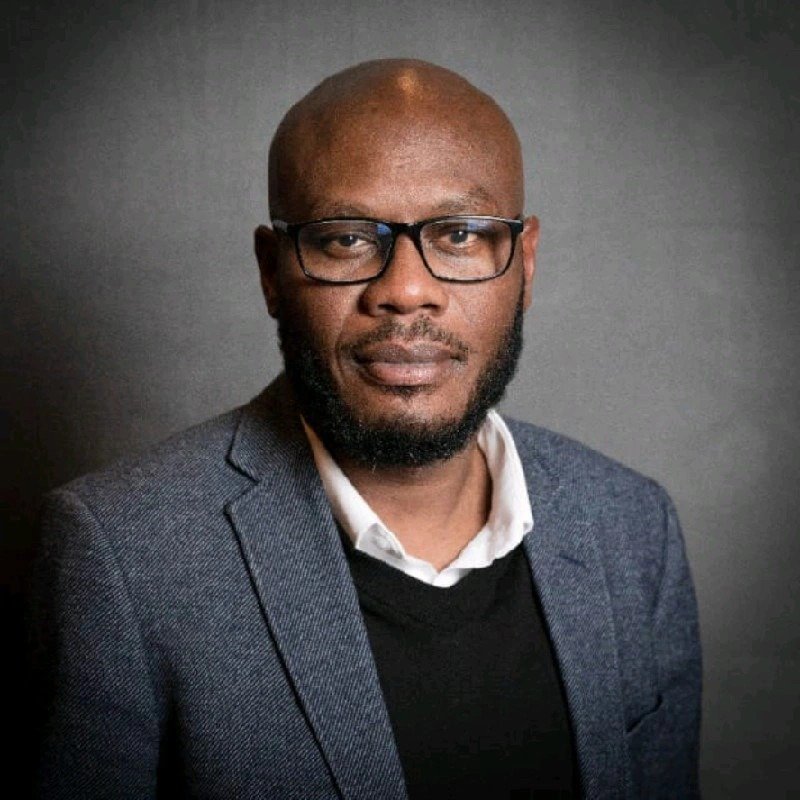
Dr. Wale Osofisan, PhD, is a seasoned governance strategist and policy analyst with over 23 years of experience advancing African-led, evidence-based solutions to political transitions, humanitarian crises and development challenges.