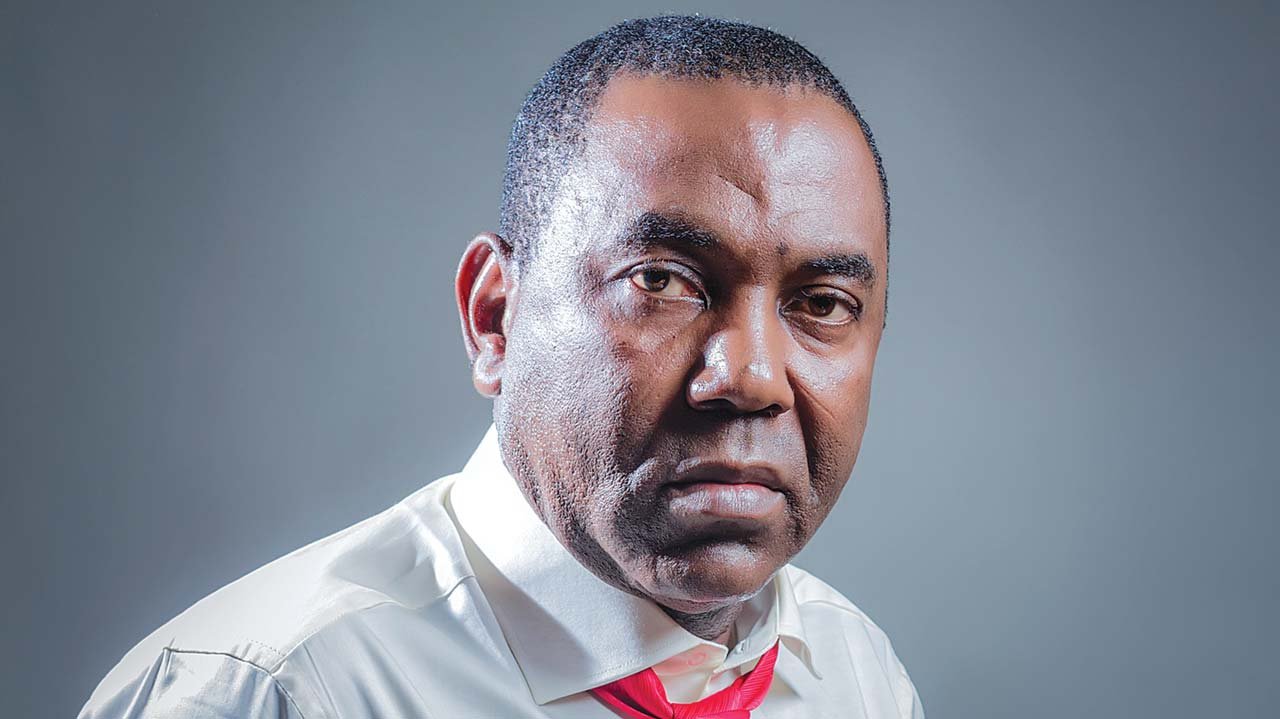
Fernando Fernandez is the shrewd former Unilever chief financial officer (CFO) who has become the multinational company’s global chief executive officer (CEO), and is now attempting to run a global marketing strategy for the company that would see the jobs of marketing directors and chief finance officers on a huge frying pan, and he is determined to make a meal of them.
Unilever is one of the most well-known brands in the world. Present in 190 countries and sells to more than three billion people every day, this company is big by every standard.
Unilever was founded in 1930 following the merger of Dutch margarine producer, Margarine Unie with British soap maker Lever Brothers.
The company is organised into four main business groups: Beauty & Wellbeing, Personal Care, Home Care, and Nutrition. It has research and development facilities in China, India, the Netherlands, Pakistan, the United Kingdom, and the United States.
In the 1930s, Unilever acquired the United Africa Company. In the second half of the 20th century, the company increasingly diversified from being a maker of products made of oils and fats, and expanded its operations worldwide. It has made numerous corporate acquisitions, including Lipton (1971), Brooke Bond (1984), Pond’s (1987), Colman’s (1995), Hellmann’s (2000), Ben & Jerry’s (2000), SlimFast (2000), Knorr (2000), Alberto-Culver (2010), Dollar Shave Club (2016), and Pukka Herbs (2017). Unilever divested its speciality chemicals businesses to Imperial Chemical Industries in 1997. In the 2010s, under the leadership of Paul Polman, the company gradually shifted its focus towards health and beauty brands and away from food brands that showed slow growth. Having divested its various global foods businesses in the 2010s and 2020s, the company is now focused on health and personal care products.
Unilever spent more than $9 billion in marketing in 2025. By all standards, that’s a huge budget. The company is present all over the world and has a basketful of products for all age categories and market segments. It looks like this company is looking at shaving off a significant chunk of this budget by discarding the already massively altered traditional marketing models in favour of just social media.
Fernando Fernandez, the CEO of Unilever, has announced that the business will, in the future, create a content farm of about 300,000 influencers to carry the marketing messages of its multitudinous brands to the ends of the earth.
Fernandez, former chief finance officer of Unilever, has tested this strategy in many markets in South America and India, and thinks it was time to make the strategy global. With this, he has the jobs of marketing directors and chief finance officers on a huge frying pan, and he is determined to make meals of them.
The marketing director who does not understand Profit and Loss, and who isn’t hands-on on the trends around AI and social listening is cooked. Fernandez has effectively caused a seismic shift in advertising. Social media will, going forward, take 50 percent of the budget, while television, the channel that built most of its brands, will fall from the pecking order announced. Unilever would shift media allocation from 30 percent to 50 percent social, increase its creator network by 20x, and retire the television-first model that built household brands, which will fall down the pecking order, and rather than take the leads in campaigns, will now become a channel that just coordinates and leverages social media campaigns.
It looks like Fernandez wants to solve the ancient advertising riddle in advertising put out by US merchant and one of the grandparents of modern marketing, John Wanamaker (1838 – 1922), who said “half the money I spend on advertising is wasted, the problem is I do not know which half.” It’s been the dilemma of many businesses these days to be sure of advertising budget allocation, because competition has increased and channels and platforms have become multifarious and unwieldy.
Wanamaker’s confusion has fuelled wasteful marketing. Marketers have come to believe that the best way to a successful marketing was to throw the seeds all over the place like the Biblical Sower, who, fully aware of the infertile grounds, hard rocky grounds, birds and pests, and some fertile grounds in between, would just spread his seeds around believing that at least some would land on the fertile grounds and grow. Fernandez wants to be sure of which soil his seeds would land, and although marketers might not be comfortable with it, he is turning attention his way because his tests in some markets have been able to yield measurably high ROI per influencer.
There are still issues that many believe will, in the medium term, drill holes in Fernandez’s wonderful ROI-led marketing approach that would make it hard to become a global template.
- Noise and Cacophony: Just imagine 300,000 people talking about a brand all over the world at the same time. Every influencer would be trying to outpost the other. Without central coordination, this would become noise that could distract from the expected delivery, which is to sell the brand. If the campaign becomes too noisy, consumers might face some unintended situations: they might miss the message, misunderstand it or get frustrated by the noise.
- Influencer baggage spilling on the brand: Influencers are real human beings prone to everyday human issues. Like the challenge with over-reliance on brand ambassadors, making the life of your brand dependent on the daily routine of influencers by as high as 50 percent might be too risky. What happens if one brand influencer drops neck deep into one of these everyday social scandals as is the trend these days? In Nigeria, one social media influencer recently was caught faking stage 4 cancer and trying to hoodwink millions of social media followers to donate money. Any brand associated with such a person would be spirited into desperate damage control mechanisms and could hurt the brand before any salvage mission would even be fully activated.
- Synergy and message dissonance: Three hundred thousand influencers is equal to 300,000 different voices, different perspectives and different personalities. They are supposed to be mutually reinforcing, but this could create distortions that could disintegrate the campaign. Except the brand is such that wins with distortion, the brand in this sort of campaign could potentially have 300,000 disparate value propositions. Even with all the central coordination, this could potentially be a problem and no brand survives such variegated disrepresentation.
- Culture clash: Playing in this influencer-driven marketing field is a problem that could prove hard for global brands to manage. The social media is borderless and messages created for markets in Europe have a way of straying into the African social media newsfeed. This becomes problematic where such could conflict with market-centric cultural messages tailor-made for the local markets.
- Coordination conundrum: The global head office might inadvertently destroy its own brand by the effort to centrally coordinate marketing activities. The AI tools might be stretched to breaking points in trying to have a central dashboard for all global activities. Some markets would lose attention and the human-machine interface might adversely impact the real time speed required for global activations and interventions when creator-led contents are in mismatch with messaging strategy.
- Return of marketing globalisation? Imposing a single marketing strategy for global brands failed in the past and it will not work this time, even if it returns in the guise of influencer-led marketing and AI-driven budget-cutting strategy of a shrewd CFO who became CEO of a global giant like Unilever. Down the road, there will be resistance. Culture will fight back and Chief Marketing Officers would be there to support the resistance to a regime that is threatening their relevance in the world of marketing.
I strongly believe that Fernando Fernandez might score great points that will help make his term as CEO of Unilever memorable and epochal, but it will not be enough for a shift that will rocket through the whole world of marketing for the long term.
He may have scored high points in the short term, but winning long term riding on this strategy is something the jury is still out on. The variables in marketing are too complicated to be squeezed into a single tool of social media. John Wanamaker could not locate the 50 percent of his advertising budget that was not working more than 100 years ago, but Fernando Fernandez has yet to give the answer to the world.
- business a.m. commits to publishing a diversity of views, opinions and comments. It, therefore, welcomes your reaction to this and any of our articles via email: comment@businessamlive.com

Ikem Okuhu, a journalist, author, PR professional, brand strategist and teacher, is the Executive Producer of C-Suite Cafe podcast as well as CEO of BRANDish, publishers of BRANDish, Nigeria’s first nationally circulating Brands and Marketing magazine. He has a career that has traversed print media, oil & gas, banking and entrepreneurship. Ikem is the author of the book, “PITCH: Debunking Marketing’s Strongest Myths”, a dispassionate exposition of the dos and don’ts of successful engagement in the marketplace, especially the Nigerian marketplace. He can be reached on + 234 8095121535 (text only) or brandishauthority@gmail.com