As Nigeria’s premium spirits market matures and a new generation of discerning consumers begins to look beyond the familiar, the conversation around craft, patience and provenance is reshaping how Nigerians think about quality, in what they drink and in what they create.
Nigeria’s creative economy is no longer a footnote in the country’s economic story. From fashion houses attracting international buyers to art platforms commanding global attention, Nigerian creatives are building institutions that carry cultural and commercial weight far beyond Lagos. The sector’s growth has been significant enough that the federal government now lists the creative economy among its priority drivers of national economic diversification, a recognition that would have seemed unlikely just a decade ago.
At the same time, a quieter shift is happening in how Nigerians drink. Single malt Scotch whisky, once considered a niche interest, is finding a new generation of consumers who are curious, educated and willing to spend on quality they can understand and articulate. They are not buying labels; they are buying stories.
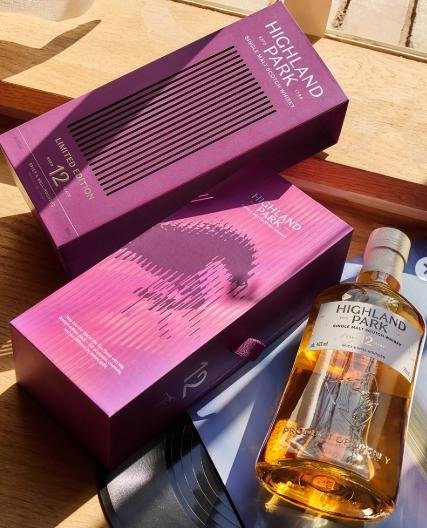
It is in this context that Highland Park, a single malt Scotch whisky distilled since 1798 on the remote Orkney Islands of Scotland, becomes a compelling reference point for a market that increasingly values craft, provenance and patience.
For both whisky making and Nigeria’s creative economy, geography is not incidental. It is the product. Highland Park is made in one of the most logistically inconvenient locations in the world, where heather rich peat flavours the malt and sherry seasoned casks absorb the island’s maritime climate over years of slow development. Nothing about the process is efficient. Everything about it is intentional.
Adebayo Oke-Lawal, founder of Orange Culture, captures this spirit precisely. “We aren’t waiting for anyone to tell us how to create. We are investing in ourselves.” Built from Lagos in 2011, Orange Culture went on to show at London Fashion Week and earn a place in the BoF 500, not by working around the city but by working from it. Tokini Peterside-Schwebig built ART X Lagos on the same conviction, that place defines value, growing it into West Africa’s leading international art fair since 2016, drawing artists and galleries from over 70 countries. Whether on the Orkney Islands or on Lagos Island, the surrounding conditions determine the character of everything produced.”
Both whisky making and Nigeria’s most enduring creative businesses make the same argument about time. It cannot be manufactured or shortcut. Highland Park’s 12 Year Old has spent over a decade in cask before reaching a glass. Its 18 Year Old represents nearly two decades of quiet maturation. Nigerian fashion designer Andrea Iyamah has built her brand through a similarly deliberate approach, attracting international stockists not through aggressive scaling but through depth that only accumulates over time. Longevity is becoming a genuine differentiator in Nigeria’s premium market, not just a brand story.
Highland Park has been making whisky for 228 years, surviving economic depressions, two world wars and the disruption of the modern spirits market. Each pressure left a mark, not as damage but as depth. Nigeria’s creative economy is building its own version of this resilience. The success of Afrobeats, now generating billions in streaming revenue and driving consumption across fashion, tourism and lifestyle markets globally, is the most visible example of what that looks like at scale.
What connects Orkney and Lagos is not geography. It is the understanding that the most meaningful work is never the loudest or the fastest. It is the most considered, the most layered and the most honest about where it comes from.
The Nigerian consumer who has found their way to the best of what Lagos produces is the same consumer developing a palate for single malt whisky. They are not looking for the most recognizable label. They are looking for the most genuine story. That meeting between Orkney and Lagos is not simply cultural. It is a reflection of where Nigerian taste, in every sense of the word, is heading.