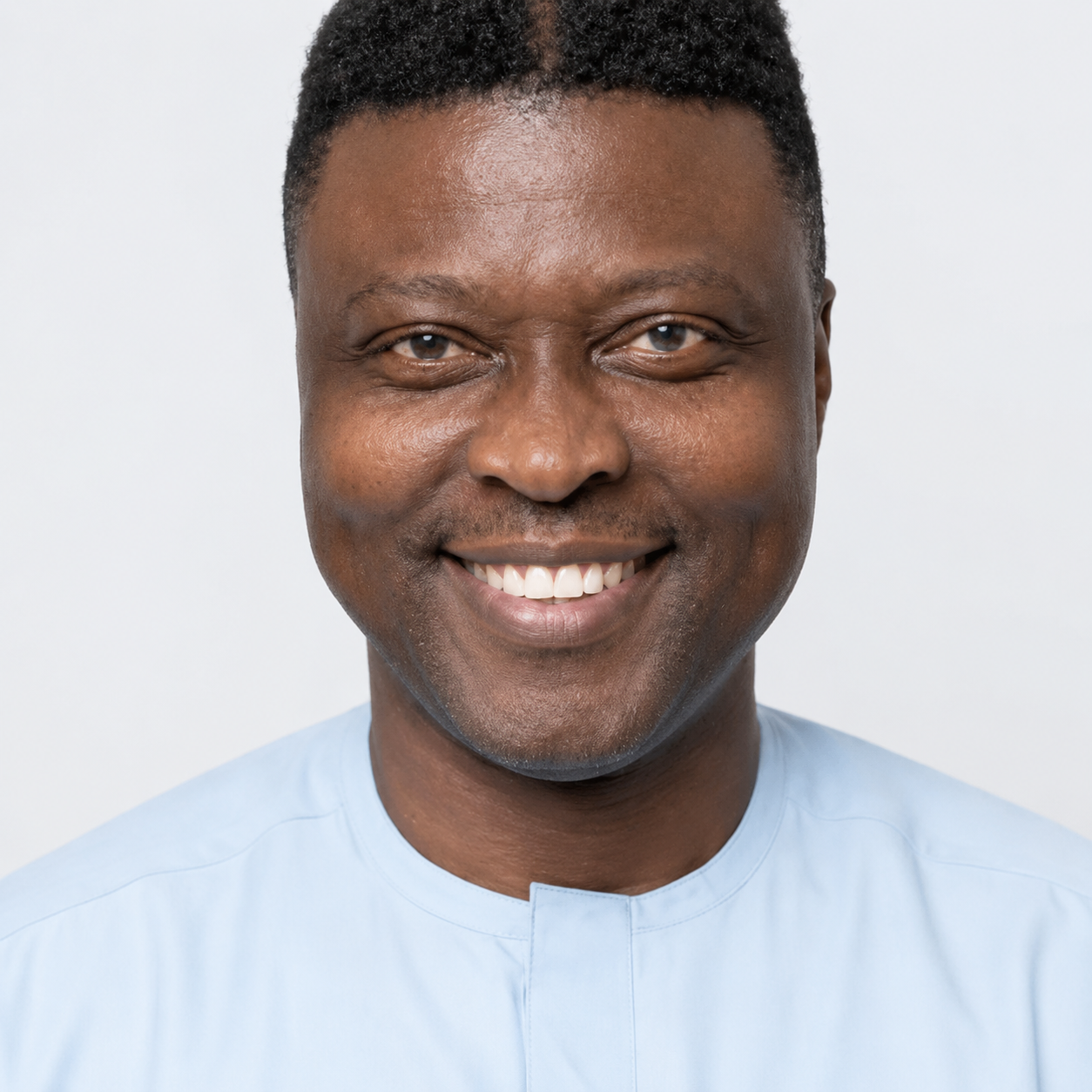
Before his death, most of us outside British academia had never heard the name Jason Arday. Today it is a name the whole world should know — not for how he died, but for what his life proved, and what the reaction to his fall reveals about how far institutions still have to go.
Arday was born in 1985 to Ghanaian parents on a council estate in Clapham, South London. He was autistic, did not speak until he was eleven, and did not learn to read or write until he was eighteen. In 2010, he ran 30 marathons in 35 days to raise money for Shelter and the Shooting Star Children’s Hospice — a feat that earned him a place as a torchbearer for the London 2012 Olympics. He went on to earn a PhD from Liverpool John Moores University, became a professor at the University of Glasgow in 2021, and in March 2023, at 37, was appointed Professor of Sociology of Education at the University of Cambridge — the youngest Black person ever to hold a professorship there in the university’s 800-year history.
Then came the campaign. A philosopher’s Substack post questioned his academic record. Cambridge opened an inquiry into his qualifications. The story metastasised into a national media pile-on, and Arday resigned from his post on 5 August 2026. Nine days later, on 14 August, he was found dead at his South London home. He was 41.
On 17 August, an estimated 30,000 people filled Trafalgar Square for a vigil organised by Stand Up to Racism, remembering a man his own MP described as “lovely, kind and brilliant” — and protesting what organisers called a racist witch-hunt. Days later, the philosopher whose allegations set off the scrutiny was suspended from his own university post in Belgium. The full truth of the academic disputes may still take time to settle. What is already settled is the pattern: a Black professional’s achievements were treated as inherently suspect in a way his white peers’ rarely are, and the scrutiny did not stop even after he had lost his job.
This is why DEI cannot be filed away as a “nice to have,” a slogan for a careers page, or a line item cut whenever budgets tighten. It is infrastructure — for fairness, for talent retention, and, frankly, for business performance. McKinsey’s 2023 “Diversity Matters Even More” study of over 1,200 companies across 23 countries found that firms in the top quartile for ethnic representation on executive teams were 39 percent more likely to financially outperform those in the bottom quartile — even as some academics have since questioned how robust the causal claim is. Whatever the precise multiplier, the direction of the evidence, year after year, points the same way: homogenous leadership is a risk, not a safe default.
But the deeper lesson from Arday’s story isn’t about a spreadsheet. It’s about what happens to talent inside institutions that adopt diversity as branding without building the culture to sustain it. Representation without belonging is exposure without protection. You cannot put a “youngest Black professor” on your homepage and then abandon that same person to a pile-on the moment they’re questioned. Companies, cities, and countries do this too — celebrating a “first” hire, a “first” appointment, then offering no real support system when that person faces disproportionate scrutiny, harsher judgment, or outright hostility.
DEI, done properly, is risk management, talent strategy, and moral obligation rolled into one. It means diverse hiring and the internal culture, mentorship, and institutional backbone to protect the people you hired. It means examining why criticism of Black professionals so often escalates faster and harder than equivalent criticism of white peers. It means recognising that a “must have” isn’t a quota — it’s an operating principle for any organisation that wants to survive contact with a diverse world.
Jason Arday’s story should not end as a culture-war talking point. It should end as a turning point.
Four calls to action:
- Boards and executive teams: Commission an independent audit of how your organisation supports — not just recruits — underrepresented leaders once they’re in senior roles, and publish the findings.
- HR and People leaders: Build a formal crisis-support protocol for employees facing public or internal scrutiny, so no one is left to face a pile-on alone while your institution stays silent.
- Business media and columnists: Interrogate coverage patterns. Ask whether stories involving Black and minority professionals are held to a harsher, faster, more public standard than equivalent stories about others — and correct course where they are.
- Every reader of this column: Don’t wait for a tragedy to say diversity, equity and inclusion matter. Say it in your budget, your hiring panel, and your next promotion decision — this week, not after the next vigil.
- business a.m. commits to publishing a diversity of views, opinions and comments. It, therefore, welcomes your reaction to this and any of our articles via email: comment@businessamlive.com

Dr. Joshua Awesome is a Coaching Psychologist/Executive and Business Performance Coach who has supported over 100,000 professionals across Africa and the globe. He can be reached via: joshua@africainmind.org