A resilient US consumer, an AI investment boom and an ability to absorb the biggest oil shock in decades have so far prevented a global downturn. But beneath the headline stability, trade balances are deteriorating, inflation is proving stubborn and the world economy is becoming more exposed to the next shock.
The global economy has reached an uncomfortable stage of the post-pandemic cycle: it is proving harder to break than many feared, but increasingly difficult to stabilise.
The latest figures from McKinsey’s Global Economics Intelligence show the outlines of an economy absorbing an extraordinary combination of shocks. US growth slowed in the second quarter, Europe’s trade position deteriorated sharply as energy imports surged, and inflation remained above central-bank comfort levels. Yet neither the energy crisis nor the geopolitical turmoil that accompanied it has so far produced the global recession that investors once feared.
That apparent resilience is the central economic story of 2026. It is also potentially misleading.
In the US, real gross domestic product expanded at an annualised rate of 1.5 percent in the second quarter, down from 2.1 percent in the first. The latest estimate from the Bureau of Economic Analysis confirmed that weaker government spending, investment and exports slowed growth, although stronger consumer spending provided an important offset.
The composition matters. America’s economy is not simply running out of steam. The consumer is still spending, while investment—particularly around artificial intelligence—is helping sustain demand. The result is a slowdown without the characteristics of a conventional recession.
But inflation has not disappeared with the slowdown. US consumer inflation was still 3.7 percent in July, according to data released last week, while core inflation remained at 3.3 percent. The Federal Reserve therefore faces the awkward combination of softer headline growth and inflation that remains well above its two percent target.
Europe’s problem is different, and in some respects more structural.
The eurozone recorded a €7.8 billion goods-trade deficit in May, compared with a €1 billion deficit in April, according to McKinsey. Energy imports were 10 percent higher than a year earlier while export volumes were broadly flat. The cumulative goods surplus for the first five months of the year had fallen to just €3.3 billion, from €78.7 billion during the same period in 2025.
That swing is more than a monthly statistical curiosity. It shows how quickly an energy shock can alter the external position of an economy that has traditionally relied on manufacturing exports.
Europe is effectively paying more to maintain its energy system while receiving little corresponding boost from export volumes. That transfers income abroad and squeezes the purchasing power available to households and companies at home.
The irony is that the oil shock itself has been considerably less damaging than its initial trajectory suggested.
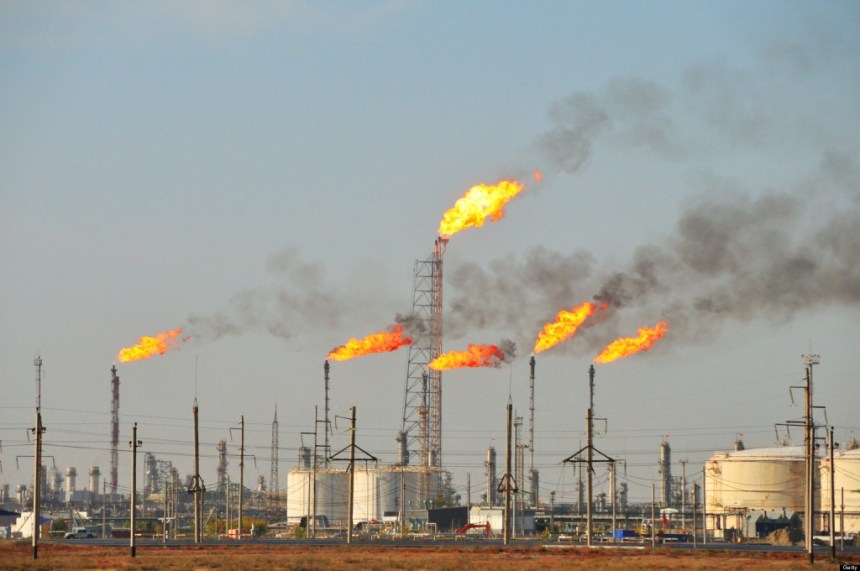
Brent crude reached $118 a barrel on April 29 as disruption to oil flows through the Strait of Hormuz threatened a major supply shortfall. By late June it had fallen as low as $72.
The International Monetary Fund estimates that the closure of the Strait disrupted access to roughly 20 million barrels a day of crude and refined products—about a fifth of global consumption. Yet a combination of inventory drawdowns, alternative production and weaker demand prevented the extreme price spike that markets initially feared.
That is good news, but it should not be mistaken for the disappearance of the risk.
The buffers that absorbed the first shock are finite. The IMF has warned that a prolonged disruption could still do significant damage if inventories are depleted or alternative supplies cannot compensate.
This is where the current economic picture becomes more complicated than the reassuring headline numbers suggest.
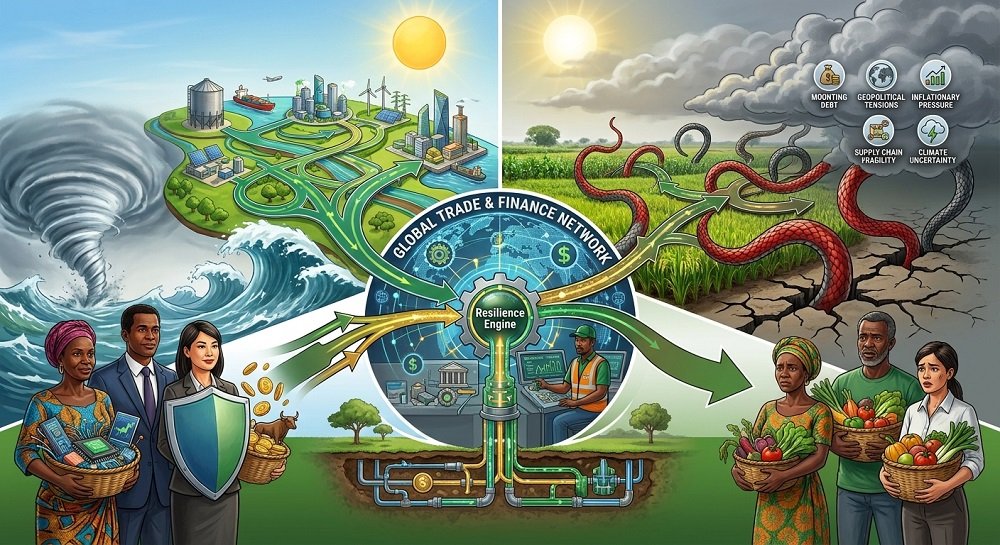
The world economy has become better at absorbing shocks partly because it has become more flexible. Energy intensity has fallen, renewable generation has expanded and supply chains have adapted. At the same time, governments and companies have learned to respond faster to disruptions than they did during the pandemic.
But resilience has also been bought with enormous amounts of investment and increasingly complex financial interdependence.
The IMF’s July outlook projected global growth of three percent in 2026 and 3.4 percent in 2027. It described the global economy as being pulled in opposite directions by the continuing effects of the Middle East energy shock and a technology-driven investment boom. Inflation, however, was revised higher, with global headline inflation forecast at 4.7 percent this year.
That technology boom is now one of the most important supports for global activity.
Artificial intelligence has become not merely a technology story but a macroeconomic one. Capital spending on computing infrastructure is generating demand across construction, semiconductors, energy and data centres, helping offset weakness elsewhere.
But it introduces a new vulnerability. If investors conclude that the expected returns from AI infrastructure will not justify the scale of current spending, the same investment cycle that is supporting growth could become a source of financial stress. The IMF explicitly identifies a reassessment of AI profitability as a downside risk to its outlook.
The global economy is therefore balancing between two unusually powerful forces: an energy shock that pushes inflation and costs higher, and a technology investment cycle that supports growth and productivity.
Analysis shows that neither force is likely to disappear quickly.
There is a further reason to be cautious about the apparent stability: the distribution of growth is becoming increasingly uneven.
The IMF expects China’s economy to grow 4.6 percent in 2026, helped by stronger-than-expected first-quarter activity, while warning that higher energy prices and weaker demand from trading partners remain drags.
The result is a global economy in which the same shock produces radically different outcomes. Oil importers face higher costs. Energy producers face disrupted output and transport. Technology exporters benefit from investment demand. Countries embedded in global manufacturing chains face the consequences of shifting trade patterns.
The old assumption that a global shock produces a broadly synchronised economic cycle is becoming less useful.
That matters for investors because diversification across countries no longer necessarily means diversification across risks. An energy shock can raise inflation everywhere; a technology correction can transmit through financial markets even where AI investment is relatively small; and a trade disruption can affect countries thousands of miles from the original source of the problem.
It also leaves central banks with an unusually difficult task.
Ordinarily, weaker growth argues for lower interest rates while higher inflation argues for tighter policy. The current environment can produce both simultaneously. Cutting rates too quickly risks allowing an energy-driven inflation shock to become embedded. Keeping them high for too long risks turning a manageable slowdown into something more serious.
For governments, the room for manoeuvre is narrowing for a different reason: debt.
The world’s financial balance sheet reached almost $1.8 quadrillion in 2025, according to McKinsey’s broader balance-sheet analysis. The enormous stock of global assets is matched by an equally enormous stock of liabilities, leaving the system highly sensitive to changes in interest rates, asset valuations and the distribution of capital.
That makes the apparent resilience of 2026 both impressive and fragile.
So far, consumers have kept spending. Companies have continued investing. Financial markets have absorbed geopolitical shocks. Oil markets found alternative supplies. Governments have avoided the kind of fiscal panic that characterised earlier crises.
But none of those facts guarantees that the next shock will be absorbed so easily.
The more revealing question is therefore not whether the global economy is heading for recession. At present, the evidence does not point clearly in that direction.
It is whether the mechanisms that have protected the economy from recession are themselves becoming sources of vulnerability.
Higher public and private debt, persistent inflation, elevated energy costs, huge technology investment programmes and increasingly fragmented trade all offer the same warning: resilience is not the absence of risk. It is the ability to postpone its consequences.
For now, the global economy has managed to do precisely that.
The challenge for policymakers and investors is to use the breathing space before the next shock arrives to rebuild the buffers that made this one survivable.