- Higher pension fund equity allocation helps
- Naira-denominated assets attract investors
- 2026 racing to record outcome
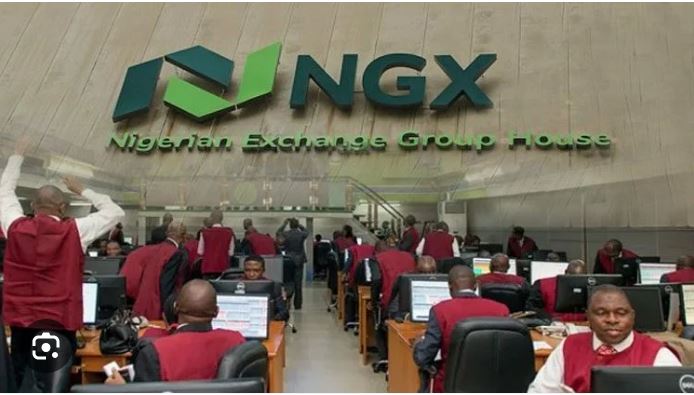
A wall of domestic money is powering Nigeria’s latest stock market boom, cushioning the equities market from the continued reluctance of foreign portfolio investors to rebuild significant positions.
The NGX All-Share Index has gained 57 percent in the first seven months of 2026, while total market capitalisation rose by about N58.9 trillion to N158.2 trillion at the end of July.
Surprisingly, foreign investors accounted for only 12.07 percent of equity transactions during the first half of the year, down from 27.08 percent in the same period of 2025. The gap has been filled by Nigerian investors, with pension funds, asset managers, other institutional players and retail participants increasingly providing the buying power behind the market’s advance.
According to analysts, the development signals a potentially important maturation of Nigeria’s capital market. A stronger domestic investor base can provide greater stability when global investors retreat, reducing the market’s exposure to sudden portfolio reversals. However, the changing structure comes with a trade-off. Foreign capital remains important for liquidity, valuation discovery, foreign exchange inflows and the financing capacity required to support Nigeria’s longer-term growth ambitions.
Rather than signalling an empty market, analysts say the numbers point to a growing domestic savings base capable of absorbing shocks from international capital markets. But they also warn that local money alone may not provide the depth required to finance Nigeria’s ambition of becoming a $1 trillion economy.
NGX data shows that total equity transactions more than doubled to N9.60 trillion in H1 2026 from N4.19 trillion a year earlier, an increase of 129.14 percent.
Domestic transactions accounted for N8.44 trillion of that amount, up from N3.06 trillion in H1 2025. Foreign transactions rose only marginally, from N1.13 trillion to N1.16 trillion.
That means the decline in foreign participation was not accompanied by a contraction in overall market activity. Instead, domestic investors expanded rapidly enough to more than fill the space.
Temilola Adeyemi, head of Coronation Research, Macro, said the development reflected a fundamental change in how Nigerian investors were managing their wealth.
Investors, she said, were increasingly spreading their portfolios across equities, fixed income and money-market instruments rather than relying on a single asset class.
“Investors are thinking more than just being in the markets. They are thinking more of ‘how do I spread my portfolio in such a way that it sustains me until the next cycle comes up’,” Adeyemi said.
“The money actually is coming from the institutional firms. For instance, PenCom recently increased its allocation to equities investment and because they dominate the institutional investment space, it has led to the massive surge we saw in H1,” she added.
The increased presence of domestic institutional capital is changing the structure of the market at a time when international investors remain cautious.
Abdulrauf Bello, investment expert and associate vice-president for investment management at Cowrywise, said foreign participation actually increased in absolute terms between H1 2025 and H1 2026, but domestic participation grew much faster.
He identified several factors behind the stronger local appetite, including the increasing attractiveness of naira-denominated assets as inflation moderates, changes in Pension Fund Administrators’ equity allocations, improved corporate performance amid greater FX stability and the growing role of technology in opening the equity market to retail investors.
“Structural improvements in the market, particularly the role of technology in democratising retail access to equities,” have been significant, Bello said, noting that retail participation had risen from an average of about 20 percent to 40 percent.
The decline in foreign investors’ share of Nigeria’s equities market does not amount to a wholesale withdrawal from Nigerian assets, analysts said, although the direction of their transactions points to continued caution.
Foreign investors traded N1.16 trillion worth of equities in the first half of 2026, marginally higher than the N1.13 trillion recorded in the corresponding period of 2025.
However, the composition of those flows was less favourable. Foreign outflows increased 19.49 percent year-on-year to N688.4 billion, while inflows declined 15.64 percent to N471.77 billion.
The result was a net selling position for foreign portfolio investors, underscoring the subdued appetite for Nigerian equities despite the broader strength of the market
Aigbovbioise Aig-Imoukhuede, managing director of Coronation Asset Management, said the figures showed that the key development was not necessarily foreign investors abandoning Nigeria, but the much faster expansion of domestic activity.
“What changed was the scale of domestic participation, which expanded at a far more significant pace of 129.1 per cent,” he said.
He noted that foreign investors had alternative instruments offering attractive returns, particularly short-dated Nigerian government securities with yields close to 20 percent.
“From a pure risk-adjusted perspective, that allocation decision was understandable,” Aig-Imoukhuede said.
Muda Yusuf, chief executive officer of the Centre for the Promotion of Private Enterprise (CPPE), similarly argued that the decline in foreign equity participation should be viewed partly as portfolio rebalancing rather than a fundamental loss of confidence in Nigeria.
“Nigerian Treasury bills and government bonds continue to offer relatively high yields, with some instruments delivering returns approaching 20 percent or more.
“For portfolio investors, these are compelling risk-adjusted returns, especially when compared with equities,” he said.
Yusuf said Nigeria continued to attract substantial portfolio flows and that money-market instruments and bonds had attracted significantly more foreign capital than equities.
The decline in stock-market participation, he said, may therefore “simply reflect movement between domestic asset classes” in many cases.
Naira seen changing the equation
Currency risk remains another critical factor behind foreign investors’ caution.
Temilola Adeyemi said the initial depreciation of the naira following the unification of the foreign-exchange market had encouraged many Nigerians to move funds into global assets as they sought protection from further currency weakness.
However, the recent strengthening of the naira seems to be changing that behaviour. She noted that the naira had appreciated by 3.1 percent, describing the move as a sign of growing confidence.
“If the naira is getting this kind of stability and there is no longer the same fear of further depreciation, why do I need to take my money out of the country?” she asked.
Adeyemi also expects foreign participation to improve eventually as the domestic market showcases stronger performance and Nigerian companies continue to record earnings growth.
The persistence of foreign investor caution in Nigeria’s equities market reflects not only domestic considerations but also the risk calculus confronting international portfolio managers.
Yusuf said foreign portfolio investors typically adjust their allocations in response to changes in global risk appetite, interest-rate expectations, commodity prices and geopolitical developments.
“Foreign portfolio investors are inherently more responsive to changes in global risk appetite, interest rates, commodity prices and geopolitical developments,” he said.
Periods of heightened global uncertainty, he added, tend to encourage a reallocation towards instruments perceived to offer greater liquidity and lower risk, potentially constraining foreign participation in emerging-market equity markets even where local asset prices are performing strongly.
He also pointed to Nigeria’s changing tax environment, noting that the new tax framework had altered the treatment of capital gains, including gains from securities, although exemptions and reinvestment provisions remain.
Investors, he said, would naturally consider the after-tax return on equities when deciding whether to remain in stocks or move into alternative assets.
A rally with a warning label
The domestic-led nature of the rally has strengthened the resilience of the market, but it has also raised questions about valuations.
Adeyemi cautioned that some listed companies had delivered returns of more than 100 percent without a corresponding improvement in fundamentals.
She also noted that much of the index’s growth had come from the industrial and oil and gas sectors.
“When we tie this to the nation’s GDP growth, we see that the oil and gas sector is the major contributor and because of the anticipated listing of the Dangote Refinery, that space is picking up strongly,” she said.
Aig-Imoukhuede also cautioned that the scale of the market’s gains required investors to distinguish between a sustainable structural recovery and a temporary re-rating.
The rally, he said, had been relatively narrow, making broader participation and stronger fundamentals necessary if the gains were to persist.
He urged institutional investors to focus on companies with strong earnings momentum, sound corporate governance, adequate liquidity and clear prospects of benefiting from renewed international participation.
The implication is that after a period in which rising prices rewarded market exposure, investors may now have to become more selective.
On his part, Yusuf believes the growing dominance of domestic investors is ultimately a positive development.
A strong domestic investor base, he said, reduces the market’s vulnerability to sudden reversals in international capital flows because foreign portfolio money is highly liquid and can leave quickly when global risk conditions deteriorate.
“Domestic institutional and retail investors are generally less sensitive to external shocks and therefore provide a more stable liquidity base for the market,” he said.
He argued that the growing role of pension funds, asset managers, institutional investors and domestic retail investors strengthens the capacity of the Nigerian market to absorb external shocks.
“This is fundamentally positive for market resilience,” Yusuf said.
But he cautioned against interpreting that resilience as an argument for reducing Nigeria’s efforts to attract foreign capital.
Foreign participation provides additional liquidity, market depth and foreign-exchange inflows.
Nigeria, he said, should therefore continue pursuing macroeconomic stability, adequate FX liquidity, efficient market infrastructure, regulatory predictability and competitive returns.
He also drew a distinction between foreign portfolio investment and foreign direct investment.
According to him, portfolio capital is useful but highly liquid and can become a source of volatility during periods of global stress. FDI, by contrast, is generally more durable because it is tied to productive assets such as factories, infrastructure, technology and long-term business commitments.
What will bring foreign investors back?
According to analysts, the next phase of Nigeria’s market performance may therefore depend on whether the conditions that foreign investors require are beginning to take shape.
Aig-Imoukhuede said market classification, FX liquidity, foreign-exchange reserves and corporate earnings would be critical.
FTSE Russell’s review of Nigeria’s position within its Frontier Market Index framework has been concluded with Nigeria now restored to the index, while S&P Dow Jones Indices has placed Nigeria on a watchlist for possible reclassification from standalone to frontier-market status.
The favourable outcome of the FTSE Russel review and a further favourable classification by S&P Dow Jones could improve access to international institutional and passive capital.
The foreign-exchange market will be equally important. Aig-Imoukhuede said improved FX liquidity, a stronger naira and reserve accumulation backed by sustainable foreign-exchange inflows would provide important evidence of Nigeria’s external resilience.
Exchange-rate stability remains one of the decisive factors shaping foreign investors’ appetite for Nigerian assets because movements in the naira can materially affect returns once local investments are converted into dollars.
But the latest performance of the NGX has demonstrated that domestic capital can provide a powerful alternative source of market liquidity.
Local investors have not only absorbed the reduced contribution of foreign portfolio investors; they have helped drive one of the exchange’s strongest rallies in years.
That development could represent a step towards greater market resilience. However, a liquidity-driven rally is not the same as sustainable value creation.
The critical test will be whether increased demand for equities translates into stronger corporate earnings, improved valuations supported by fundamentals and greater productive investment across the economy.
The NGX has already added N58.9 trillion in value. Now comes the harder part. The question is no longer who is buying Nigerian stocks, but whether the domestic investors powering the rally can keep it going until corporate earnings, productive investment and foreign confidence begin to reinforce the gains.
That challenge, according to analysts, extends beyond the stock exchange. This is as Nigeria needs to turn the strength of domestic capital into a deeper, more liquid and more diversified market capable of financing the economy’s next growth cycle.
“Global capital follows confidence, but domestic capital trades on it,” Aig-Imoukhuede said.
2026 could therefore mark more than a spectacular run for Nigerian equities. It could become the point at which domestic capital emerged as the market’s first line of support, and Nigeria began the harder task of turning that resilience into a capital market capable of financing a $1 trillion economy.